 English
 Spanish
 Portuguese
 French
 Italian
 Remote Mower
Introduction: A New Approach to Professional Lawn Mower Operations
For landscaping companies, agricultural businesses, property managers, and vegetation maintenance contractors, choosing the right lawn mower can directly affect operational efficiency, labor planning, and long-term equipment costs. Traditional mowing equipment remains effective for many applications, but steep slopes, uneven ground, dense vegetation, and restricted-access areas can make routine mowing more complicated.
Remote-controlled mowing equipment offers an alternative for these challenging environments. By allowing operators to control a machine from a suitable position away from the cutting unit, a remote-controlled lawn mower can help businesses improve their mowing workflow while managing certain operational risks.
This case study examines a representative commercial mowing scenario, explaining how remote-controlled technology can improve productivity, what technical factors matter, and how businesses can evaluate the results. The scenario is illustrative rather than a claim about a specific customer's verified results.
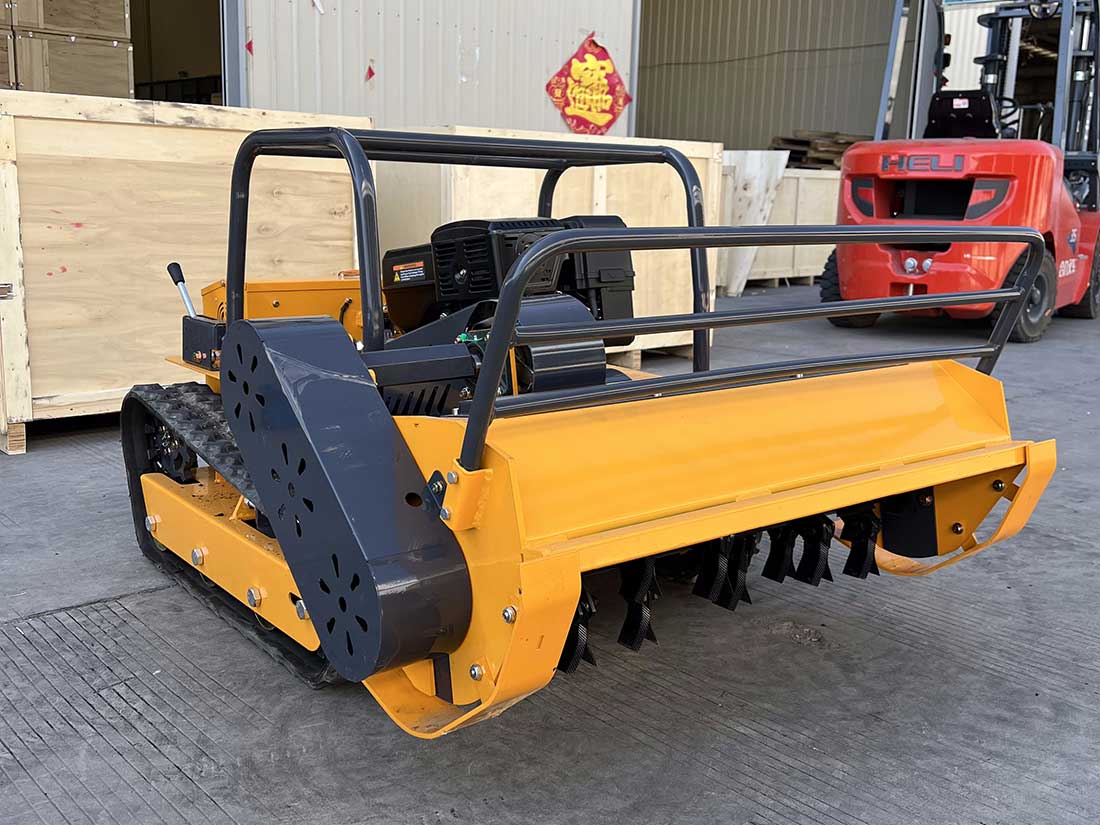
1. The Challenge: Improving Efficiency on Difficult Terrain
Consider a landscaping contractor responsible for maintaining roadside embankments, uneven grassland, and large commercial properties. The team needs to keep vegetation under control while managing limited working hours, labor availability, and equipment maintenance.
Several challenges can affect conventional lawn mower operations.
Difficult slopes and uneven surfaces
Sloping ground can affect traction, stability, maneuverability, and cutting consistency. Conventional ride-on or walk-behind equipment may be unsuitable for certain slopes, depending on the machine's design and operating limits.
A remote-controlled lawn mower designed for challenging terrain can give the operator greater flexibility in positioning and controlling the equipment. However, the machine must still operate within the manufacturer's specified slope, traction, and stability limits.
Labor-intensive mowing procedures
Large or complicated sites often require repeated repositioning, careful maneuvering, and additional time around obstacles. These tasks can reduce the productive time available for actual grass cutting.
A suitable remote-controlled mower may simplify some of these procedures by allowing the operator to manage movement and cutting functions from a more practical location.
Inconsistent vegetation conditions
Grass height, density, moisture, and ground conditions can vary considerably across one site. A lawn mower selected for ordinary turf may struggle when vegetation becomes tall, dense, or mixed with weeds.
Choosing suitable cutting equipment, traction, and engine or motor capacity is therefore essential for consistent results.
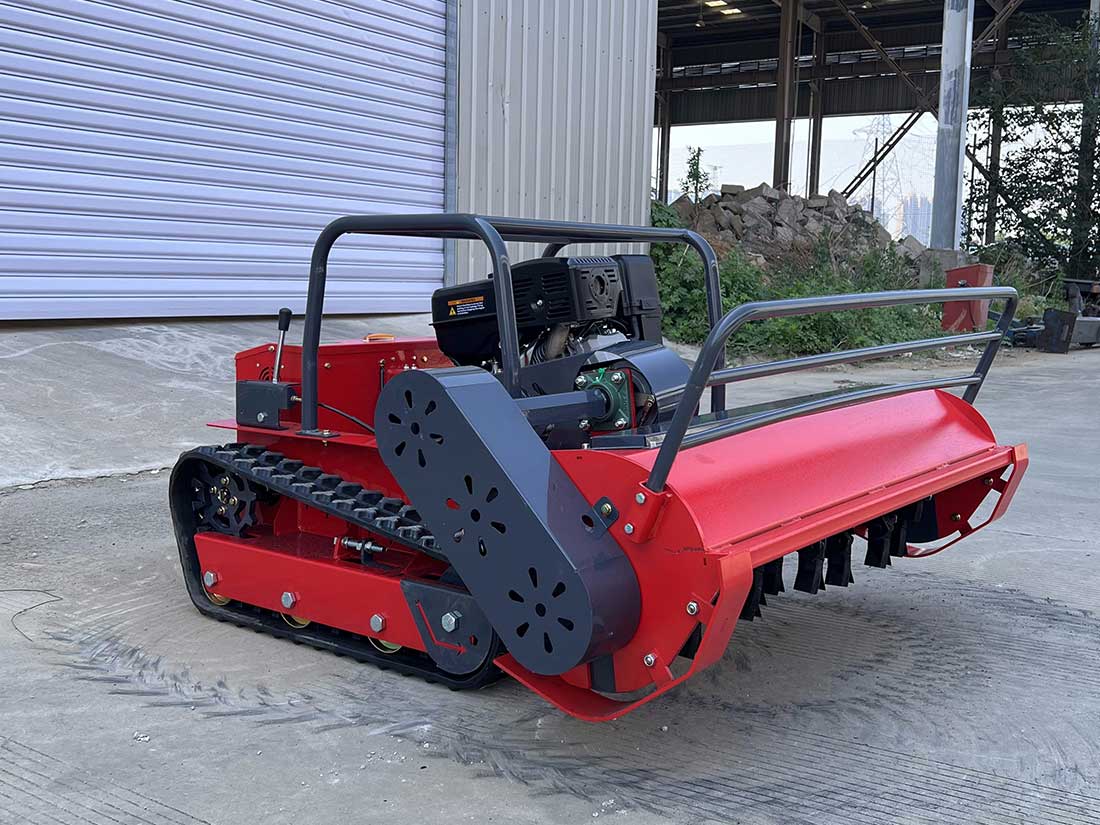
2. The Solution: Introducing Remote-Controlled Mowing Equipment
To address these challenges, the contractor evaluates a remote-controlled lawn mower designed for professional vegetation management.
Unlike conventional equipment that generally requires the operator to walk behind or ride on the machine, remote-controlled mowing equipment enables operation through a dedicated remote-control system. Depending on the model, the operator may control travel direction, speed, steering, and cutting functions.
The purpose is not simply to replace one type of lawn mower with another. It is to match the equipment to the site's working conditions and create a more efficient mowing process.
Key technical features to evaluate
1. Track design and traction
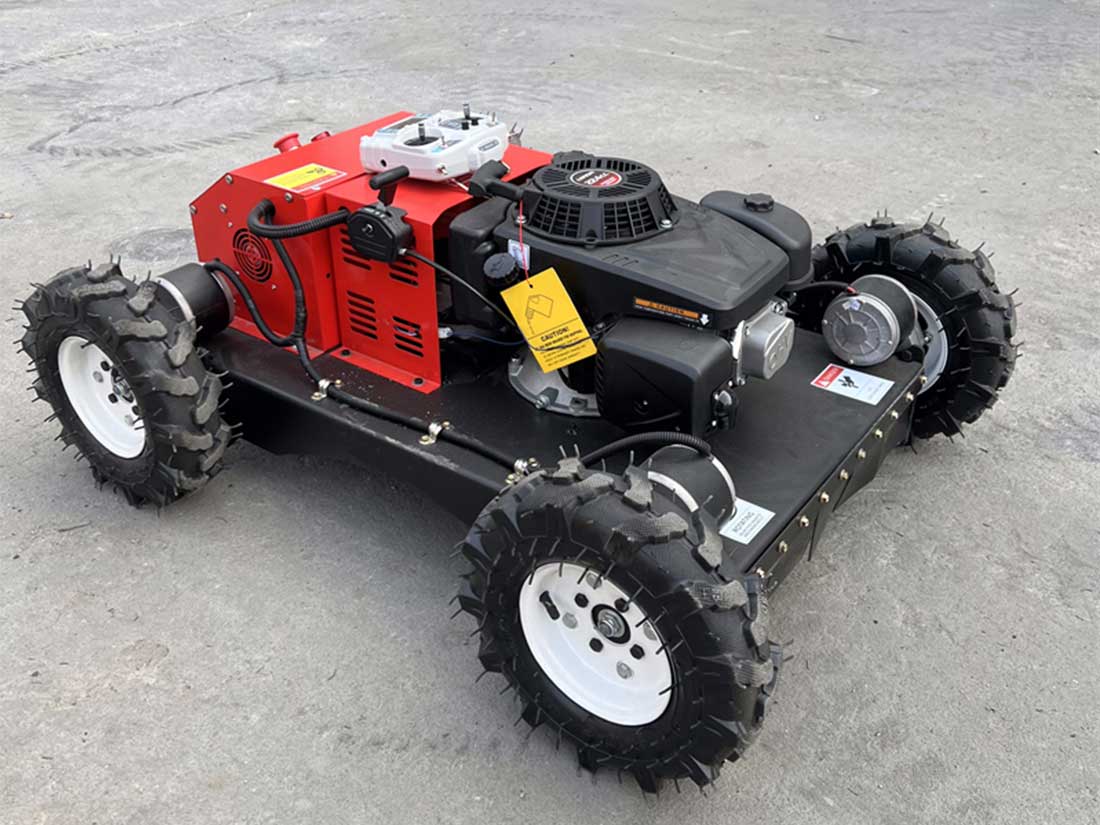
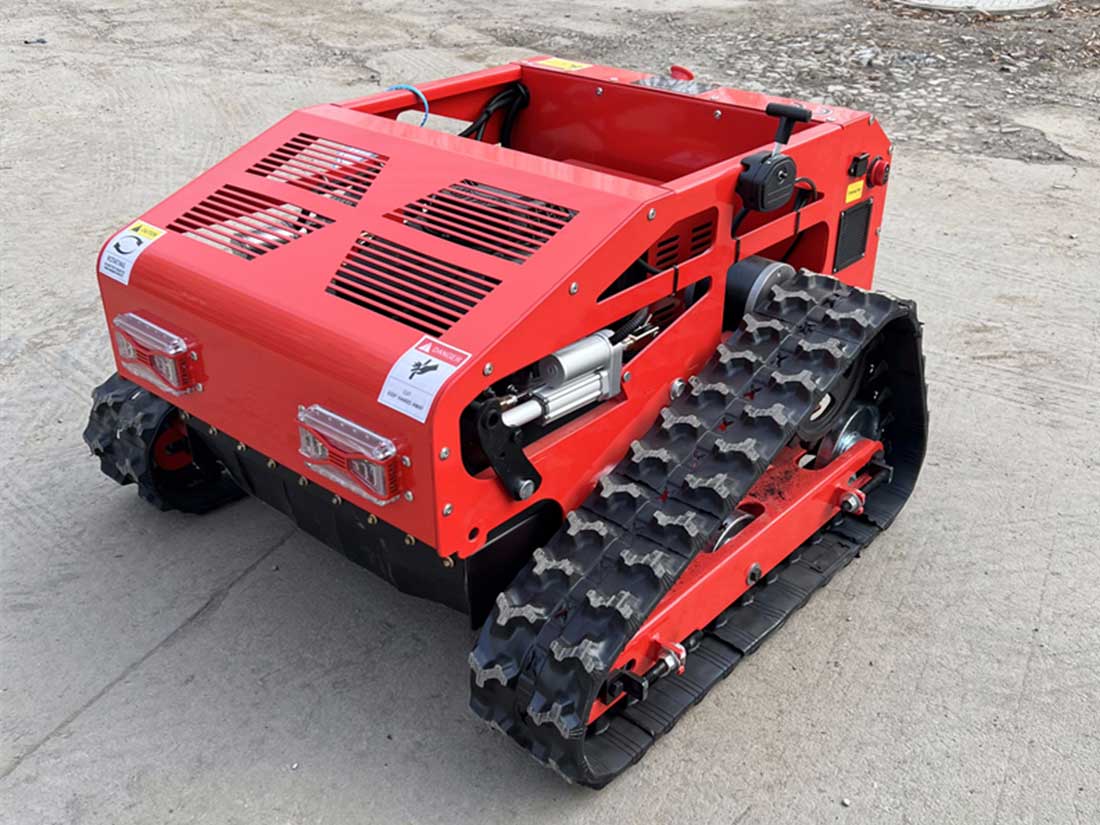
Tracked equipment can provide useful ground contact on certain uneven or sloping surfaces. Actual traction and stability depend on track geometry, machine weight distribution, ground conditions, and the manufacturer's operating limits.
2. Cutting system
Rotary and flail cutting systems serve different applications. A rotary cutting deck may suit routine grass maintenance, while a suitable flail system may be preferable for some areas containing tougher vegetation. Buyers should confirm the intended vegetation type and cutting height range before selecting a machine.
3. Remote-control responsiveness
A reliable control system helps operators manage speed, turning, and positioning. Control range, signal reliability, emergency-stop functionality, and the availability of fail-safe features should be checked against the intended work environment.
4. Power and operating endurance
The power system influences cutting performance, operating duration, refueling or charging requirements, and maintenance planning. Gasoline-powered and battery-powered lawn mower designs offer different advantages, so the appropriate choice depends on site size, workload, and operating preferences.
5. Serviceability
Commercial equipment must be maintainable as well as productive. Accessible service points, replacement parts, clear maintenance instructions, and responsive technical support can help reduce avoidable downtime.
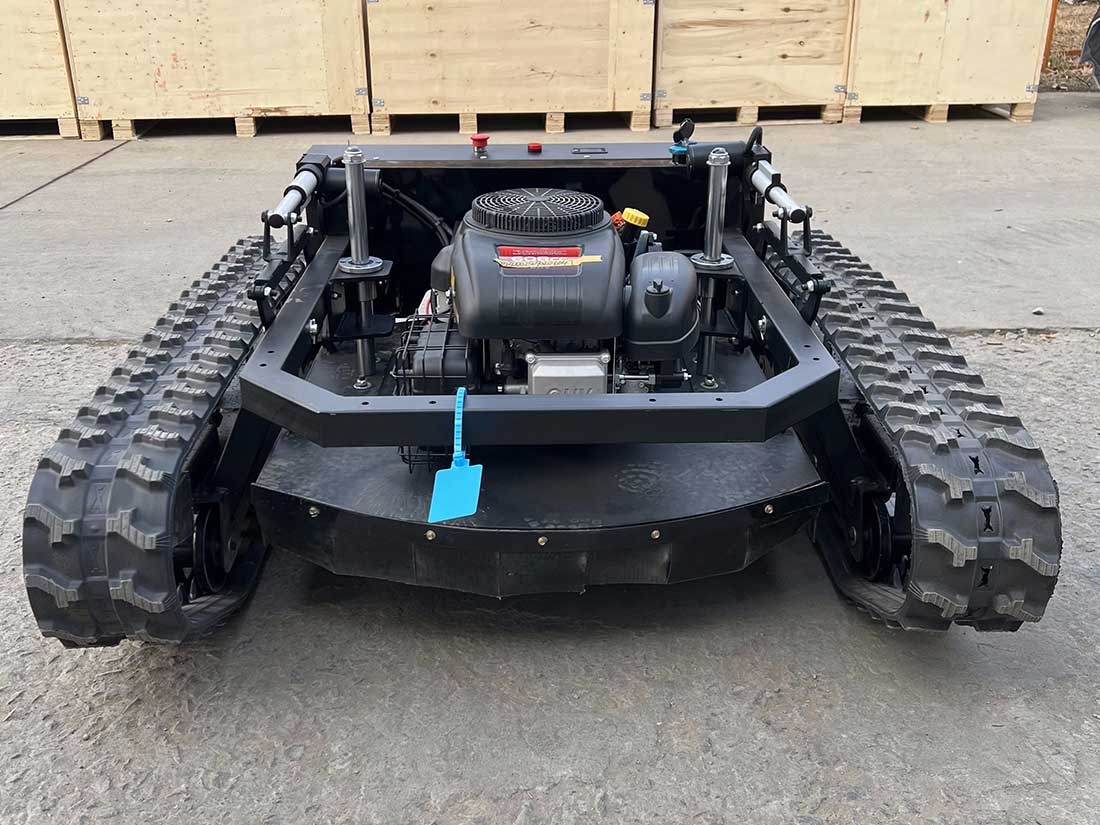
3. The Case Study Workflow: From Site Assessment to Daily Operation
A structured operating process helps businesses determine whether a remote-controlled lawn mower delivers practical benefits.
Step 1: Inspect and classify the site
Before mowing begins, the team assesses slope gradients, surface conditions, vegetation density, obstacles, access routes, and potential hazards.
The inspection identifies areas that may be suitable for remote-controlled mowing and areas that require a different method. Ground conditions should be checked for soft soil, hidden holes, loose debris, and other factors that could affect stability or cutting performance.
Step 2: Select equipment for the actual workload
The contractor compares available lawn mower models based on their cutting width, power, traction system, permitted slope capability, control functions, and service requirements.
A larger cutting width may improve productivity on open ground, but it does not automatically make a machine more efficient on narrow paths or around obstacles. The best equipment is the model that fits the full operating environment.
Step 3: Train operators and establish procedures
Operators receive training on the remote-control system, machine limitations, startup and shutdown procedures, emergency stops, inspection routines, and safe operating distances.
A remote-controlled lawn mower does not eliminate every hazard. Flying debris, unstable ground, moving machinery, and unexpected obstacles remain important considerations. Operators should follow the manufacturer's instructions and applicable workplace safety requirements.
Step 4: Organize mowing into practical work zones
The team divides the site into manageable sections according to terrain, vegetation, and access. This approach can reduce unnecessary repositioning and help operators select an appropriate speed and cutting strategy for each area.
On dense vegetation, a slower working speed or multiple passes may be necessary. For routine grass, a suitable cutting height and consistent travel pattern can help maintain an even finish.
Step 5: Record operating performance
Instead of relying on impressions alone, the contractor records key operational indicators before and after introducing the remote-controlled lawn mower.
Useful measurements include:
Total area maintained per working hour
Labor hours required per completed area
Setup, transport, and repositioning time
Fuel or electricity consumption
Routine maintenance and repair costs
Downtime and completed work orders
Cutting quality and the number of repeat passes required
These measurements help establish whether the new equipment improves productivity under real working conditions.
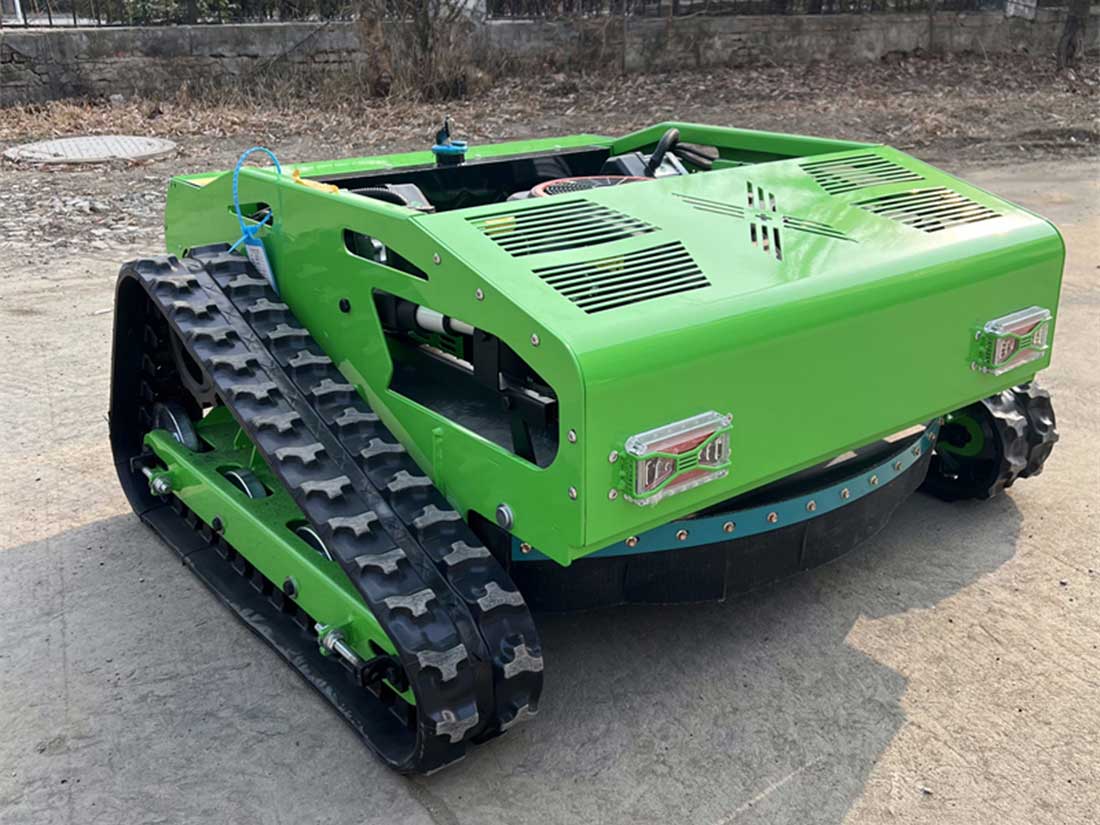
4. Results Analysis: How Remote-Controlled Technology Can Improve Efficiency
The benefits of a remote-controlled lawn mower depend on the machine, terrain, vegetation, operator experience, and maintenance practices. Nevertheless, several potential improvements can be evaluated systematically.
Better allocation of operator time
When mowing difficult ground, operators may spend significant time maneuvering, changing positions, or accessing individual sections. Remote control can make some of these tasks easier to manage.
If the machine can work effectively from a suitable operator position, the team may be able to organize the job more efficiently. The actual time saved should be measured rather than assumed.
Improved access to challenging areas
A properly specified remote-controlled lawn mower can be useful for certain slopes, embankments, and uneven landscapes where conventional equipment may be impractical or unsuitable.
This does not mean every slope is safe to mow. The machine must be approved for the conditions, and the operator must follow specified slope limits and ground-clearance requirements.
More consistent mowing procedures
Remote control can help operators make controlled adjustments to travel direction and speed. When combined with the correct cutting system and a planned work pattern, this may support more consistent results across different sections of a site.
Cutting quality still depends on blade condition, vegetation density, cutting height, travel speed, and the machine's available power.
Reduced exposure to selected operational hazards
Keeping the operator away from the cutting unit may reduce exposure to some hazards associated with direct operation on difficult ground. This is a key reason professional buyers investigate remote-controlled equipment for suitable applications.
However, remote operation is not a guarantee of safety. Flying debris, loss of traction, machine rollover, electrical or mechanical faults, and poor visibility can still create risks. A site-specific risk assessment remains essential.
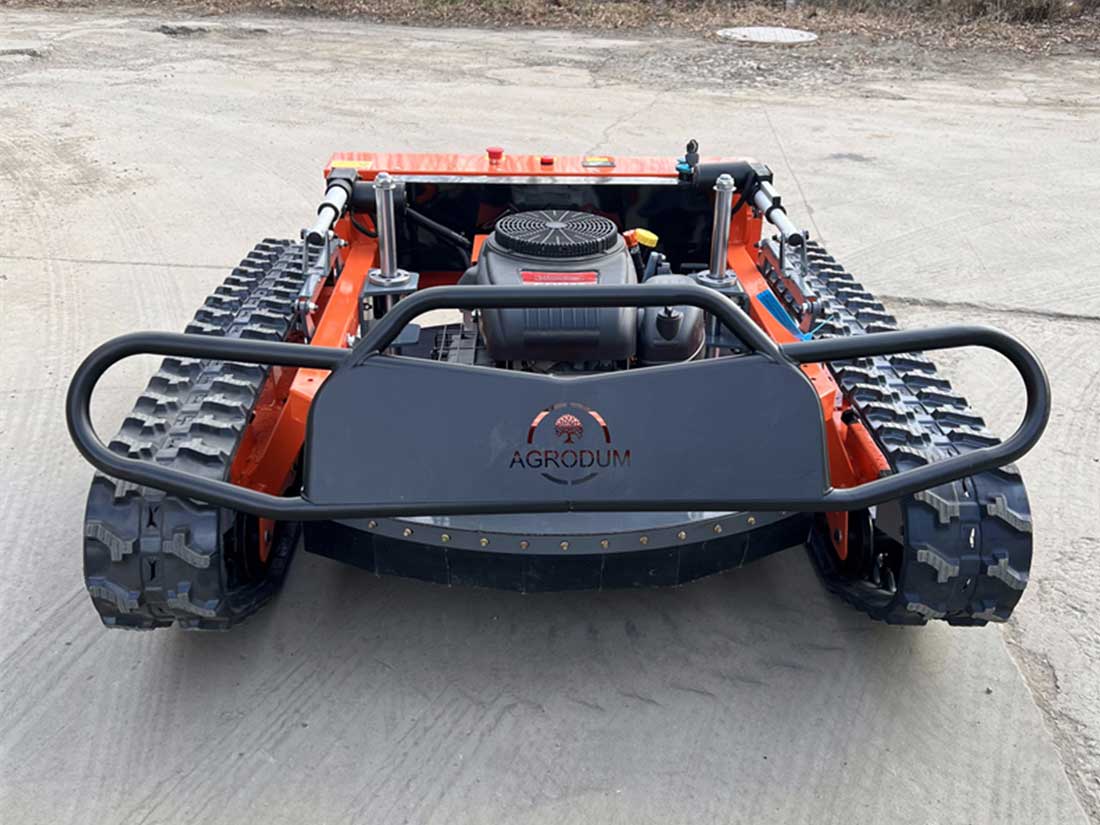
5. Comparing Conventional and Remote-Controlled Lawn Mowers
| Evaluation factor | Conventional lawn mower | Remote-controlled lawn mower |
|---|---|---|
| Operator position | Usually walks behind or rides on the machine | Operator controls the machine remotely |
| Challenging terrain | Suitability depends on machine type and site conditions | Certain purpose-built models are designed for difficult terrain |
| Maneuverability | Varies by deck, steering, and machine design | Remote control can help with positioning in suitable work areas |
| Productivity | Strong on suitable lawns and familiar routes | Potential advantages where terrain or access complicates mowing |
| Safety considerations | Depends on machine, terrain, and operating method | Remote operation changes operator positioning but does not remove all hazards |
| Maintenance | Depends on engine, cutting system, and construction | Also depends on powertrain, tracks, controls, cutting system, and service access |
| Best selection method | Match the machine to the job | Match the machine, control system, and operating limits to the job |
There is no universal winner. A conventional lawn mower may remain the most economical choice for flat, open lawns. A remote-controlled model may be a better fit for contractors who regularly maintain challenging terrain or vegetation areas that require specialized access.
6. Calculating the Business Case
For commercial buyers, the investment decision should be based on measurable operating costs rather than technology alone.
A basic evaluation can compare the total cost of the current mowing process with the expected cost of operating a remote-controlled lawn mower.
Important cost categories include:
Purchase price and financing
Transport and setup
Operator labor
Fuel or electricity
Preventive maintenance and repairs
Spare parts and replacement cutting components
Training and safety procedures
Downtime and equipment availability
A simple productivity metric is:
Mowing productivity = Completed area ÷ Total working hours
Businesses should define working hours consistently. For example, they may include setup, repositioning, and routine delays to capture the full operational picture rather than measuring cutting time alone.
For an investment assessment, estimated annual savings can be calculated as:
Annual net benefit = Annual operating cost savings − Additional annual ownership costs
The payback period can then be estimated by dividing the initial additional investment by the annual net benefit, provided that the annual net benefit is positive and reasonably stable.
A remote-controlled lawn mower is more likely to offer a compelling business case when it solves a recurring operational problem, improves the amount of completed work, or reduces costs that are significant to the contractor's business.
7. Common Purchasing Mistakes to Avoid
Even advanced mowing technology can underperform if the equipment is poorly matched to the application.
Choosing by price alone: A low initial price may not reflect the full cost of ownership, parts availability, service support, or expected operating life.
Ignoring slope specifications: Never assume that all tracked lawn mower models can handle the same gradients. Verify manufacturer limits and the effects of surface conditions.
Selecting the wrong cutting system: Grass, brush, weeds, and woody vegetation may require different cutting equipment. Confirm that the selected model is intended for the vegetation being managed.
Overlooking transport requirements: Dimensions, machine weight, loading arrangements, and transport access can affect daily productivity.
Failing to measure results: Without consistent baseline data, it is difficult to establish whether the equipment actually improves efficiency.
Neglecting operator training: Remote-controlled machinery still requires competent operation, inspections, and established safety procedures.
8. Why Professional Buyers Consider JY Lawn Mower
When comparing remote-controlled mowing equipment, professional buyers should look beyond general product descriptions and examine whether a machine meets the specific requirements of their work.
JY Lawn Mower provides a starting point for exploring remote-controlled mowing solutions for professional grass cutting and vegetation management. Buyers can review available equipment and identify models for further evaluation based on their terrain, vegetation type, operating schedule, and maintenance needs.
Before making a purchasing decision, ask the supplier to clarify:
The recommended applications and permitted slope limits
Cutting-system options and suitable vegetation types
Power, operating endurance, and productivity specifications
Remote-control range and safety features
Routine maintenance requirements and spare-parts support
Demonstration, training, and technical assistance options
Visit the official website at https://www.jylawnmower.com/ to explore JY Lawn Mower solutions and identify equipment that may fit your mowing requirements.
Conclusion: Making Lawn Mower Efficiency Measurable
This case study demonstrates how a structured approach to equipment selection and work planning can help businesses assess the value of remote-controlled mowing technology.
A suitable remote-controlled lawn mower may improve workflow organization, provide practical advantages on certain difficult surfaces, and help operators manage selected mowing tasks from a more appropriate position. The scale of these benefits depends on the operating environment and should be confirmed through real performance data.
For landscaping contractors, agricultural operators, roadside maintenance teams, and property managers, the key is to match the lawn mower to the task, evaluate total ownership costs, and prioritize safe operation.
To explore remote-controlled mowing equipment for professional applications, visit JY Lawn Mower and compare available solutions for your site's specific requirements.