 English
 Spanish
 Portuguese
 French
 Italian
 Remote Mower
Introduction: A Smarter Approach to Modern Lawn Maintenance
Maintaining grass across large properties, uneven landscapes, roadside areas, and steep slopes can be challenging for landscaping professionals and vegetation management teams. Traditional mowing equipment remains useful for many routine tasks, but difficult terrain, limited access, and operator safety concerns can make certain mowing operations more complicated.
A modern grass lawn mower equipped with remote-control technology offers an alternative approach. Remote-controlled mowing equipment allows operators to control the machine from a safer position while maintaining visibility of the cutting area. Depending on the model and application, these machines can help landscaping teams manage challenging ground conditions, reduce the need for direct operator exposure, and organize mowing workflows more effectively.
This success-story-style article examines how remote-controlled mowing can improve operational efficiency in a representative landscaping scenario. The example is illustrative rather than a verified customer case, so it does not claim specific measured productivity gains or documented customer results. Instead, it explains the practical considerations that professionals can use when evaluating a grass lawn mower for demanding mowing applications.
For information about remote-controlled mowing solutions, visit JY Lawn Mower.
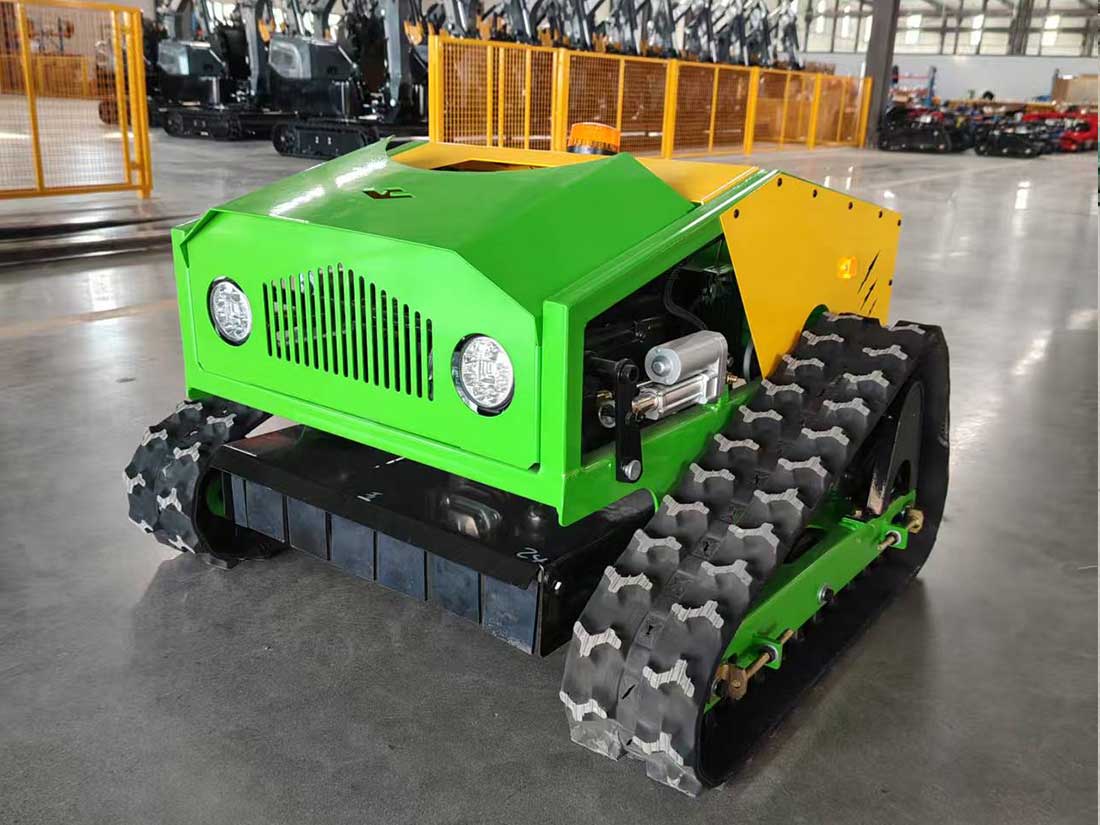
1. The Challenge: Managing Grass Across Difficult Terrain
Imagine a landscaping contractor responsible for maintaining a large property that includes open grassland, sloping banks, roadside vegetation, and sections of uneven ground. The team needs to maintain a consistent cutting appearance while managing labor, equipment access, and operational safety.
Using a conventional grass lawn mower may be appropriate for flat, accessible areas. However, steep slopes and irregular surfaces can create additional challenges.
Limited Access and Maneuverability
Traditional riding mowers and walk-behind machines may be difficult to operate in narrow spaces, on uneven ground, or near certain landscape obstacles. Turning around in confined areas can also require additional maneuvering.
A remote-controlled grass lawn mower may offer a more flexible approach when the machine is designed for the terrain and cutting conditions involved. Its compact design, tracked undercarriage, or other specialized features can help it navigate selected challenging areas.
Operator Safety on Slopes
Operating mowing equipment on steep or unstable ground requires careful attention to traction, stability, and the manufacturer's operating limits. A loss of traction or an unexpected change in ground conditions can create serious hazards.
Remote-controlled mowing allows the operator to stand away from the machine instead of riding on it or walking immediately behind it. This can reduce direct exposure to certain hazards, although it does not eliminate all risks. Operators still need suitable training, a clear view of the working area, and compliance with the equipment's slope and safety specifications.
Repetitive Work and Workflow Pressure
Large mowing projects often involve repeated passes, overlapping cutting paths, obstacle avoidance, and movement between work areas. Poorly planned routes can lead to unnecessary repositioning and inconsistent cutting.
A suitable grass lawn mower can help address these workflow issues when it is integrated into a well-organized mowing plan. Remote control provides the operator with flexibility to adjust direction and machine movement while observing the cutting process.
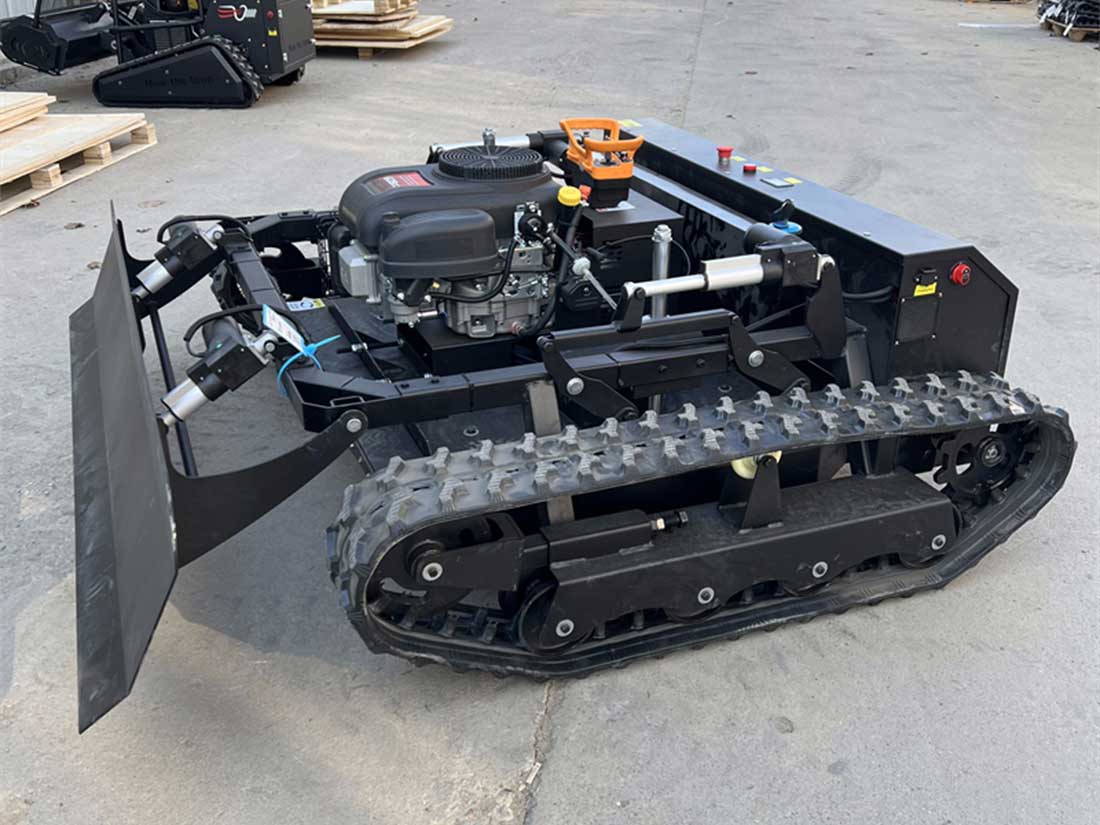
2. The Solution: Introducing Remote-Controlled Mowing Equipment
After reviewing the site's requirements, the contractor in this illustrative scenario considers adding a remote-controlled grass lawn mower to the equipment fleet.
Rather than replacing every existing mower, the team assigns equipment according to terrain, vegetation conditions, and the level of precision required. Conventional machines continue handling appropriate open and relatively flat areas, while the remote-controlled mower is evaluated for selected slopes, rough ground, and difficult-to-access sections.
This mixed-equipment strategy reflects an important principle in professional grounds maintenance: the best machine is the one that matches the application, not necessarily the one with the most features.
Track Design and Ground Contact
Many remote-controlled mowers use tracks to provide ground contact across uneven terrain. Track systems can offer traction advantages over some wheeled designs, depending on the surface, track configuration, machine weight, and operating conditions.
When evaluating a tracked grass lawn mower, professionals should consider:
Track width, tread design, and ground-contact characteristics.
Traction on dry grass, damp soil, and other expected surfaces.
Stability when traveling across slopes within the manufacturer's permitted limits.
Ground pressure and the potential for turf damage.
Clearance and maneuverability around obstacles.
Tracks alone do not guarantee safe operation on every slope. Wet grass, loose soil, hidden rocks, and changing ground conditions can affect machine stability. Always follow the manufacturer's specified operating limits.
Cutting System and Vegetation Type
The cutting system is another major factor in selecting a grass lawn mower.
Rotary cutting systems are commonly used for grass and general vegetation maintenance, while flail systems may be suitable for certain rough-grass and heavier vegetation applications. The appropriate configuration depends on the mower design, vegetation density, desired finish, and site requirements.
Before choosing equipment, landscaping professionals should determine whether the primary task involves regularly maintained lawn grass, tall grass, weeds, brush-like vegetation, or a combination of conditions.
Matching the cutting system to the application helps avoid unnecessary strain on the machine and supports more consistent maintenance.
Remote Control and Safety Features
Remote-control capability allows the operator to direct the mower without sitting on the machine. Depending on the model, useful features may include an emergency-stop function, safety interlocks, status indicators, and controls for changing direction or cutting operation.
A professional assessment should confirm how these features work in practice. Operators should understand the control range, visibility requirements, response behavior, emergency procedures, and limitations imposed by obstacles or signal interference.
A grass lawn mower should never be selected on remote-control capability alone. Mechanical reliability, maintenance access, service support, and suitability for the intended terrain are equally important.
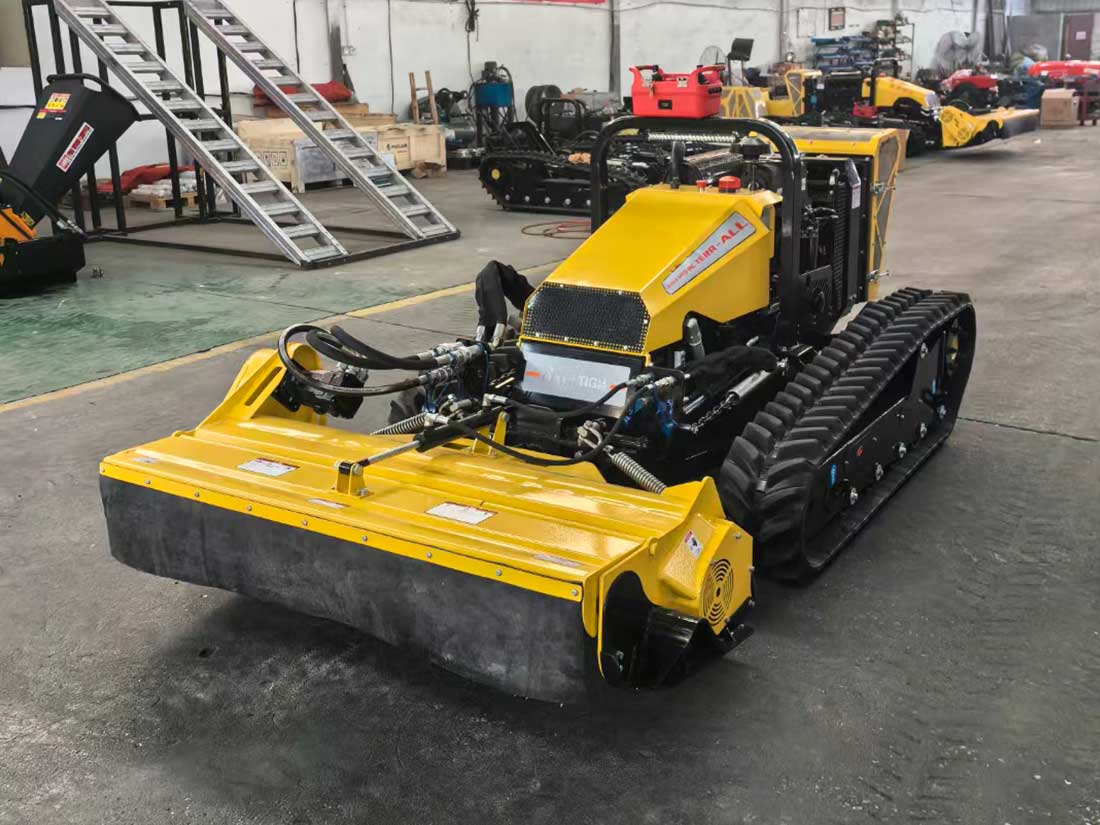
3. Improving Efficiency Through Better Mowing Practices
Remote-controlled equipment can support a more efficient mowing process, but efficiency depends on more than the machine itself. Work planning, operator training, maintenance, and cutting conditions all contribute to the outcome.
Step 1: Divide the Site into Work Zones
The first step is to divide the property into manageable sections according to terrain, grass height, obstacles, and access.
For example, the contractor may classify the site into:
Open areas suitable for conventional mowing equipment.
Sloping sections that may benefit from remote-controlled mowing.
Rough vegetation areas requiring a suitable heavy-duty cutting system.
Narrow or obstructed zones requiring careful maneuvering.
Areas that should be excluded because of unsafe ground conditions or equipment limitations.
This approach allows the team to assign the most appropriate grass lawn mower to each task rather than using a single machine for every condition.
Step 2: Plan the Cutting Route
A planned route helps reduce unnecessary travel and repeated passes. Operators should identify access points, turning areas, obstacles, and safe positions from which they can maintain a clear view of the mower.
On sloping ground, the route must follow the manufacturer's instructions regarding travel direction and permitted operating angles. Operators should never assume that a machine can safely traverse a slope simply because it has tracks.
For a remote-controlled grass lawn mower, careful route planning also helps maintain control of the cutting area and reduces avoidable repositioning.
Step 3: Match Speed to Grass Conditions
Moving too quickly through dense or tall vegetation can lead to uneven cutting, increased load on the cutting system, or repeated passes. Slowing down may improve cutting consistency when vegetation is heavy or the terrain is irregular.
The ideal operating speed depends on grass height, moisture, density, blade condition, machine power, and the required finish.
Experienced operators assess the cutting result rather than relying on speed alone. If a grass lawn mower leaves uncut strips or struggles under load, the operator may need to adjust travel speed, cutting height, route planning, or the selected equipment configuration.
Step 4: Use Remote Control to Improve Operator Positioning
One of the practical advantages of remote-controlled mowing is that the operator can choose a suitable position away from the moving machine.
This is especially relevant when mowing selected slopes or areas where direct operation would place the operator close to difficult terrain. The operator must still remain outside hazardous zones, maintain adequate visibility, and observe all safety procedures.
Remote control should be treated as a risk-management feature rather than permission to mow beyond the machine's rated capabilities.
Step 5: Inspect Equipment and Maintain Cutting Performance
Regular inspection is essential for every grass lawn mower, particularly when equipment works in rough or demanding conditions.
A practical maintenance routine may include checking:
Cutting blades or flails for wear, damage, and secure attachment.
Tracks, rollers, and undercarriage components for debris or abnormal wear.
Engine or motor systems according to the manufacturer's schedule.
Hydraulic components, where fitted, for leaks or damage.
Remote-control functions and emergency-stop operation.
Guards, fasteners, and other safety-related components.
Maintenance requirements vary by model. Following the manufacturer's service schedule helps identify problems before they interrupt work and supports dependable machine operation.
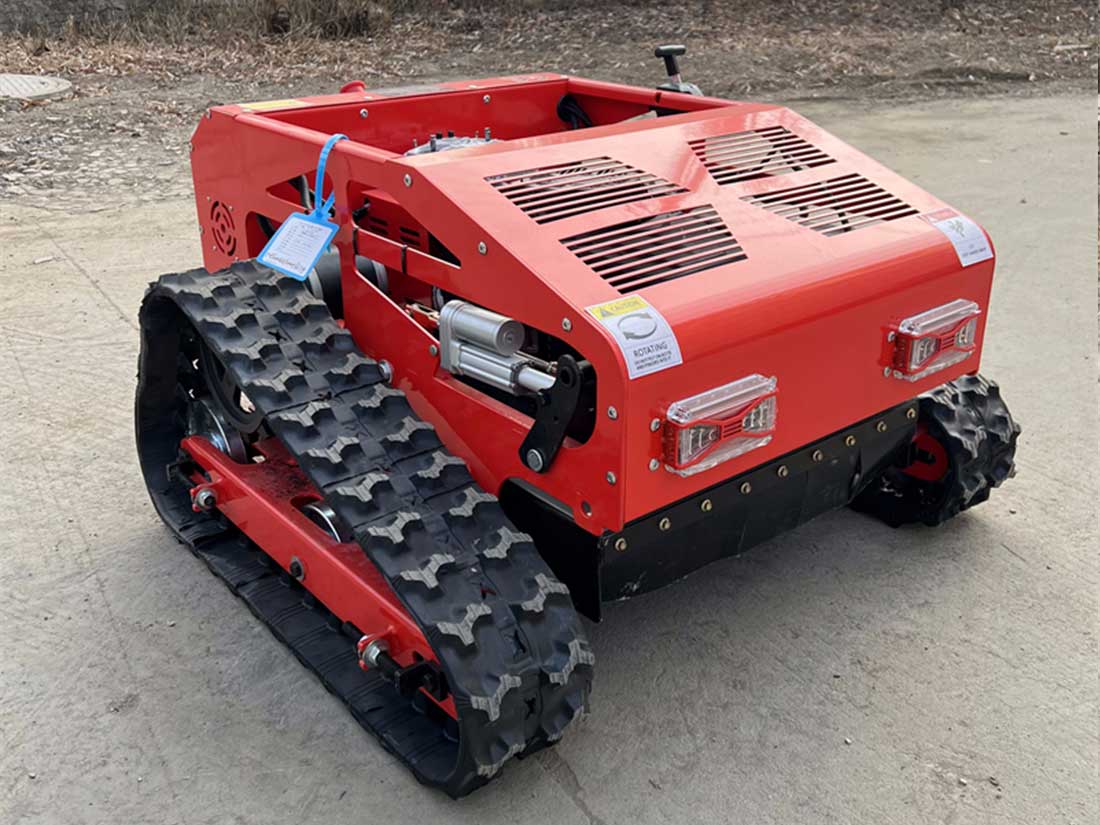
4. Evaluating the Results: What Does Improved Efficiency Mean?
In the illustrative contractor scenario, introducing a remote-controlled grass lawn mower creates an opportunity to review the mowing process more systematically. However, any claim of improved efficiency should be supported by operational data rather than assumptions.
Professional landscaping teams can assess the value of new equipment by tracking several practical indicators.
Time Required per Area
Record the time needed to complete comparable areas under similar conditions. Separate actual cutting time from setup, transport, refueling or charging, cleaning, and maintenance.
This distinction helps reveal whether a grass lawn mower improves overall job efficiency or simply changes how working time is distributed.
Cutting Quality and Rework
Inspect completed areas for consistency, missed strips, uneven cutting, and damage to the turf. Record whether the team needs additional passes or manual trimming after mowing.
A remote-controlled mower that matches the vegetation and terrain may reduce certain rework requirements, but the outcome depends on the cutting system, operator skill, and site conditions.
Operator Exposure and Safety
Document the locations where the operator works, the hazards encountered, and the safety procedures required for each task.
Remote-controlled mowing may reduce the need for operators to ride on or walk directly behind the machine in selected applications. Nevertheless, site-specific risk assessments remain necessary, and all incidents, near misses, and equipment limitations should be recorded.
Fuel or Energy Consumption
Measure fuel use or electrical energy consumption across comparable jobs. Consider the machine's operating time, load, travel distance, and idle time.
A grass lawn mower that completes work efficiently is not automatically the one with the lowest fuel or energy consumption. Comparing actual operating data provides a more reliable basis for equipment decisions.
Maintenance and Ownership Costs
Track routine servicing, wear parts, unexpected repairs, transportation, and downtime. These costs can significantly affect the long-term value of mowing equipment.
The most suitable grass lawn mower is not necessarily the least expensive machine to purchase. Professional buyers should consider the total cost of ownership alongside performance, safety, and service availability.
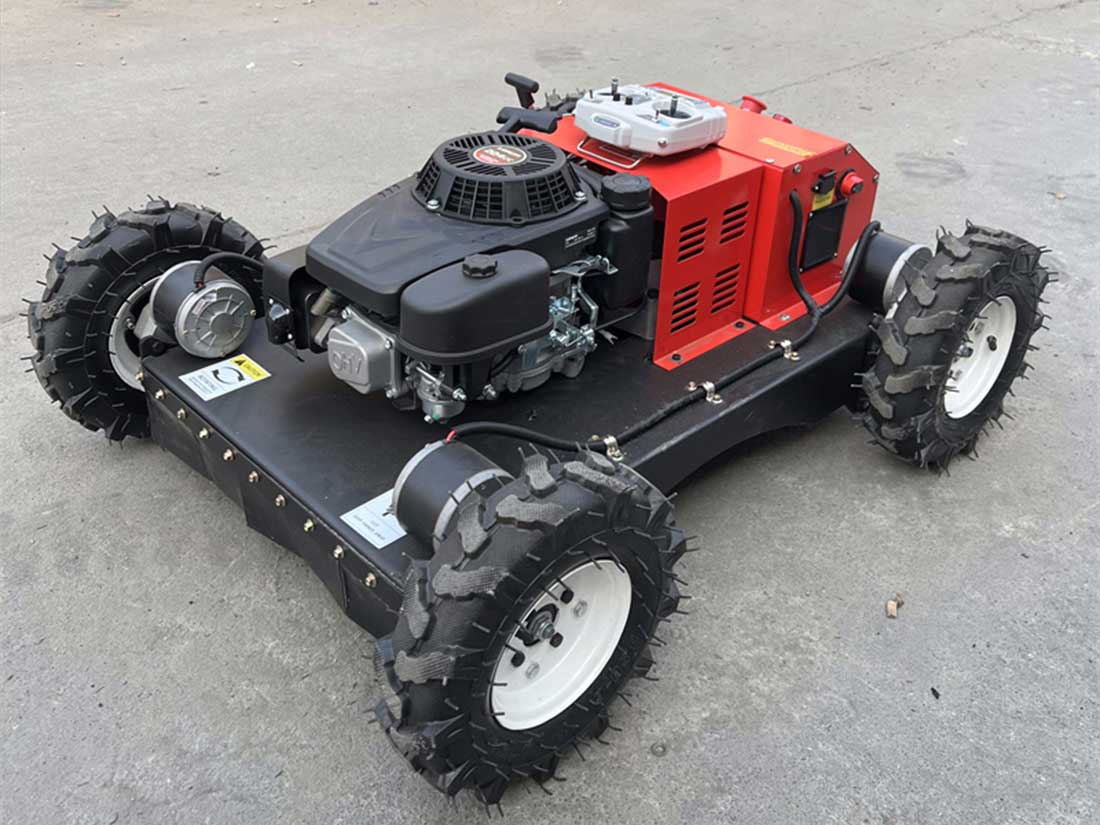
5. Common Mistakes When Choosing a Remote-Controlled Grass Lawn Mower
Even advanced equipment can underperform if it is poorly matched to the job. Avoiding several common mistakes can improve the likelihood of a successful investment.
Choosing Based on Slope Claims Alone
A machine's advertised slope capability should be checked against its operating manual and the actual site conditions. Maximum slope ratings may depend on surface type, direction of travel, attachment configuration, and other restrictions.
Do not compare slope figures without understanding how they were determined.
Ignoring Vegetation Conditions
A mower designed primarily for maintained grass may not be suitable for dense weeds or woody vegetation. Conversely, a heavy-duty cutting system may be unnecessary for fine lawn maintenance.
Choose a grass lawn mower according to the actual vegetation, required cutting quality, and expected workload.
Overlooking Service and Parts Availability
Routine maintenance and replacement parts are part of equipment ownership. Before purchasing, ask about recommended service intervals, common wear components, technical documentation, and the availability of support.
For commercial users, access to reliable after-sales assistance can be an important factor in reducing avoidable downtime.
Expecting Automation to Replace Operator Training
Remote-controlled equipment still requires competent operation. Workers need to understand machine controls, safe working distances, slope limitations, emergency procedures, and pre-operation inspections.
Training helps operators use the equipment consistently and recognize conditions in which mowing should stop.
Failing to Test the Machine in Realistic Conditions
Where possible, evaluate the mower under representative working conditions before making a purchase decision. Consider the site's steepest permitted working sections, typical vegetation, surface moisture, access restrictions, and transport requirements.
A practical assessment can reveal whether the grass lawn mower is suitable for the job and whether the operating workflow needs adjustment.
6. Why Remote-Controlled Mowing Matters for Professional Landscaping
Remote-controlled mowing is becoming an important option for businesses that manage challenging vegetation and hard-to-access landscapes. Its value comes from combining appropriate cutting capability with operator positioning, terrain adaptability, and a more deliberate approach to job planning.
For landscaping contractors, property managers, municipalities, and vegetation maintenance teams, the main considerations are practical:
Greater flexibility: A suitably configured remote-controlled grass lawn mower may be useful in areas where conventional equipment is difficult to position or maneuver.
Potential safety advantages: Remote operation can reduce direct operator exposure to selected hazards, provided the machine is used within its limits and appropriate safety controls are followed.
More structured workflows: Dividing sites into zones and assigning equipment according to conditions can help teams plan their work more effectively.
Application-specific cutting: Selecting the correct cutting system can help address differences between maintained grass, tall grass, and rough vegetation.
Measurable performance: Tracking working time, cutting quality, fuel or energy use, maintenance, and rework provides a sound basis for evaluating the equipment's actual contribution.
These benefits are not automatic. Results depend on machine specifications, operator experience, site conditions, maintenance practices, and the quality of the work plan.
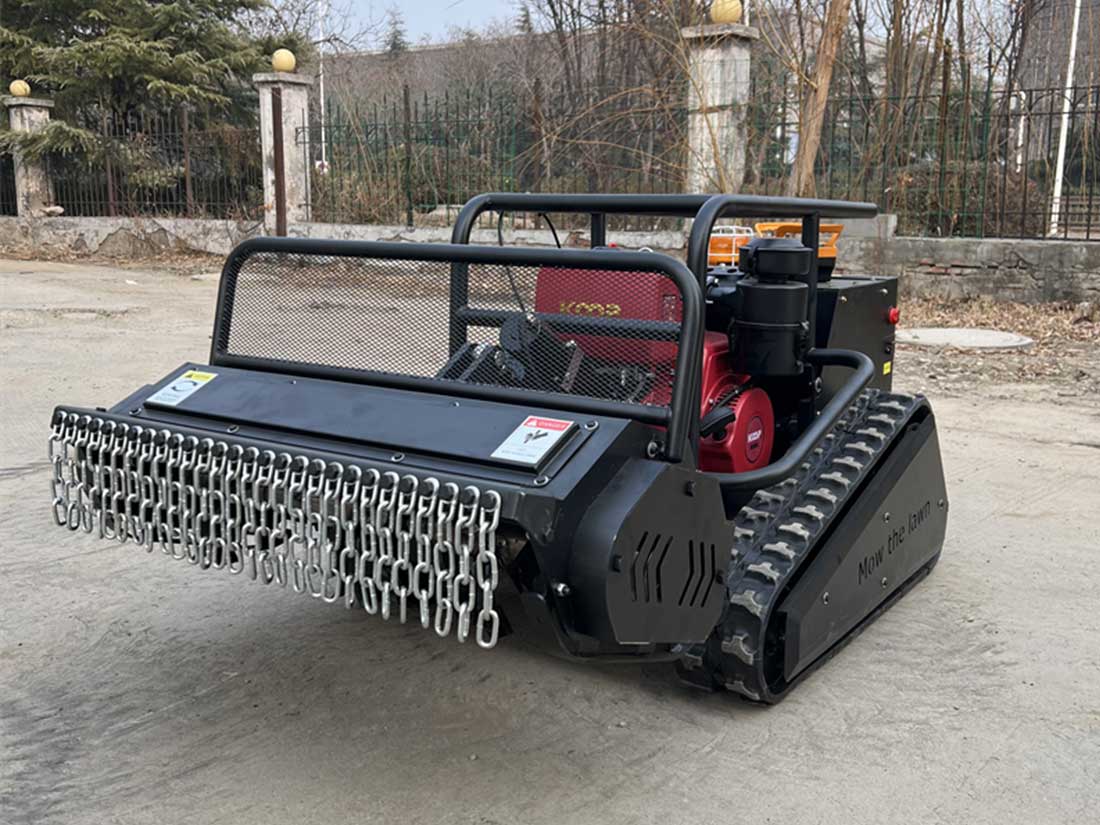
7. Explore Remote-Controlled Mowing Solutions at JY Lawn Mower
Selecting the right grass lawn mower requires a clear understanding of the terrain, vegetation, working area, and operational priorities. A remote-controlled model may be worth considering when conventional mowing methods present challenges involving access, maneuverability, or operator positioning.
JY Lawn Mower provides an online starting point for exploring remote-controlled mowing equipment and related solutions. Before selecting a machine, professional buyers should review the available specifications and confirm the following details with the supplier:
Whether the machine is suitable for the intended grass and vegetation types.
The manufacturer's permitted slope and operating conditions.
Cutting width, cutting-height adjustment, and expected working performance.
Track design, ground clearance, and transport requirements.
Remote-control range, safety functions, and operating procedures.
Maintenance requirements, replacement parts, warranty terms, and technical support.
These questions help ensure that a grass lawn mower is selected according to real working requirements rather than marketing claims alone.
Visit https://www.jylawnmower.com/ to explore JY Lawn Mower's offerings and identify potential remote-controlled mowing solutions for your application.
Conclusion: Building a More Efficient Mowing Strategy
Improving mowing efficiency starts with understanding the challenges of the site and matching equipment to the work. Remote-controlled mowing can provide practical advantages for selected difficult-terrain applications by allowing operators to control the machine from a suitable position, plan cutting routes more carefully, and choose equipment configurations for specific vegetation conditions.
As this illustrative success story demonstrates, choosing a grass lawn mower should involve more than comparing purchase prices or advertised performance figures. Terrain suitability, cutting quality, operator training, maintenance, and total operating costs all deserve careful consideration.
For professional landscaping teams seeking to improve their mowing workflow, a remote-controlled grass lawn mower may be a valuable addition to an existing equipment fleet. The best decision comes from matching the machine to the application, following manufacturer guidance, and evaluating results with reliable operational data.
To learn more about remote-controlled mowing equipment and potential solutions for your work, visit JY Lawn Mower.