 English
 Spanish
 Portuguese
 French
 Italian
 Remote Mower
Introduction
Maintaining roadside embankments, steep grass areas, drainage slopes, and uneven green spaces is one of the more demanding tasks in professional vegetation management. Conventional mowing equipment can become difficult to operate when terrain conditions change, particularly where slopes, restricted access, dense vegetation, or uneven ground are involved.
This is where an embankment mower can provide a valuable professional solution.
An embankment mower is designed for vegetation management in areas where standard lawn mowing equipment may not be the most practical choice. When combined with remote-controlled mowing technology, an embankment mower can give professional operators greater flexibility in positioning the machine and managing difficult terrain.
For landscaping contractors, roadside maintenance teams, municipalities, agricultural operators, and property managers, the combination of an embankment mower and remote operation represents an important development in modern vegetation management.
The Challenge: Maintaining Difficult Embankments
Embankments are rarely uniform.
A typical maintenance area may include:
- Sloping ground
- Uneven surfaces
- Tall grass
- Dense vegetation
- Drainage channels
- Rocks or other obstacles
- Restricted access
- Variable ground conditions
These factors can make routine mowing more demanding than maintaining a conventional flat lawn.
In professional operations, the challenge is not simply cutting vegetation. Teams must also consider machine stability, traction, operator positioning, accessibility, productivity, and safe working procedures.
An embankment mower is therefore evaluated as a complete vegetation-management system rather than simply as a cutting machine.
The Case for Remote-Controlled Embankment Mowing
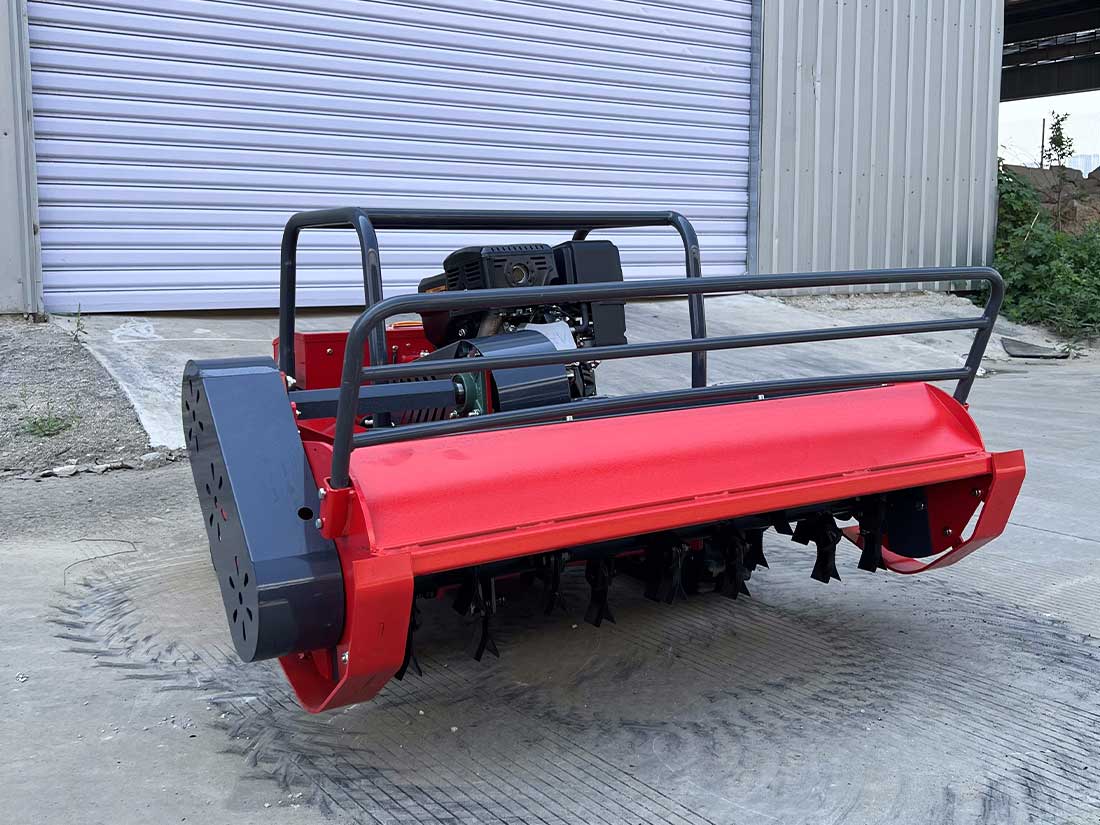
A remote-controlled embankment mower changes the way an operator interacts with the machine.
Instead of remaining directly on or immediately behind the mower, the operator can control the machine remotely from a suitable position.
This can be particularly useful when the mowing area contains difficult slopes.
Remote-controlled mowing equipment can provide:
- Greater operator positioning flexibility
- Remote steering and movement control
- Improved visibility of the machine's working area
- Flexible access to difficult vegetation
- A professional alternative to conventional mowing methods
However, remote operation does not remove the need for proper safety procedures. Operators must always follow the equipment manufacturer's instructions and specified operating limits.
Embankment Mower: A Professional Approach to Slope Maintenance
An embankment mower must be selected according to the terrain where it will operate.
Professional buyers should evaluate several technical and operational factors.
Traction
Traction is fundamental when mowing inclined or uneven ground. The drive system must be appropriate for the expected surface conditions.
Stability
Machine stability is especially important on slopes. Weight distribution, chassis configuration, and ground contact all influence operating behavior.
Cutting System
The cutting system should match the vegetation being managed. Grass, weeds, and heavier vegetation can place different demands on mowing equipment.
Remote Control
A responsive remote-control system allows the operator to manage movement and mowing functions from a suitable position.
Maintenance
Professional equipment should also be evaluated according to maintenance accessibility, replacement parts, and technical support.
How an Embankment Mower Can Improve the Workflow
Consider a professional contractor responsible for maintaining a long roadside embankment.
Using conventional mowing equipment may require the team to carefully manage operator positioning, machine access, and terrain conditions.
With an appropriately configured embankment mower, the workflow can be reorganized around remote operation.
A typical process may include:
1. Site inspection → 2. Hazard identification → 3. Machine positioning → 4. Remote mowing → 5. Area inspection → 6. Routine maintenance
This approach allows the operator to focus on machine control while maintaining an appropriate external position.
The actual productivity achieved will depend on the machine, vegetation density, terrain, cutting width, travel speed, operator experience, and site conditions.
Safety: The Central Advantage of Remote Operation
The strongest reason to consider a remote-controlled embankment mower is often operator positioning.
Slopes can present additional risks compared with flat ground. Remote operation allows the operator to control the equipment without necessarily following the machine directly across every part of the embankment.
Before using an embankment mower, professional operators should inspect:
- Slope characteristics
- Ground firmness
- Wet or slippery areas
- Rocks and debris
- Trees and structures
- Drainage channels
- People and animals
- Potential obstacles
The operator should maintain appropriate visibility and remain within the manufacturer's specified operating range and terrain limitations.
A remote-controlled embankment mower should be viewed as a tool that supports professional safety practices—not as a replacement for them.
Embankment Mower Applications
The versatility of an embankment mower makes it relevant to several professional industries.
Roadside Maintenance
Roadside embankments frequently require regular vegetation control. Specialized mowing equipment can help maintenance teams approach these areas more systematically.
Landscaping
Large landscaping projects may include slopes, estates, parks, and irregular green spaces where an embankment mower can provide an additional mowing option.
Agricultural Maintenance
Agricultural properties can contain large areas with uneven or inclined terrain. Depending on vegetation and site requirements, remote-controlled mowing equipment may be suitable for specialized vegetation management.
Municipal Green-Space Management
Municipalities and public maintenance teams may need to manage extensive grass areas, slopes, drainage zones, and other difficult locations.
What Makes a Good Embankment Mower?
Not every mower is an appropriate embankment mower.
Professional users should consider the complete machine configuration.
Terrain Capability
The equipment must be appropriate for the intended terrain.
Mowing Capacity
The cutting system should be matched to the expected vegetation.
Maneuverability
An embankment mower needs predictable movement when operating around slopes, obstacles, and irregular surfaces.
Control Precision
Remote-controlled operation should provide accurate machine control.
Durability
Commercial equipment needs to withstand repeated professional use and demanding working environments.
Serviceability
Regular inspection and maintenance are essential for maintaining reliable equipment performance.
Embankment Mower vs. Conventional Mowing Equipment
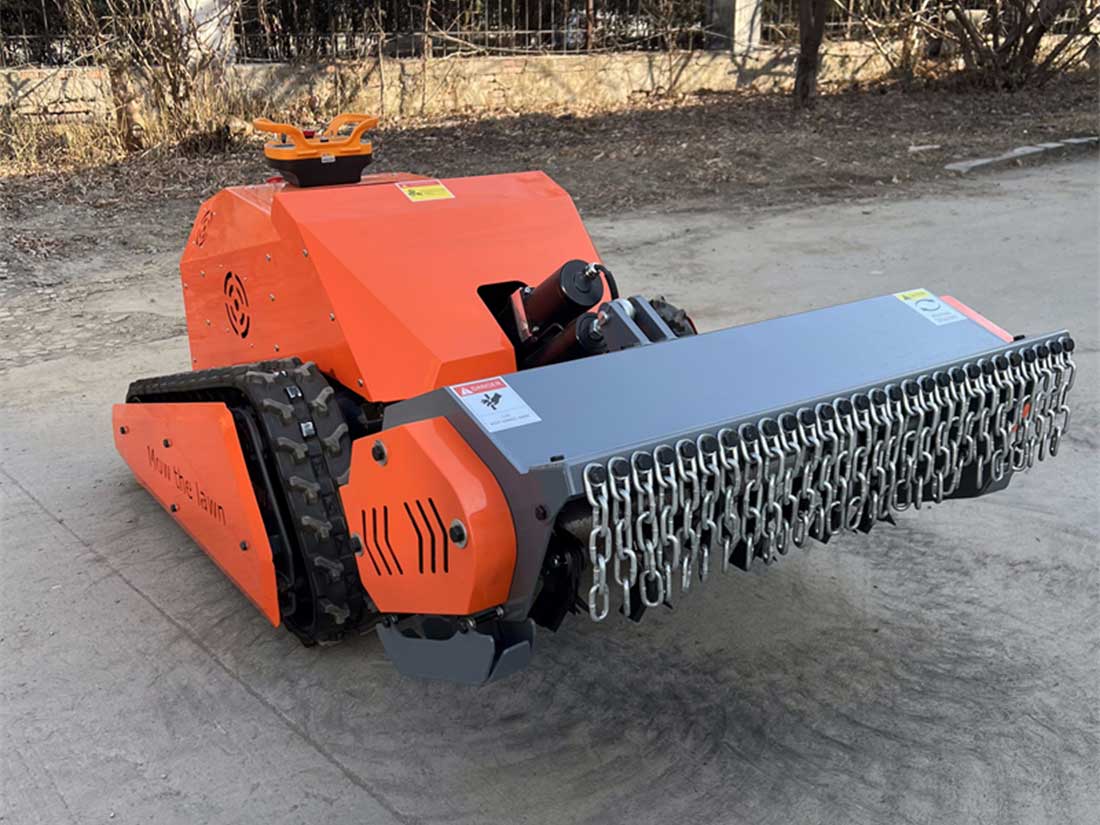
An embankment mower is not necessarily the best solution for every mowing application.
For a small, flat residential lawn, conventional equipment may be more practical.
The value of an embankment mower becomes more apparent when the job involves:
- Slopes
- Roadside embankments
- Uneven ground
- Difficult access
- Large vegetation-management areas
- Professional maintenance projects
The correct equipment should always be selected according to the actual site requirements.
Remote-Controlled Mowing Equipment: Beyond the Mower
A professional remote-controlled embankment mower should be considered as part of a complete equipment system.
The operator, remote-control system, drive system, cutting mechanism, chassis, and maintenance program all contribute to the overall result.
This is why experienced equipment selection focuses on the complete workflow rather than one specification.
A useful evaluation framework is:
Terrain + Vegetation + Traction + Cutting System + Remote Control + Safety + Maintenance
When these elements are appropriately matched, remote-controlled mowing equipment can become an effective solution for demanding vegetation-management operations.
Professional Experience Matters
An embankment mower may look straightforward, but real-world performance depends heavily on how the machine is selected and operated.
Experienced maintenance teams understand that terrain conditions can change considerably even within the same project.
A dry, firm slope may behave very differently from wet or loose ground. Vegetation height and density can also influence cutting performance.
For this reason, professional users should avoid selecting an embankment mower based solely on advertised power or price.
Instead, they should examine how the complete machine fits the actual working environment.
Building a More Efficient Mowing Strategy
The objective of using an embankment mower is not simply to replace conventional mowing.
The greater opportunity is to create a more efficient working strategy.
A professional team can combine:
- Site planning
- Proper equipment selection
- Remote operation
- Trained operators
- Routine inspection
- Preventive maintenance
This approach can help improve consistency and operational control across difficult mowing areas.
Remote-controlled mowing equipment is particularly interesting because it changes both the machine's operating method and the way the operator can organize the work.
A Practical Success Story
Imagine a vegetation-maintenance contractor responsible for several difficult roadside embankments.
The contractor needs equipment capable of handling uneven grass areas while allowing operators to work from a suitable position.
After assessing the terrain, vegetation, access requirements, and safety procedures, the company chooses an appropriately configured remote-controlled embankment mower.
The maintenance workflow is then organized around:
- Inspecting each embankment.
- Establishing a safe operating zone.
- Positioning the embankment mower.
- Operating the mower remotely.
- Monitoring the cutting process.
- Inspecting the completed area.
- Performing routine equipment checks.
The key lesson from this type of professional application is that successful mowing depends on the combination of suitable technology, trained personnel, and disciplined site management.
It is the system—not the machine alone—that determines the quality of the operation.
The Future of Embankment Mowing
Remote-controlled mowing equipment is part of a wider movement toward smarter professional vegetation management.
Future development of the embankment mower may focus on areas such as:
- More precise remote controls
- Improved traction
- Better machine monitoring
- Enhanced operator assistance
- Greater energy efficiency
- More adaptable cutting systems
As professional landscaping and roadside maintenance become increasingly focused on efficiency and operational safety, remote-controlled mowing technology is likely to remain an important area of equipment development.
Choosing an Embankment Mower for Your Operation
Before purchasing an embankment mower, professional users should answer several practical questions:
What terrain will the machine operate on?
Understand the slope, surface, and access conditions.
What vegetation needs to be cut?
Grass and heavier vegetation can require different cutting configurations.
How large are the areas?
Large areas may place greater demands on productivity and machine durability.
How will operators control the machine?
Evaluate the remote-control system and operating visibility.
What maintenance support is available?
Consider routine servicing, replacement components, and technical assistance.
This structured approach can help companies select remote-controlled mowing equipment that matches their actual requirements.
Explore Professional Remote-Controlled Mowing Equipment
If your business manages roadside embankments, slopes, large green areas, agricultural land, or challenging landscaping projects, an embankment mower may be worth considering as part of a professional vegetation-management strategy.
For more information about remote-controlled mowing equipment and professional mowing solutions, visit:
JY Lawn Mower – Professional Remote-Controlled Mowing Equipment
JY Lawn Mower provides information on professional mowing solutions for demanding vegetation-management applications.
Conclusion
The embankment mower represents a specialized approach to maintaining slopes, roadside vegetation, uneven ground, and other challenging green areas.
When combined with remote-controlled mowing technology, an embankment mower can give professional operators greater flexibility in machine positioning while supporting a more organized approach to difficult mowing tasks.
The key to success is not simply purchasing an embankment mower. Professional results depend on matching the machine to the terrain and vegetation, following operating limits, training operators, inspecting the work area, and maintaining the equipment correctly.
For contractors and maintenance teams searching for a modern approach to difficult terrain, remote-controlled mowing equipment deserves serious consideration.
Explore professional mowing solutions at: