 English
 Spanish
 Portuguese
 French
 Italian
 Remote Mower
Uneven ground is one of the most challenging environments for professional vegetation management. Slopes, rough grass, irregular surfaces, roadside embankments, orchards, and large landscaped areas can create serious difficulties for conventional mowing equipment.
In these conditions, the remote controlled lawn mower is becoming an increasingly practical solution for professional operators. By separating the operator from the machine and combining remote operation with specialized mowing equipment, this technology can provide greater control and a more flexible approach to difficult terrain.
This case study examines a typical professional application scenario and explains how a remote controlled lawn mower can be integrated into a safer and more efficient mowing workflow.
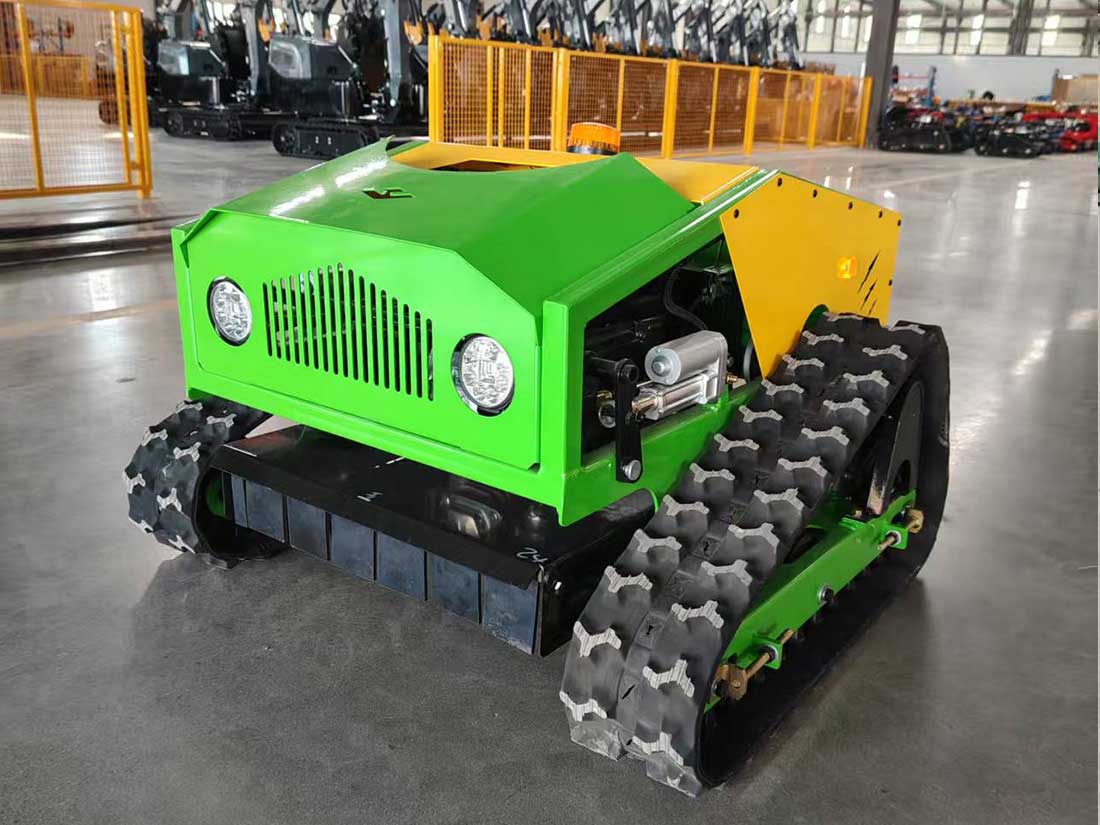
The Challenge: Mowing Uneven Ground
For professional landscaping and vegetation-management teams, uneven ground presents several challenges at the same time.
A conventional wheeled mower may perform very well on flat, accessible lawns. However, performance can become more complicated when the working area includes steep sections, rough surfaces, obstacles, or inconsistent vegetation.
The operator must consider:
Machine traction
Ground stability
Cutting consistency
Operator positioning
Obstacles
Access limitations
Vegetation density
Working efficiency
On uneven ground, simply increasing engine power does not solve every problem.
A professional mower must be able to move predictably across the working area while maintaining sufficient traction and cutting performance. At the same time, the operator needs a clear view of the machine and its surroundings.
This is where a remote controlled lawn mower offers a different approach.
The Professional Solution: Remote-Controlled Mowing Equipment
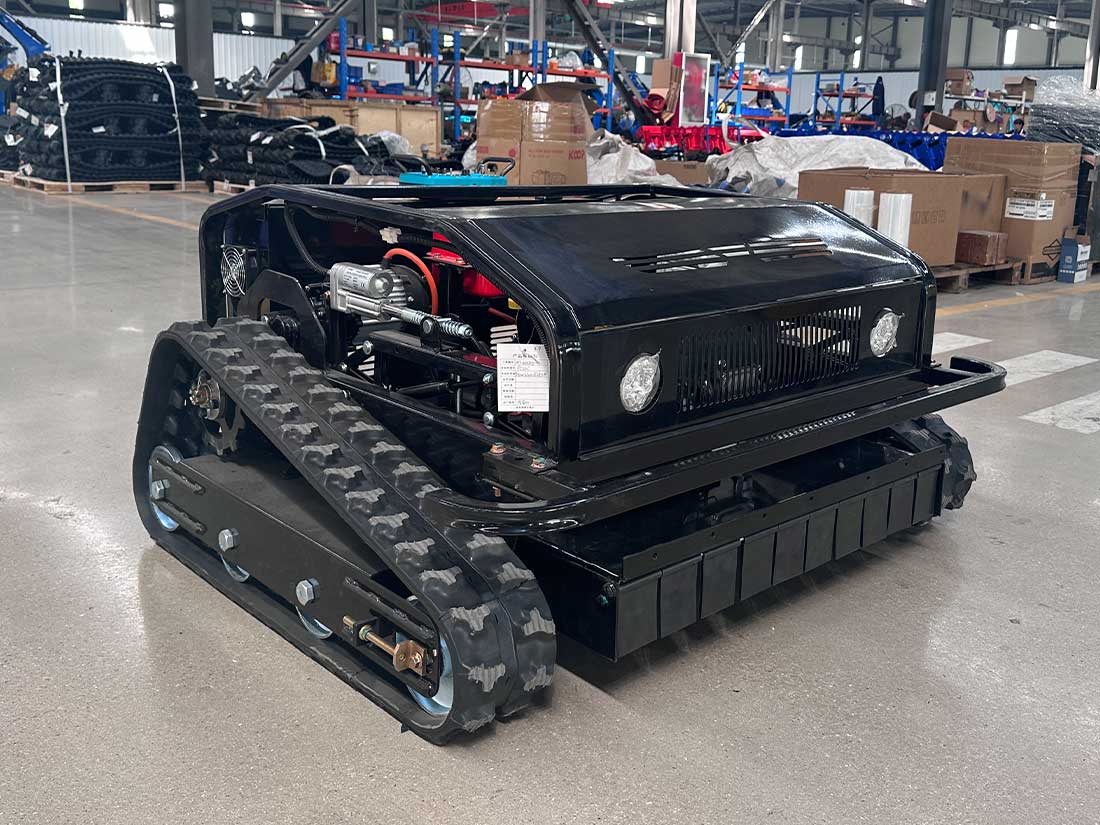
In this application scenario, the mowing team uses a remote controlled lawn mower designed for challenging terrain.
Instead of requiring the operator to remain directly behind or on the mower, remote control allows the machine to be operated from a separate position.
This provides an important operational advantage.
The operator can select a suitable position from which to observe the machine and working area, then control the mower as it moves through uneven sections.
The value of the system therefore comes from more than the remote-control transmitter. A professional remote controlled lawn mower needs to combine several technologies:
Remote machine control
Stable mobility
Suitable traction
Appropriate cutting equipment
Strong structural components
Precise steering
Reliable power transmission
Practical maintenance access
The combination creates a complete remote-controlled mowing system rather than simply a conventional mower with a remote attached.
Why Crawler Mobility Matters
One of the key considerations when selecting a remote controlled lawn mower for uneven ground is the machine's mobility system.
Crawler tracks can provide advantages in applications where ground contact and traction are important. Compared with conventional wheels, tracks distribute machine contact across a larger area and can provide a stable platform for moving across irregular surfaces.
However, professionals should understand that crawler tracks are not a guarantee of safe operation on every type of terrain.
Actual performance depends on factors such as:
Slope angle
Soil condition
Moisture
Surface stability
Vegetation
Machine weight
Attachment configuration
Operator experience
Professional equipment selection should therefore begin with a detailed assessment of the actual working environment.
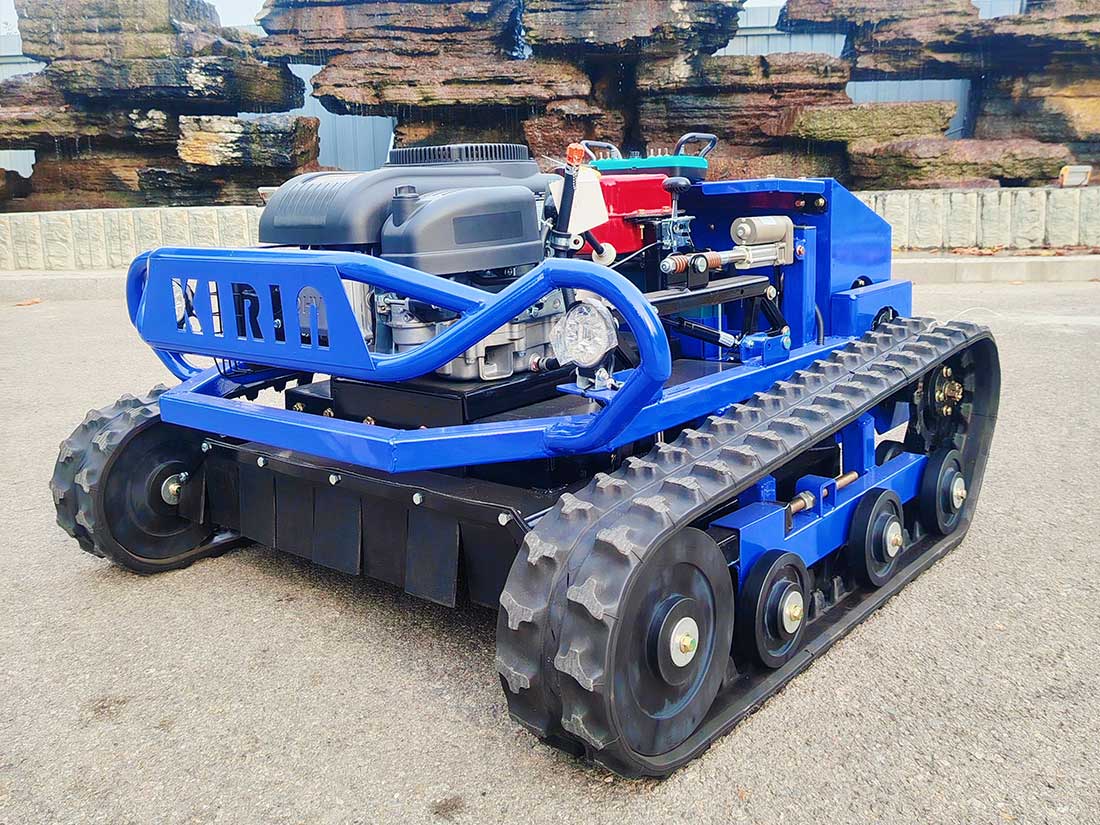
Case Study Scenario: A Difficult Landscape
Imagine a professional landscaping contractor responsible for maintaining a large property containing flat grass, uneven ground, sloped sections, and areas with dense vegetation.
The flat sections can be handled efficiently with conventional equipment.
The difficult sections are different.
Some areas are too irregular for comfortable walk-behind mowing. Other sections require the operator to work close to slopes or obstacles. Moving heavy equipment repeatedly across the property also adds time to the operation.
The contractor introduces a remote controlled lawn mower for the difficult sections while continuing to use conventional machinery where it remains the most practical choice.
This mixed-equipment strategy is important.
Professional mowing does not require replacing every existing mower with remote-controlled equipment. Instead, the remote controlled lawn mower becomes a specialized tool for areas where its characteristics provide a clear operational advantage.
Step 1: Assess the Working Area
Before starting the mowing operation, the team evaluates the terrain.
The operator identifies:
Steep areas
Uneven surfaces
Soft ground
Drainage channels
Trees
Rocks
Fences
Other obstacles
Areas with restricted access
This assessment determines where the remote-controlled mower should be used.
Professional operators should never treat the entire property as one uniform surface. Different terrain conditions require different mowing strategies.
Step 2: Establish a Safe Operating Position
The operator then selects a position that provides good visibility of the remote controlled lawn mower and its working environment.
This is one of the major differences between remote-controlled and conventional mowing.
The operator does not need to physically follow the mower through every difficult section.
Instead, the operator can maintain an appropriate distance and direct the machine remotely.
This can be particularly useful when mowing slopes, rough ground, or areas where direct operator access is inconvenient.
Step 3: Controlled Mowing
The remote controlled lawn mower is then guided through the designated working area.
Rather than making aggressive movements, experienced operators use controlled steering and progressive passes.
This approach helps maintain consistent cutting and reduces unnecessary machine movement.
On uneven terrain, professional mowing is often about control rather than speed.
A machine that moves predictably and allows accurate directional corrections can be more useful than equipment designed primarily for maximum cutting speed.
Step 4: Adapt the Cutting Strategy
Uneven ground often contains different types of vegetation.
One section may contain relatively short grass, while another may contain tall, dense growth.
The remote controlled lawn mower therefore needs an appropriate cutting system for the actual vegetation.
Professional users should evaluate:
Cutting width
Cutting height
Blade configuration
Flail configuration where applicable
Motor or engine capacity
Deck construction
Cutting-system durability
The correct cutting configuration can have a major impact on productivity and cutting quality.
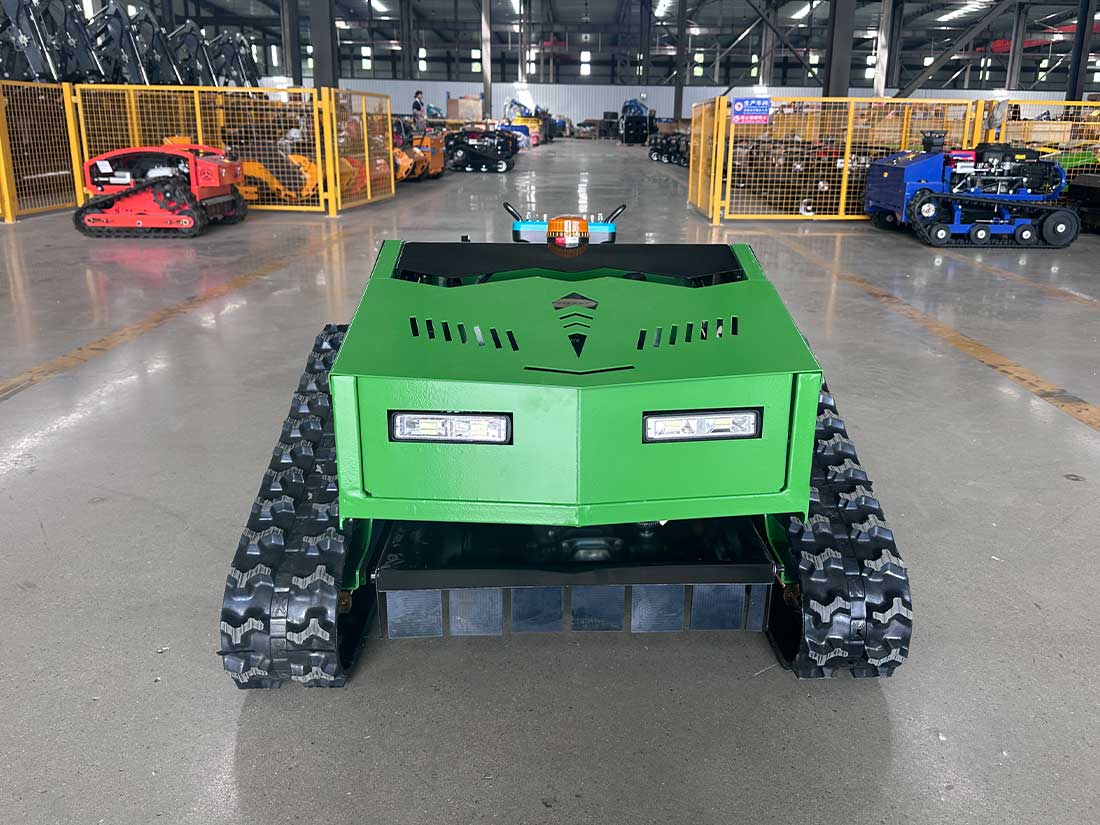
Safety Benefits of Remote Operation
Safety is one of the strongest reasons professionals consider a remote controlled lawn mower.
When working on uneven ground, the operator may need to deal with unstable surfaces, slopes, obstacles, and changing ground conditions.
Remote operation allows the operator to control the machine without necessarily standing directly beside it.
This can improve operator positioning and reduce the need to physically walk across difficult sections.
However, remote operation should never be interpreted as eliminating risk.
Professional operators still need to follow appropriate safety procedures, maintain clear visibility, understand machine limitations, inspect the working area, and operate within the manufacturer's specified conditions.
The remote controlled lawn mower is a tool for improving the working method—not a replacement for professional safety procedures.
Application in Roadside Maintenance
Uneven ground is particularly common in roadside vegetation management.
Roadside areas may include embankments, drainage channels, slopes, rough grass, and difficult-to-access sections.
Professional roadside mowing equipment must therefore combine mobility, cutting capability, and operator control.
The existing project material identifies roadside mowing equipment as relevant to municipalities, landscaping companies, agricultural contractors, and road-maintenance professionals.
In suitable applications, a remote controlled lawn mower can be used to manage difficult roadside vegetation while allowing the operator to remain in a more controlled position.
For roadside operations, traffic management and work-zone safety remain essential. The equipment should always be used according to local regulations and professional site procedures.
Application in Landscaping
Landscaping contractors frequently manage properties that combine different terrain types.
A large commercial landscape may include:
Open lawns
Slopes
Rough grass
Trees
Drainage areas
Uneven sections
Difficult-to-access vegetation
A remote controlled lawn mower can be assigned specifically to the difficult sections.
This allows the contractor to create a more flexible mowing fleet.
Conventional equipment can remain productive on flat lawns, while remote-controlled mowing equipment can handle terrain where remote operation and specialized mobility are more appropriate.
Application in Agriculture and Orchards
Agricultural land and orchards can also contain uneven ground and vegetation that is difficult to access with conventional equipment.
In these environments, maneuverability becomes particularly important.
A remote controlled lawn mower can provide operators with greater flexibility when working around trees, irregular ground, and vegetation between agricultural areas.
For professional agricultural contractors, the objective is not simply to find the most powerful mower.
The objective is to select equipment that matches the terrain, vegetation, access conditions, and frequency of operation.
Productivity Improvements Through Better Workflow
A major professional advantage of the remote controlled lawn mower is its potential to improve the overall workflow.
Productivity is not simply measured by how quickly the blades rotate.
A professional operation also needs to consider:
Setup time
Transportation
Machine positioning
Operator movement
Terrain accessibility
Cutting consistency
Repositioning
Maintenance
Downtime
If difficult terrain repeatedly forces workers to use slower or more physically demanding methods, introducing specialized remote-controlled mowing equipment may improve the overall process.
The goal is to make difficult mowing more manageable rather than simply making the machine faster.
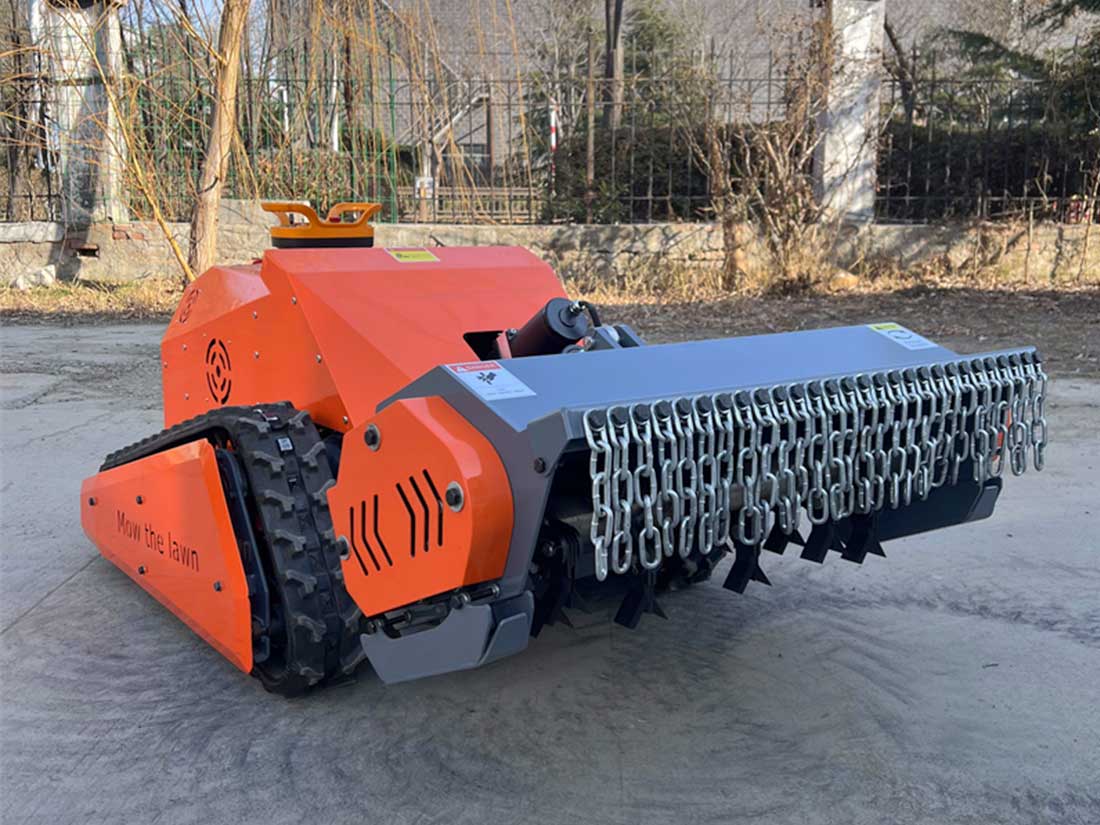
A Practical Comparison
Consider two approaches to the same uneven area.
Conventional approach
The operator works close to the mower and must physically follow the machine. Difficult slopes and irregular surfaces can make positioning more demanding. Additional effort may be required to move equipment between working areas.
Remote-controlled approach
The operator controls the remote controlled lawn mower from a suitable position while the machine works directly on the difficult section.
This creates greater separation between operator and machine and allows the operator to focus on machine positioning, cutting direction, and terrain conditions.
The difference is not necessarily that one machine is always better than another.
The important point is that remote-controlled equipment gives professional operators another option for difficult working environments.
What Professionals Should Check Before Buying
A remote controlled lawn mower should be evaluated as professional mowing equipment, not simply as a consumer lawn-care product.
Before purchasing, professionals should examine several factors.
Terrain capability
Determine whether the mower is designed for the slopes and ground conditions encountered in your operation.
Mobility
Evaluate the crawler or wheel system and its ability to maintain traction on the intended surfaces.
Cutting system
Select a cutting configuration suitable for the grass, weeds, brush, or other vegetation being managed.
Remote control
Check the responsiveness, usability, and practical operating range of the control system.
Construction quality
Professional machines need to withstand repeated operation in demanding environments.
Maintenance
Check access to service points, cutting components, tracks, hydraulic components where applicable, and other wear parts.
Support and spare parts
Long-term professional productivity depends not only on the initial machine purchase but also on maintenance support and replacement components.
Maintenance After Difficult-Terrain Operations
After using a remote controlled lawn mower on uneven ground, professional inspection should be part of the normal workflow.
Operators should check:
Tracks and undercarriage
Cutting components
Fasteners
Guards
Hydraulic components where applicable
Belts and drive components
Debris accumulation
Signs of abnormal wear
Grass, mud, and debris should be removed where necessary.
Cutting components should be inspected regularly, especially after working in rough vegetation or areas containing stones and other potential obstacles.
Preventive maintenance helps keep professional mowing equipment ready for the next job.
Lessons From the Case Study
This professional application scenario demonstrates several important principles.
First, difficult terrain requires equipment designed around the terrain rather than equipment selected solely for flat-ground performance.
Second, remote operation can change the operator's working position and provide greater flexibility when dealing with uneven surfaces.
Third, crawler mobility, cutting performance, machine control, and structural durability must work together.
Fourth, safety depends on the complete operating procedure, not simply on whether the machine has remote control.
Finally, the best professional equipment strategy may involve combining conventional and remote-controlled mowing equipment according to the specific conditions of each working area.
The Future of Professional Mowing
The growing interest in the remote controlled lawn mower reflects a broader shift in professional vegetation management.
Contractors are looking for equipment that can handle increasingly diverse working environments while improving operator control and productivity.
Remote-controlled mowing equipment is particularly relevant where conventional mowing becomes difficult because of terrain, access, vegetation, or operator positioning.
As technology continues to develop, future professional mowers are likely to focus on improved control systems, more efficient power management, stronger mobility, better cutting systems, and greater equipment versatility.
The remote controlled lawn mower is therefore becoming an important part of the conversation around modern professional mowing.
Conclusion
The main lesson from this case study is straightforward: uneven ground requires a different approach to mowing.
A remote controlled lawn mower can provide professional operators with a practical way to approach slopes, rough surfaces, embankments, orchards, landscapes, and other challenging areas.
The technology is most effective when remote control is combined with appropriate crawler mobility, reliable cutting equipment, strong construction, and disciplined professional operation.
For contractors evaluating new professional mowing equipment, the key question should not simply be, “How powerful is the mower?”
A better question is:
“Can this machine safely and efficiently solve the terrain problems we encounter every day?”
If the answer points toward remote-controlled mowing equipment, explore the professional solutions available from JY Lawn Mower and evaluate which remote-controlled mowing system best matches your terrain, vegetation, and operational requirements.