 English
 Spanish
 Portuguese
 French
 Italian
 Remote Mower
Tall grass and overgrown vegetation present very different challenges from routine lawn mowing. When vegetation becomes dense, fibrous, uneven, or mixed with weeds and light brush, choosing the right cutting system can have a major impact on productivity, finish quality, equipment durability, and maintenance requirements.
This is why the flail mower vs rotary mower comparison is important for professional landscapers, agricultural operators, property managers, and vegetation-management contractors.
In this practical case-study-style comparison, we examine how flail mower vs rotary mower systems can perform in tall grass and why remote-controlled mowing equipment is becoming an increasingly useful option for difficult terrain.
The Challenge: Maintaining Tall and Overgrown Grass
Imagine a large property where grass has been allowed to grow for several weeks. The vegetation is approximately knee-high in some sections, with thicker weeds and uneven growth in others.
A conventional mower may struggle with this type of vegetation because tall grass can wrap around components, overload the cutting system, or require multiple passes.
The objective is not simply to cut the grass. A professional mowing solution should provide:
- Consistent cutting performance
- Good productivity
- Reliable operation
- Effective vegetation processing
- Maneuverability
- Appropriate safety for the terrain
Under these conditions, the flail mower vs rotary mower question becomes more complicated than simply comparing cutting speeds.
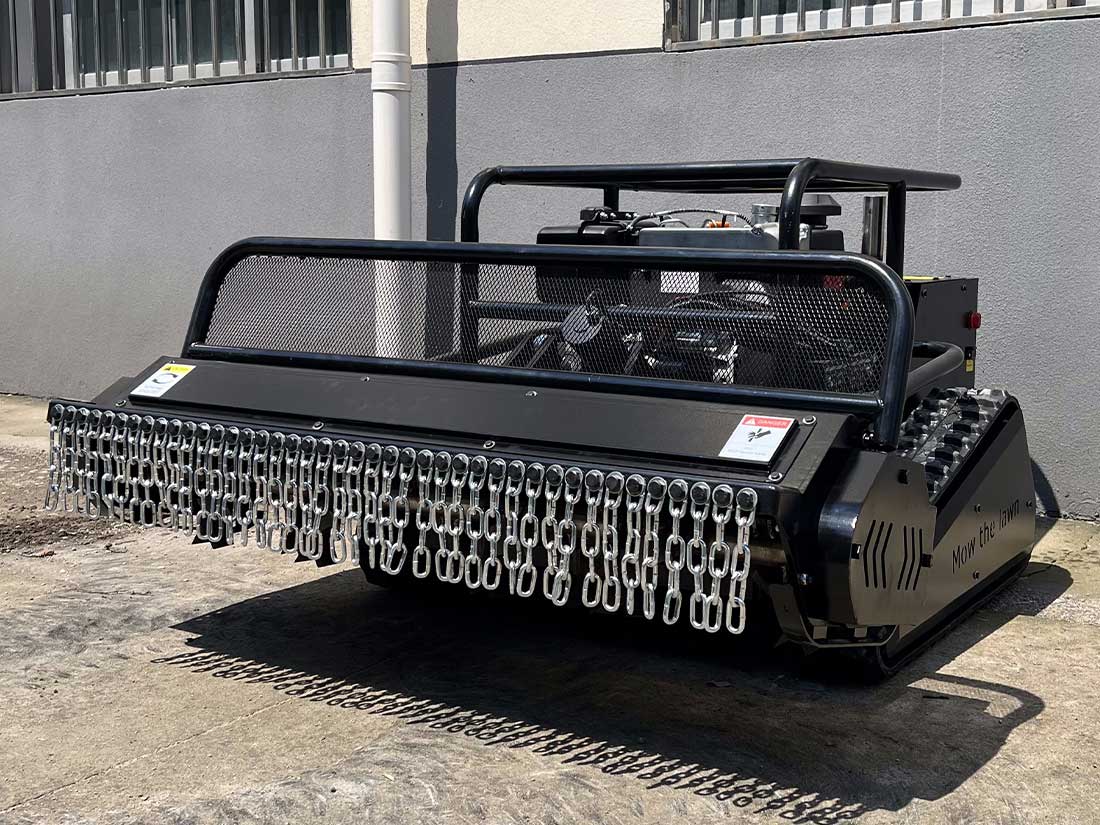
Flail Mower vs Rotary Mower: How the Systems Differ
Before comparing performance, it is important to understand how the two cutting systems work.
Flail Mower
A flail mower uses a rotating horizontal rotor fitted with multiple flails or hammer-style cutting tools.
As the rotor spins, the flails cut and process vegetation inside the mowing chamber.
This design is particularly suitable for:
- Tall grass
- Weeds
- Dense vegetation
- Light brush
- Rough fields
- Overgrown areas
Rotary Mower
A rotary mower generally uses one or more horizontally rotating blades positioned beneath a deck.
The blades cut vegetation at high speed and are widely used for maintaining lawns, fields, and grass-covered areas.
Rotary systems can be highly effective when vegetation is relatively uniform and the terrain is suitable for conventional mowing.
Therefore, in a flail mower vs rotary mower comparison, the correct choice depends heavily on the working environment.
Case Study: Tall Grass on a Large Property
Consider a professional maintenance team responsible for approximately 10 acres of mixed grassland.
The property contains:
- Tall grass
- Thick weeds
- Slightly uneven terrain
- Small areas of woody vegetation
- Several sloped sections
The team needs to restore the property to a manageable condition while minimizing repeated passes.
Scenario A: Rotary Mower
The rotary mower can provide strong performance in areas where the vegetation is primarily grass and the ground is relatively even.
However, when encountering dense vegetation, the operator may need to reduce travel speed or make additional passes.
Tall vegetation can also produce uneven results if the cutting deck becomes overloaded.
Scenario B: Flail Mower
The flail mower is designed to cut and process heavier vegetation.
The multiple cutting tools distributed across the rotor can provide a more consistent treatment of tall grass and weeds.
For rough vegetation management, this can make the flail system particularly attractive.
This case demonstrates why the flail mower vs rotary mower decision should be based on vegetation conditions rather than simply the size of the engine.
Cutting Quality: Flail Mower vs Rotary Mower
Cutting quality is another important factor.
A rotary mower can produce an excellent finish when used on appropriate grass at the correct cutting height.
For lawn-like surfaces, this can be a significant advantage.
A flail mower has a different objective. Instead of producing a highly manicured lawn appearance, it is designed to cut and process vegetation efficiently.
Consequently, in the flail mower vs rotary mower comparison:
Rotary mower: Often preferable when a cleaner lawn-style finish is the priority.
Flail mower: Often preferable when vegetation processing and rough-area maintenance are more important.
The ideal system therefore depends on the desired end result.
Performance in Dense Vegetation
Dense vegetation is where the flail mower vs rotary mower comparison becomes particularly interesting.
A flail mower's rotor carries numerous cutting tools, allowing it to work through vegetation progressively.
This can make it suitable for areas containing mixed grass, weeds, and light brush.
A rotary mower can also handle substantial vegetation when appropriately specified, but its performance depends heavily on blade design, deck configuration, engine capacity, and operating conditions.
For professional users, it is important to match the cutting system to the expected vegetation rather than assuming that one technology is universally superior.
Flail Mower vs Rotary Mower on Uneven Terrain
Terrain can significantly influence mowing performance.
Uneven ground can cause conventional cutting decks to bounce, scalp vegetation, or produce inconsistent results.
A flail mower can be advantageous in some rough-terrain applications because of its design and ability to process vegetation close to the ground.
However, terrain suitability ultimately depends on the specific machine.
This is particularly relevant when the mower is mounted on remote-controlled mowing equipment.
A remote-controlled mower can provide additional maneuverability and allow an operator to control the machine from a safer or more practical position, especially on certain slopes and difficult surfaces.
Why Remote-Controlled Mowing Equipment Changes the Comparison
Modern remote-controlled mowing equipment is expanding the applications of both rotary and flail-style cutting systems.
A remote-controlled mower can allow the operator to:
- Control the machine from a distance
- Maintain a better view of the cutting area
- Navigate difficult terrain
- Reduce physical walking requirements
- Access areas that may be challenging for conventional equipment
For professional vegetation management, the combination of a suitable cutting mechanism and remote operation can be particularly valuable.
A remote-controlled flail mower, for example, can combine the vegetation-processing characteristics of a flail system with the operational flexibility of remote control.
Flail Mower vs Rotary Mower for Slopes
Slopes require special attention.
Operating conventional equipment on steep terrain can introduce additional challenges related to traction, stability, and operator positioning.
Remote-controlled mowing equipment can provide a different operating approach by allowing the operator to remain away from the machine while maintaining control.
When comparing flail mower vs rotary mower systems for slopes, professionals should evaluate:
- Maximum recommended slope
- Machine weight
- Traction system
- Center of gravity
- Cutting width
- Remote-control range
- Ground conditions
Never assume that a remote-controlled machine can safely operate on every slope. The manufacturer's specifications and site-specific risk assessment should determine the appropriate application.
Productivity Comparison
Productivity depends on much more than cutting width.
Consider a large property with tall grass and irregular vegetation.
A rotary mower may move quickly through open grass, making it highly productive when conditions are favorable.
A flail mower may travel more slowly but provide better vegetation processing, potentially reducing the need for additional passes.
Therefore, the flail mower vs rotary mower productivity comparison should consider the complete mowing cycle:
- Travel speed
- Cutting width
- Vegetation density
- Number of passes
- Terrain
- Machine downtime
- Operator requirements
The fastest machine in ideal conditions is not necessarily the most productive machine in challenging conditions.
Maintenance Considerations
Maintenance is another important part of the flail mower vs rotary mower decision.
Flail mowers typically contain multiple cutting tools, rotor components, bearings, and other parts that require inspection.
Operators should regularly check:
- Flail condition
- Rotor
- Bearings
- Belts or drivetrain components
- Guards
- Fasteners
Rotary mowers have their own maintenance requirements, including blade inspection, deck cleaning, spindle maintenance, and drivetrain checks.
For professional users, preventive maintenance is essential regardless of the cutting system.
Which Mower Is Better for Tall Grass?
So, who wins the flail mower vs rotary mower comparison?
The answer depends on the application.
Choose a Flail Mower When:
- Grass is tall and dense
- Weeds are common
- Vegetation is mixed
- Light brush may be present
- The area is rough or semi-wild
- Vegetation processing is more important than a manicured finish
Choose a Rotary Mower When:
- Grass is relatively uniform
- The terrain is reasonably smooth
- A clean lawn-style finish is important
- High-speed grass cutting is the primary objective
- Vegetation is not excessively woody or dense
For difficult vegetation management, a flail system can often provide advantages that make it particularly suitable for demanding applications.
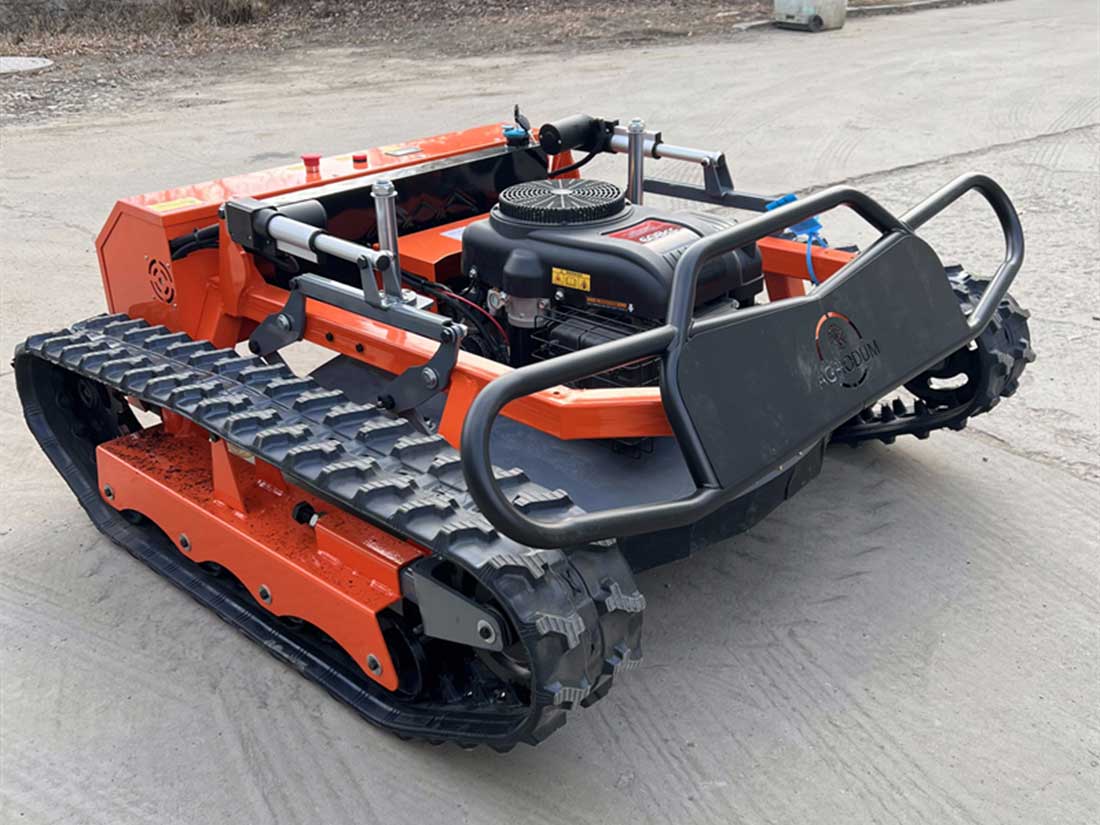
The Role of Professional Remote-Controlled Mowing Equipment
The future of vegetation management is increasingly connected to remote-controlled technology.
Remote-controlled mowing equipment can combine different cutting systems with advanced control technology, creating specialized machines for applications such as:
- Steep slopes
- Embankments
- Solar farms
- Roadsides
- Orchards
- Rough fields
- Large properties
A remote-controlled flail mower can be particularly useful where tall vegetation and difficult terrain occur together.
The ability to operate the machine remotely can also provide greater flexibility when working in environments where conventional mower operation is inconvenient.
How Professionals Should Make the Decision
Instead of asking simply, "Which is better: flail mower vs rotary mower?", professional buyers should ask a more practical question:
Which cutting system is best suited to my vegetation, terrain, productivity requirements, and maintenance strategy?
Before purchasing equipment, evaluate:
- Vegetation type — grass, weeds, brush, or mixed growth.
- Terrain — flat, uneven, or sloped.
- Required finish — manicured appearance or vegetation control.
- Area size — small property or large-scale operation.
- Operating frequency — regular mowing or occasional overgrowth management.
- Safety requirements — especially on slopes and difficult terrain.
- Maintenance resources — parts, servicing, and operator expertise.
This approach provides a much more reliable basis for equipment selection.
Explore Remote-Controlled Mowing Solutions
For professionals who need to manage tall grass, rough terrain, embankments, slopes, or large properties, remote-controlled mowing equipment can provide an effective alternative to conventional machinery.
JY Lawn Mower specializes in remote-controlled mowing solutions designed for demanding vegetation-management applications.
JY Lawn Mower — Remote-Controlled Mowing Equipment
Professionals can explore available equipment and evaluate solutions according to their terrain, vegetation type, and operational requirements.
Conclusion
The flail mower vs rotary mower comparison does not have a single winner for every application.
Rotary mowers can be excellent for efficient grass cutting and lawn-style maintenance, while flail mowers are particularly well suited to tall grass, weeds, dense vegetation, and rougher environments.
When difficult terrain is added to the equation, remote-controlled mowing equipment can further expand the capabilities of professional mowing systems.
Ultimately, the best choice in the flail mower vs rotary mower debate depends on the actual working conditions. By evaluating vegetation, terrain, desired finish, productivity, safety, and maintenance requirements, professionals can select a mowing solution that delivers reliable long-term performance.
For challenging applications where remote operation is valuable, exploring modern remote-controlled mowing equipment can be an important next step toward safer and more efficient vegetation management.