 English
 Spanish
 Portuguese
 French
 Italian
 Remote Mower
Introduction
Maintaining grass and vegetation on slopes, uneven ground, roadsides, and large green areas presents challenges that conventional mowing equipment cannot always address efficiently. For professional landscapers, agricultural contractors, property managers, and vegetation-maintenance teams, equipment selection has become an important part of improving productivity while maintaining safe working practices.
The remote control lawn mower is an increasingly relevant solution for these demanding applications. By combining professional mowing equipment with remote operation, it allows an operator to control the machine from a separate position rather than remaining directly on the machine.
For challenging terrain, this operating concept can provide greater flexibility and a different approach to managing difficult mowing tasks.
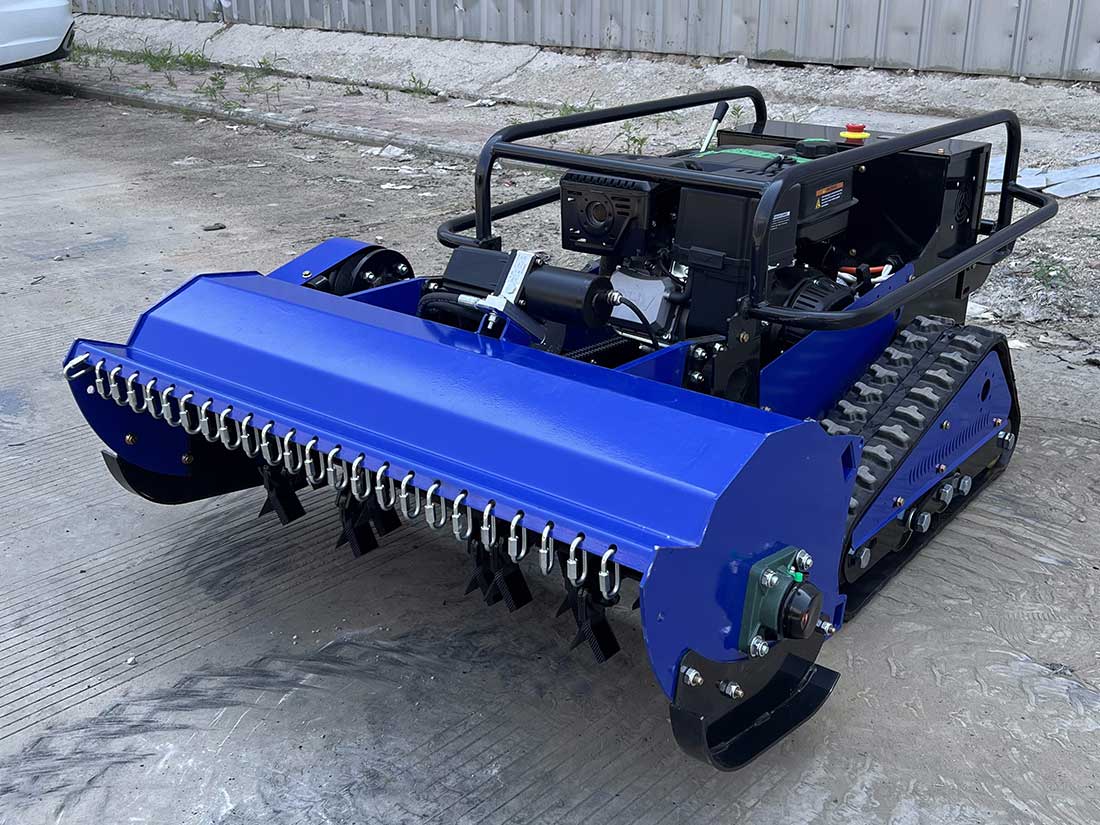
Why Slopes Require Specialized Mowing Equipment
Sloped terrain introduces several factors that must be considered during mowing. Inclination, uneven surfaces, wet grass, obstacles, and changing ground conditions can all affect machine stability and traction.
A remote control lawn mower can be particularly useful in applications where maintaining physical distance from the mowing machine is desirable. The operator can control the equipment remotely while maintaining an appropriate position from which to observe the machine and the surrounding work area.
However, remote operation should never be considered a substitute for proper training or safety procedures. The machine must always be operated within the manufacturer's specified limits.
How a Remote Control Lawn Mower Works
A remote control lawn mower uses a wireless control system to allow the operator to manage the machine remotely.
Depending on the equipment configuration, remote controls may be used to manage functions such as:
- Forward and reverse movement
- Steering
- Travel speed
- Mowing operation
- Machine stopping
The combination of remote control and a dedicated mowing platform gives professional operators greater flexibility when working across complex landscapes.
For commercial users, the quality of the control system is especially important. Responsive controls can help operators make accurate adjustments as terrain and working conditions change.
Remote Operation Can Improve Operator Positioning
One of the principal advantages of a remote control lawn mower is that the operator does not need to remain directly on the machine.
On difficult terrain, this can allow the operator to select a more suitable position for observing and controlling the equipment.
This can be valuable when working around:
- Slopes
- Uneven terrain
- Dense vegetation
- Roadside areas
- Large green spaces
- Difficult-to-access locations
The benefit is not simply convenience. Remote-controlled mowing equipment can change how professional teams organize the work area and position operators during mowing operations.
Traction and Stability Matter
A remote control lawn mower intended for challenging terrain must be evaluated as a complete machine rather than simply as a mower with a remote control.
Traction and stability are particularly important.
Professional users should consider:
Ground Contact
The machine needs an appropriate traction system for its intended operating environment.
Weight Distribution
A balanced machine can provide more predictable behavior when operating across uneven ground.
Drive Performance
Adequate drive performance is important when moving across inclines or difficult surfaces.
Cutting-System Design
The cutting system should match the vegetation and workload for which the machine is intended.
These factors should be assessed together when selecting a remote control lawn mower for professional work.
Safer Mowing on Slopes
Safety is one of the strongest reasons professionals consider remote-controlled mowing equipment.
A remote control lawn mower can allow the operator to control the machine from outside the immediate operating position. This can be advantageous when working on certain slopes or difficult surfaces.
Nevertheless, professional safety practices remain essential.
Before operating a remote control lawn mower, operators should:
- Inspect the terrain.
- Identify obstacles and potential hazards.
- Check the machine and remote-control system.
- Confirm that the work area is clear.
- Maintain appropriate visibility of the machine.
- Keep people and animals away from the operating area.
- Follow all manufacturer instructions.
- Stay within the machine's specified operating limits.
Remote operation can support safer working practices, but it does not eliminate operational risks.
Efficiency for Professional Landscaping
Professional landscaping companies often manage multiple types of properties and terrain. A machine that can adapt to different working environments can therefore provide significant operational value.
A remote control lawn mower can be considered for applications involving large green areas, challenging slopes, roadside vegetation, agricultural land, and other demanding environments.
The source material also identifies professional applications such as agriculture, landscaping, roadside mowing, and difficult terrain, emphasizing the industry's movement toward more efficient and smarter mowing solutions.
Actual productivity, however, depends on the specific machine, terrain, vegetation, cutting width, operating method, and operator experience.
Applications of Remote-Controlled Mowing Equipment
Landscaping
A remote control lawn mower can provide landscaping contractors with an additional solution for managing large or difficult properties.
For companies responsible for parks, commercial properties, estates, and extensive green spaces, remote-controlled equipment may improve operational flexibility.
Roadside Vegetation Management
Roadside mowing presents unique challenges because working areas can be uneven and access may be restricted.
Professional roadside mowing equipment is increasingly focused on improving efficiency and making vegetation management more practical for contractors and maintenance teams.
Agriculture
Agricultural properties can include large areas with different terrain conditions. A remote control lawn mower can be considered where remote operation and specialized mowing capabilities match the requirements of the site.
Difficult Green Areas
Hillsides, irregular ground, and overgrown areas may require equipment designed specifically for demanding mowing conditions.
What Professionals Should Look for in a Remote Control Lawn Mower
Choosing the right remote control lawn mower requires more than comparing prices.
Professional buyers should evaluate several factors.
1. Terrain Capability
Understand the types of slopes and surfaces on which the machine is designed to operate.
2. Traction
Evaluate the drive system and its suitability for the expected ground conditions.
3. Cutting Performance
The cutting system should be appropriate for the height, density, and type of vegetation.
4. Remote-Control Performance
The operator should have precise and predictable control of the machine.
5. Durability
Commercial equipment needs to withstand frequent operation and demanding working conditions.
6. Maintenance
Easy access to maintenance points, replacement components, and technical support can influence the long-term value of the equipment.
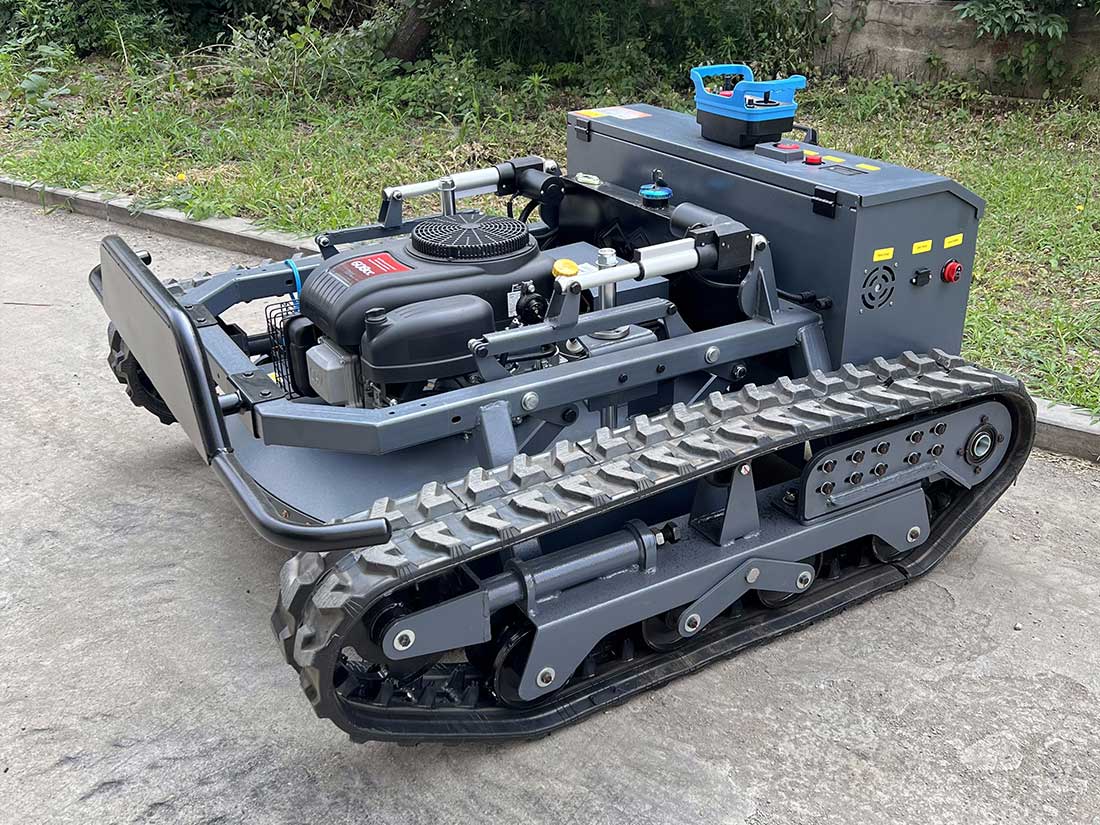
Remote Control Lawn Mower vs. Conventional Mowers
A remote control lawn mower is not necessarily the ideal solution for every lawn.
For small, flat residential gardens, conventional mowing equipment may remain a practical choice.
The advantages of remote-controlled mowing become more relevant when the application involves difficult terrain, larger areas, slopes, or locations where operator positioning is an important consideration.
Therefore, professionals should evaluate equipment according to the actual job rather than assuming that one mower configuration is suitable for every situation.
Combining Safety and Productivity
Professional mowing is ultimately about achieving a balance between productivity and responsible operation.
A remote control lawn mower can contribute to this objective by allowing operators to control mowing equipment from a distance while maintaining an external view of the working environment.
The most effective approach combines:
Appropriate equipment + trained operators + proper site preparation + correct operating procedures
This principle is particularly important when working on slopes or other terrain where conditions can change quickly.
The Future of Remote-Controlled Mowing
The development of remote-controlled mowing equipment reflects a broader trend toward smarter professional landscaping technology.
Future equipment development may focus on improvements in:
- Remote-control precision
- Traction systems
- Machine monitoring
- Energy efficiency
- Operator assistance
- Safety systems
- Mowing productivity
The remote control lawn mower is therefore more than a simple alternative to conventional equipment. It represents a different approach to how professional mowing operations can be organized.
As landscaping and vegetation-management companies face increasingly demanding working environments, remote-controlled equipment may become an increasingly important part of their machinery fleets.
Why Professional Experience Matters
Selecting a remote control lawn mower should always begin with the job requirements.
Experienced contractors understand that terrain, vegetation, machine configuration, maintenance, and operator skills all influence real-world performance.
For example, a mower intended for a flat commercial lawn may not be appropriate for steep or uneven terrain. Similarly, a machine designed for grass cutting may not be suitable for heavier vegetation.
A professional equipment supplier should therefore help customers understand the relationship between machine characteristics and actual operating conditions.
Explore Professional Remote-Controlled Mowing Equipment
For businesses considering a remote control lawn mower, the next step is to compare professional equipment according to terrain, mowing requirements, safety considerations, and expected workload.
JY Lawn Mower focuses on professional mowing equipment and solutions for demanding vegetation-management applications.
To learn more about remote-controlled mowing equipment, visit:
JY Lawn Mower – Professional Remote-Controlled Mowing Equipment
Conclusion
The remote control lawn mower is becoming an increasingly interesting option for professional mowing operations, particularly where slopes, uneven terrain, large green areas, and difficult access create additional challenges.
Its key advantage is the combination of remote operation and professional mowing capability. By allowing the operator to control the machine from a separate position, it can provide greater flexibility in how certain difficult mowing tasks are approached.
However, successful use depends on selecting equipment that matches the terrain and vegetation, following manufacturer specifications, maintaining the machine properly, and ensuring that operators are appropriately trained.
For professional landscapers, agricultural contractors, roadside maintenance teams, and other vegetation-management specialists, remote-controlled mowing equipment offers a modern approach to improving operational flexibility.
Discover more professional solutions at: