 English
 Spanish
 Portuguese
 French
 Italian
 Remote Mower
Maintaining steep slopes, roadside banks, drainage channels, rough fields, and other challenging landscapes has always required specialized equipment and experienced operators. Conventional lawn mowers can perform effectively on relatively flat surfaces, but difficult terrain introduces additional challenges involving traction, stability, accessibility, vegetation density, and operator safety.
For these applications, the embankment mower has become an increasingly important solution. Modern embankment mower equipment combines robust cutting systems, strong traction, and specialized chassis designs with remote-control technology. This makes it particularly attractive to professional landscapers, agricultural operators, contractors, and land-management teams responsible for maintaining difficult terrain.
When integrated with remote-controlled mowing equipment, an embankment mower can give operators greater control while allowing them to work from a more suitable position away from steep or hazardous areas.
What Makes an Embankment Mower Different?
An embankment mower is designed specifically for mowing slopes, banks, embankments, and uneven terrain.
Traditional lawn mowers are generally optimized for stable, relatively level surfaces. By comparison, an embankment mower must address several engineering challenges simultaneously.
These include:
- Maintaining traction on slopes
- Remaining stable on uneven ground
- Cutting tall or dense vegetation
- Navigating obstacles
- Providing sufficient cutting power
- Allowing accurate control on difficult surfaces
Professional embankment mower equipment is therefore designed around the specific demands of slope maintenance rather than simply adapting a standard lawn mower to an incline.
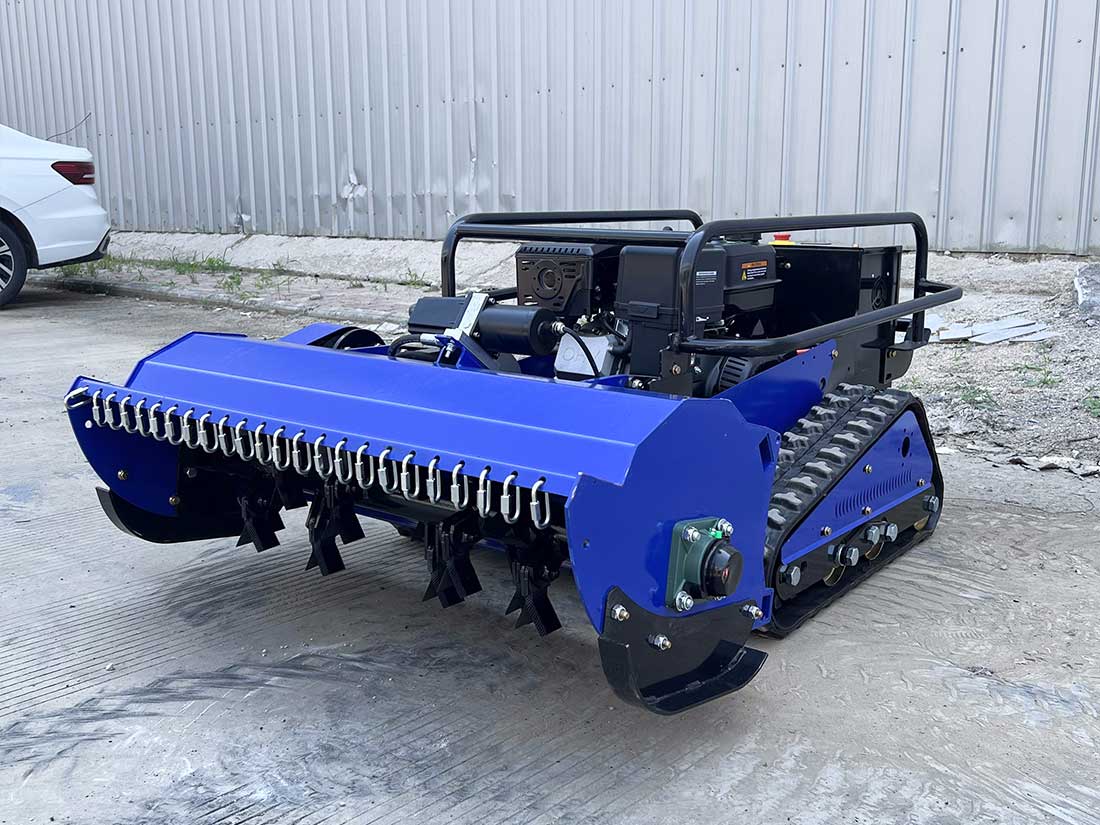
Why Remote-Controlled Mowing Equipment Is Gaining Attention
One of the most important developments in professional vegetation management is the integration of remote-control systems.
A remote-controlled embankment mower allows an operator to control the machine from a distance. Depending on the model, the remote control may operate steering, forward and reverse movement, speed, cutting functions, and emergency stopping.
This approach can offer several operational benefits.
Instead of physically walking along a steep slope with the machine, the operator can remain in a more stable position while monitoring the equipment.
Remote-controlled mowing equipment is therefore particularly useful when maintaining:
- Steep embankments
- Roadside slopes
- Riverbanks
- Drainage areas
- Rough agricultural land
- Overgrown commercial properties
Of course, every embankment mower has specific operating limitations, and users must follow the manufacturer's instructions regarding slope angle, terrain, and safe operating procedures.
Improved Access to Difficult Terrain
Accessibility is one of the biggest advantages of an embankment mower.
Many difficult landscapes cannot be easily reached with large conventional machinery. Narrow paths, uneven surfaces, steep banks, and dense vegetation can prevent standard equipment from operating efficiently.
A compact remote-controlled embankment mower can provide greater flexibility in these situations.
For professional contractors, this can mean fewer manual interventions and more efficient use of labor.
Better Performance on Steep Slopes
Slope mowing requires much more than a powerful engine. Traction and stability are equally important.
A professional embankment mower needs to maintain sufficient contact with the ground while traveling across an incline. Depending on the design, specialized tires, tracks, weight distribution, and drivetrain systems may contribute to improved stability.
Before purchasing an embankment mower, professionals should examine the manufacturer's stated maximum operating angle and compare it with the actual conditions of the site.
Factors such as wet grass, loose soil, mud, and surface debris can also affect traction.
Handling Tall Grass and Dense Vegetation
Difficult terrain is often associated with vegetation that is not maintained frequently.
An embankment mower designed for professional applications may need to handle:
- Tall grass
- Thick weeds
- Dense vegetation
- Rough field growth
- Seasonal overgrowth
For these conditions, cutting performance depends on the relationship between engine power, cutting mechanism, blade design, and machine speed.
Choosing the correct embankment mower for the vegetation type can help reduce repeated passes and improve overall productivity.
Safety Is a Major Consideration
Safety is another important reason professionals are considering remote-controlled mowing equipment.
Operating conventional equipment directly on a steep slope can expose workers to challenging footing and unpredictable terrain conditions.
A remote-controlled embankment mower allows the operator to control the machine without standing directly on the steepest part of the slope.
This can reduce certain operational risks, but remote operation does not eliminate hazards.
Before using an embankment mower, operators should:
- Inspect the terrain.
- Identify rocks, debris, holes, and other obstacles.
- Keep people and animals away from the operating area.
- Check weather and ground conditions.
- Confirm that the slope is within the machine's rated operating limits.
- Inspect the mower and remote-control system.
- Follow all manufacturer safety procedures.
Professional training and proper operating procedures remain essential.
Applications Across Multiple Industries
The versatility of the embankment mower makes it useful in several professional sectors.
Roadside Vegetation Management
Roadside banks can be difficult to access and may require frequent vegetation control. Remote-controlled mowing equipment can provide a practical solution for maintaining these areas.
Landscaping
Professional landscaping companies can use an embankment mower to manage slopes and large properties where conventional equipment is less effective.
Agriculture
Farmers and land managers may use specialized mowing equipment to control vegetation along field boundaries, drainage areas, and sloped land.
Infrastructure Maintenance
Railways, utilities, drainage systems, and other infrastructure often contain difficult-to-access vegetation. An embankment mower can help maintenance teams manage these areas more efficiently.
How to Choose the Right Embankment Mower
Professionals should evaluate several technical factors before purchasing an embankment mower.
1. Maximum Slope Capability
Check the manufacturer's specified operating angle. Never assume that every slope mower can safely operate on every incline.
2. Cutting Width
A wider cutting deck can improve productivity on open terrain, while a narrower configuration may offer better maneuverability in restricted areas.
3. Traction
Evaluate whether wheels or tracks are more appropriate for the terrain and soil conditions.
4. Cutting Capacity
Consider the expected grass height, vegetation density, and frequency of mowing.
5. Remote-Control Range
For remote-controlled equipment, ensure that the operating range is appropriate for the size and layout of the worksite.
6. Maintenance Requirements
Professional users should examine access to spare parts, routine maintenance procedures, technical support, and long-term operating costs.
Engineering Quality Matters
A high-quality embankment mower is the result of integrating multiple engineering systems rather than simply adding a remote control to a conventional mower.
The chassis, drivetrain, cutting system, motor, electrical components, and remote-control system must work together effectively.
For professional applications, machine durability is particularly important because equipment may be exposed to vibration, dust, moisture, mud, uneven terrain, and extended operating periods.
This is why buyers should evaluate not only specifications but also the manufacturer's engineering experience and after-sales support.
Maintenance for Reliable Performance
Regular maintenance is essential for keeping an embankment mower operating efficiently.
After mowing, operators should inspect:
- Cutting blades
- Tires or tracks
- Drive components
- Chassis
- Electrical connections
- Battery
- Remote-control system
- Fasteners and structural components
Grass and mud should be cleaned according to the manufacturer's recommendations.
Preventive maintenance can help identify worn components early and reduce unexpected downtime.
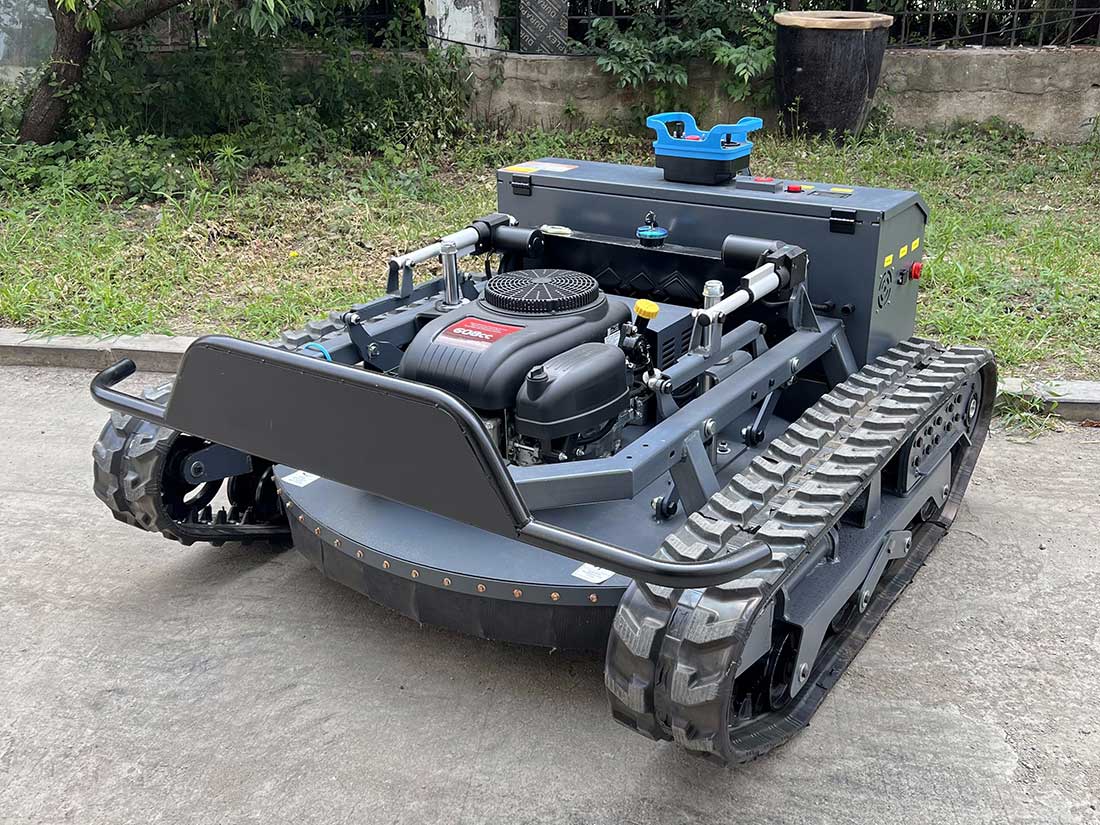
The Future of Remote-Controlled Mowing Equipment
The development of remote-controlled mowing equipment is moving toward increasingly intelligent and efficient machines.
Future embankment mower systems may incorporate technologies such as:
- Advanced sensors
- Improved navigation
- Remote monitoring
- Automated safety systems
- More efficient power management
- Precision control systems
These technologies could further improve productivity while making difficult terrain easier to manage.
For professional contractors and land managers, the combination of specialized mowing design and remote operation represents an important direction for the future of vegetation management.
Explore Professional Embankment Mower Solutions
Professionals looking for specialized mowing equipment should choose machinery according to the actual requirements of their terrain and vegetation.
JY Lawn Mower provides professional solutions for remote-controlled mowing applications and challenging terrain. To explore its range of equipment and learn more about remote-controlled mowing technology, visit:
JY Lawn Mower — Remote-Controlled Mowing Equipment
The site provides useful information for users researching professional mowing solutions for slopes, rough terrain, large areas, and demanding vegetation-management applications.
Conclusion
The embankment mower is becoming an increasingly valuable tool for professionals who need to maintain difficult terrain efficiently.
Its combination of specialized cutting capability, traction, stability, and remote operation makes it particularly suitable for steep slopes, roadside banks, agricultural land, drainage channels, and other challenging environments.
For professional users, choosing the right embankment mower requires careful evaluation of slope capability, cutting performance, traction, remote-control functions, durability, maintenance, and safety.
As remote-controlled mowing equipment continues to evolve, the embankment mower is positioned to play an increasingly important role in safer, more efficient, and more professional vegetation management.