 English
 Spanish
 Portuguese
 French
 Italian
 Remote Mower
Choosing the right mowing equipment can make a significant difference in lawn quality, maintenance efficiency, operating costs, and workplace safety. While traditional lawn mowers remain a practical choice for many residential and commercial properties, advances in remote-controlled mowing equipment have created new options for managing steep slopes, uneven ground, and challenging vegetation.
A remote controlled lawn mower allows an operator to control the machine from a distance using a handheld transmitter. Depending on its design, the machine may feature a tracked or wheeled chassis, a specialized cutting system, and controls for navigating difficult terrain. Traditional mowers, by comparison, typically require the operator to walk behind the machine, ride on it, or guide it through a conventional steering system.
So, which option is better for your lawn? The answer depends on the size of your property, the terrain, the type of vegetation, your budget, and how frequently you need to mow. Understanding the strengths and limitations of each option will help you make a more informed decision.
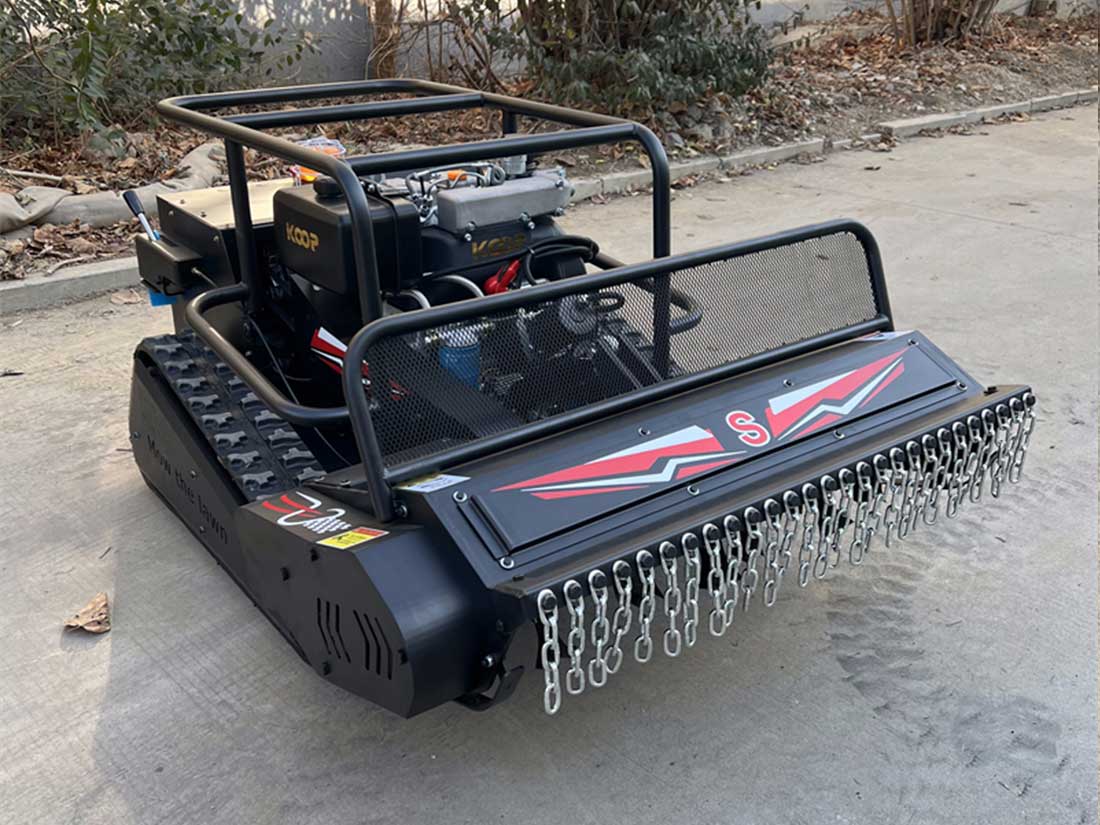
1. Understanding Remote Controlled Lawn Mowers and Traditional Mowers
Before comparing performance, it is important to understand how these two categories of mowing equipment work.
What Is a Remote Controlled Lawn Mower?
A remote controlled lawn mower is a mowing machine operated through a wireless remote transmitter rather than through direct onboard driving or conventional walk-behind controls.
Many professional models are designed for difficult terrain and may feature:
Tracked undercarriages for traction on suitable uneven surfaces.
Compact chassis designs for working around obstacles.
Rotary or flail cutting systems for different vegetation types.
Remote steering and speed controls.
Emergency-stop and other safety functions, depending on the model.
A remote controlled lawn mower can be particularly useful for maintaining embankments, roadside vegetation, orchards, solar farms, and large properties with challenging ground conditions.
However, not every remote-controlled mower is designed for steep slopes or heavy vegetation. Buyers should confirm the manufacturer's specifications before selecting a machine for specialized applications.
What Are Traditional Lawn Mowers?
Traditional lawn mowers include push mowers, self-propelled walk-behind models, ride-on mowers, and zero-turn riding machines.
These products remain widely used because they offer a range of prices, cutting widths, and operating capabilities. For small residential lawns, a basic walk-behind mower may provide everything a homeowner needs. Larger properties may benefit from a riding mower that covers more ground per pass.
Traditional mowers are often practical for accessible, relatively level lawns. Their suitability decreases when terrain becomes too steep, uneven, or difficult to navigate safely.
The goal is not to assume that one technology is always superior, but to match the equipment to the working environment.
2. Remote Controlled Lawn Mower vs. Traditional Mowers: Key Differences
The following comparison highlights the main factors to consider when choosing between remote-controlled and conventional mowing equipment.
Feature | Remote controlled lawn mower | Traditional lawn mower |
|---|---|---|
Operation | Controlled remotely by an operator | Walk-behind or onboard operation |
Operator positioning | Operator can stand away from the machine | Operator generally walks behind or rides on the machine |
Steep slopes | Specialized models may be suitable within rated limits | Suitability depends on mower design and slope restrictions |
Flat lawns | Effective, though potentially more specialized than necessary | Often highly practical and cost-effective |
Rough vegetation | Suitable models may support rotary or flail cutting | Capability varies by mower type and cutting system |
Maneuverability | Compact remote-controlled designs can suit selected restricted areas | Varies by size, steering system, and configuration |
Initial investment | Specialized professional models may cost more | Broad range of budget-friendly options |
Maintenance | Requires model-specific servicing and replacement parts | Often supported by widely available parts and service networks |
Operator training | Requires training in remote operation and safety procedures | Familiar operating methods, although training remains important |
Best applications | Difficult terrain and specialized maintenance tasks | Routine lawns and accessible mowing areas |
The best choice depends on the actual conditions of your property. A remote controlled lawn mower may offer substantial advantages in one application, while a traditional mower may be the more economical solution in another.

3. Which Mower Performs Better on Steep Slopes?
Terrain is one of the most important differences between these equipment categories.
On flat ground, many traditional mowers deliver reliable cutting performance with relatively straightforward operation. On steep inclines, however, traction, stability, and operator positioning become more significant.
A specialized remote controlled lawn mower allows the operator to guide the machine without riding on it or walking directly behind it. This can help reduce exposure to some hazards associated with mowing steep ground.
Tracked models may also offer useful traction on certain uneven surfaces, depending on their track design, weight distribution, and the condition of the soil.
Typical applications include:
Grass-covered embankments.
Hillside landscaping.
Roadside verges.
Drainage channels.
Uneven agricultural properties.
Traditional mowers should only be used on slopes permitted by their manufacturers. Riding a mower across an unsuitable incline can create serious stability risks, while walk-behind machines may be difficult to control on slippery or irregular ground.
A remote controlled lawn mower is not automatically safe on every slope, either. Operators must observe the machine's rated limits and consider surface conditions, obstacles, and manufacturer instructions.
Professional recommendation: If your property includes recurring steep-slope maintenance, evaluate a purpose-built remote-controlled mower and compare its documented slope capability with the actual terrain. For relatively flat residential lawns, a conventional mower is usually a more straightforward choice.
4. Cutting Performance: Grass, Weeds, and Dense Vegetation
Cutting quality depends on more than whether a mower is remote-controlled. Blade design, cutting height, power output, cutting width, vegetation density, and operator technique all influence the final result.
Remote-controlled mowing equipment
A remote controlled lawn mower may be available with different cutting systems, depending on the model.
Rotary cutting systems are suitable for many routine grass-cutting applications. They can provide a practical solution for maintained lawns, grass-covered slopes, and other areas within the machine's specified capabilities.
Flail cutting systems are often considered for rough grass, dense weeds, and selected light-brush applications. Their suitability depends on the cutting elements, machine power, and the type of vegetation being managed.
For professional contractors, choosing the correct cutting system can be more important than selecting a machine based on engine power alone.
Traditional mowing equipment
Traditional rotary mowers can produce excellent results on maintained lawns, particularly when the grass is cut regularly and the equipment is properly maintained.
Specialized conventional brush cutters and rough-cut mowers can also handle demanding vegetation. Therefore, a remote controlled lawn mower does not automatically outperform every traditional machine in cutting quality.
The main advantage of remote-controlled equipment is its operating format and suitability for specific environments, not a universal guarantee of a better finish.
For the best results, select a mower designed for the grass height, vegetation density, terrain, and finish required.
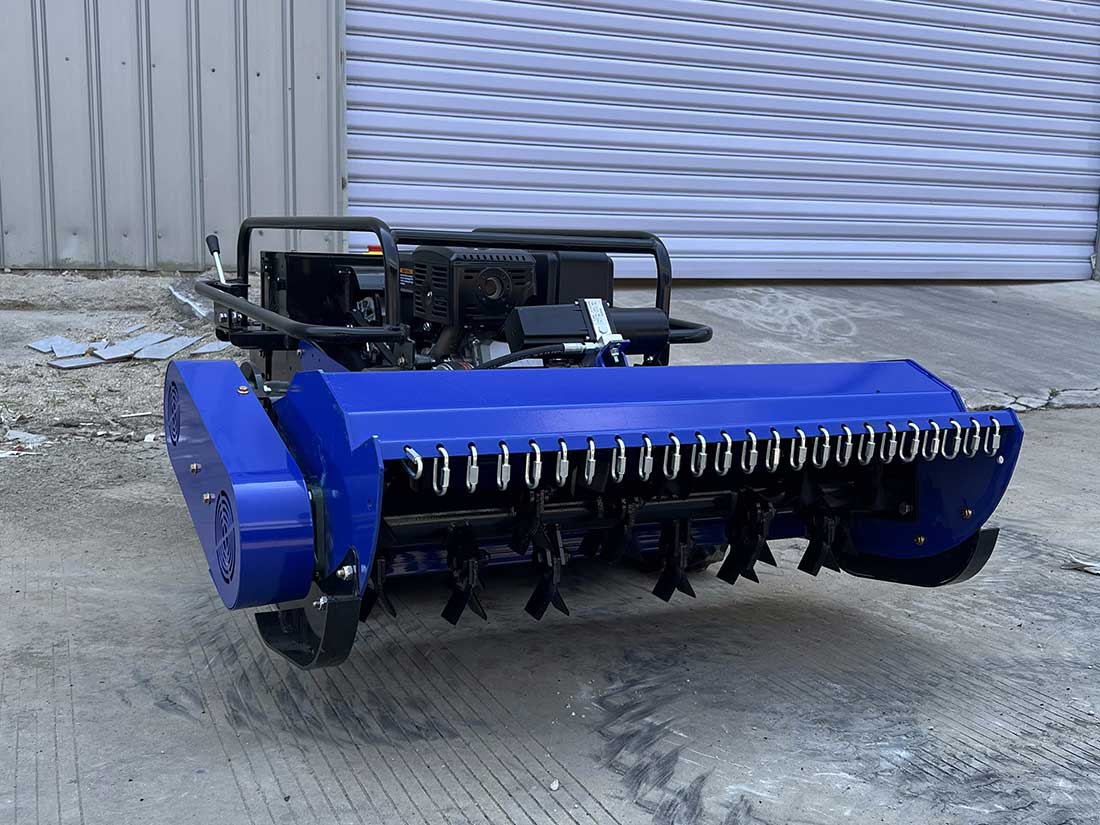
5. Safety and Operator Comfort
Safety is a major consideration when mowing large properties or difficult terrain.
Traditional walk-behind and riding mowers can be appropriate for their intended applications, but the operator must remain in a suitable position and follow the manufacturer's operating instructions.
A remote controlled lawn mower offers a different approach because the operator controls the machine from a separate position. On appropriate terrain, this can reduce the need to stand on a steep bank or ride a machine over challenging ground.
Potential safety advantages include:
Greater flexibility in choosing the operator's position.
Reduced need for direct physical handling of the machine during mowing.
Remote stopping and control functions on equipped models.
Improved access to certain difficult-to-maintain areas.
These benefits depend on the machine's design and how it is used. Remote-controlled mowers can still create hazards from rotating blades, thrown debris, loss of traction, and nearby people or vehicles.
Operators should maintain suitable separation distances, inspect the site, use required protective equipment, and understand emergency procedures before operating the machine.
For commercial landscaping businesses, a remote controlled lawn mower may be worth considering when reducing exposure to difficult working conditions is an important operational priority.
6. Cost Comparison: Which Option Offers Better Value?
Price is another major factor in the decision.
Traditional lawn mowers are available across a wide price range, from basic residential push mowers to larger commercial riding machines. A remote controlled lawn mower is a more specialized investment, particularly when equipped for professional slope maintenance or rough vegetation.
However, the purchase price alone does not determine long-term value.
Initial purchase costs
A conventional mower may be the most economical option for a homeowner with a small, flat lawn. Buying a specialized remote controlled lawn mower for a simple mowing task may not provide enough additional value to justify the investment.
For a landscaping contractor working on steep embankments every week, the calculation may be different. Specialized equipment may help reduce time spent on certain tasks and allow the business to manage challenging sites more efficiently.
Operating and maintenance costs
Both types of equipment require routine servicing, cleaning, blade or cutting-element replacement, and repairs.
When comparing a remote controlled lawn mower with a traditional mower, account for:
Fuel or electricity consumption.
Routine maintenance and replacement parts.
Transport and setup time.
Labor hours per job.
Expected annual operating hours.
Service availability and warranty conditions.
Example: Evaluating return on investment
Suppose a landscaping business is considering a remote controlled lawn mower for recurring slope-maintenance projects.
The business should estimate the annual labor hours potentially saved, subtract any additional operating and maintenance costs, and compare the resulting savings with the initial investment.
If the equipment saves meaningful labor time across many projects, it may offer attractive long-term value. If the machine is used only occasionally, renting or outsourcing specialized mowing may be more economical.
The most reliable decision comes from comparing actual project requirements and operating costs rather than relying on general claims about productivity.

7. Which Mower Is Better for Different Property Types?
Different properties have different mowing requirements. The following examples illustrate how to approach equipment selection.
Small residential lawns
A traditional walk-behind mower is often the most practical choice for a small, relatively flat garden. It is familiar to operate and may require a lower initial investment than a specialized remote controlled lawn mower.
Large, accessible lawns
Riding and zero-turn mowers can cover extensive, relatively level lawns efficiently. A remote-controlled machine may complement this equipment if the property also contains difficult slopes or restricted areas.
Steep slopes and rough terrain
A purpose-built remote controlled lawn mower may be more suitable for these areas, provided its rated slope limits, traction, and cutting system match the working conditions.
Commercial and agricultural properties
Contractors managing rough vegetation, orchards, embankments, or large estates may benefit from specialized remote-controlled equipment alongside conventional mowers.
For many professional operations, the most effective strategy is to combine different types of equipment. Traditional mowers can handle open, level lawns, while a remote controlled lawn mower can be assigned to terrain that requires specialized capabilities.
8. How to Choose the Right Remote Controlled Lawn Mower
If remote-controlled equipment appears suitable for your property, the next step is to compare individual models carefully.
Professional buyers should assess several essential specifications.
1. Maximum permitted slope: Confirm the rated operating angle and any restrictions related to sideways travel, surface conditions, or vegetation.
2. Track or wheel configuration: Evaluate traction, ground pressure, maneuverability, and the type of terrain the machine is expected to encounter.
3. Cutting system: Choose a rotary or flail configuration based on grass height, weed density, and the desired finish.
4. Cutting width and productivity: Consider the area to be maintained, the available working space, and the number of operating hours required.
5. Power and runtime: Compare engine output, fuel consumption, battery capacity where applicable, and refueling or charging requirements.
6. Control and safety systems: Review control range, emergency-stop functions, communication-loss behavior, and operator visibility.
7. After-sales support: Check spare-parts availability, maintenance documentation, warranty coverage, and access to technical assistance.
8. Total ownership cost: Include purchase price, transport, servicing, consumables, and expected utilization.
Taking these factors into account can help you identify a remote controlled lawn mower that offers the right balance of safety, capability, and long-term value.

9. Explore Remote-Controlled Mowing Equipment from JUYOU
For businesses that maintain slopes, rough terrain, orchards, roadside vegetation, or large commercial properties, choosing a suitable equipment supplier is an important part of the purchasing process.
JUYOU Lawn Mower offers remote-controlled mowing equipment for a range of professional vegetation-management applications. Buyers can explore available machine configurations and identify options that may suit challenging mowing environments.
When comparing a remote controlled lawn mower from JUYOU with conventional equipment, focus on the specifications that directly affect your work: permitted slope, cutting system, machine dimensions, power configuration, and maintenance requirements.
Before requesting a quotation, prepare a brief description of your project, including:
The terrain and steepest slope.
The type and density of vegetation.
The total area to be maintained.
Your expected daily operating hours.
Preferred cutting system and machine configuration.
Delivery destination and after-sales support requirements.
This information can help you discuss the most appropriate options with the supplier and compare them against the capabilities of your current equipment.
Visit https://www.jylawnmower.com/ to explore remote-controlled mowing solutions for professional landscaping and difficult-terrain maintenance.
10. Final Verdict: Remote Controlled Lawn Mower or Traditional Mower?
So, which option is better?
The answer depends on the work you need to perform.
A traditional mower is often the better choice for small residential lawns, regular grass cutting, and accessible properties where affordability and simplicity are priorities.
A remote controlled lawn mower may be the better fit for specialized tasks involving steep slopes, uneven ground, and difficult-to-access vegetation, particularly when operator positioning and terrain capability are important considerations.
For professional landscaping businesses, combining both types of equipment may offer the greatest flexibility. Conventional mowers can handle routine work efficiently, while remote-controlled machines can take on selected challenging areas.
The most effective purchasing decision should consider safety, terrain, cutting requirements, productivity, maintenance, and total cost of ownership.

Conclusion
The comparison between a remote controlled lawn mower and traditional mowing equipment is not simply a question of which technology is newer. It is about finding the right machine for the job.
Traditional mowers remain dependable solutions for many everyday lawn-care tasks. Remote-controlled mowing equipment adds valuable options for professionals who need to manage difficult terrain and specialized vegetation with greater flexibility.
By evaluating your property's conditions and understanding the capabilities of each machine, you can choose equipment that supports reliable results and efficient maintenance.
If you are looking for specialized mowing solutions for steep slopes, rough ground, or commercial landscaping, explore the products available at JUYOU Lawn Mower to find a remote controlled lawn mower suited to your operational needs.