 English
 Spanish
 Portuguese
 French
 Italian
 Remote Mower
Professional lawn care is changing rapidly. As landscaping companies, agricultural contractors, municipalities, and vegetation-management professionals face larger areas, more demanding terrain, and increasing pressure to improve workplace safety, traditional mowing methods are no longer always the most efficient solution.
One technology attracting growing attention is the remote controlled lawn mower.
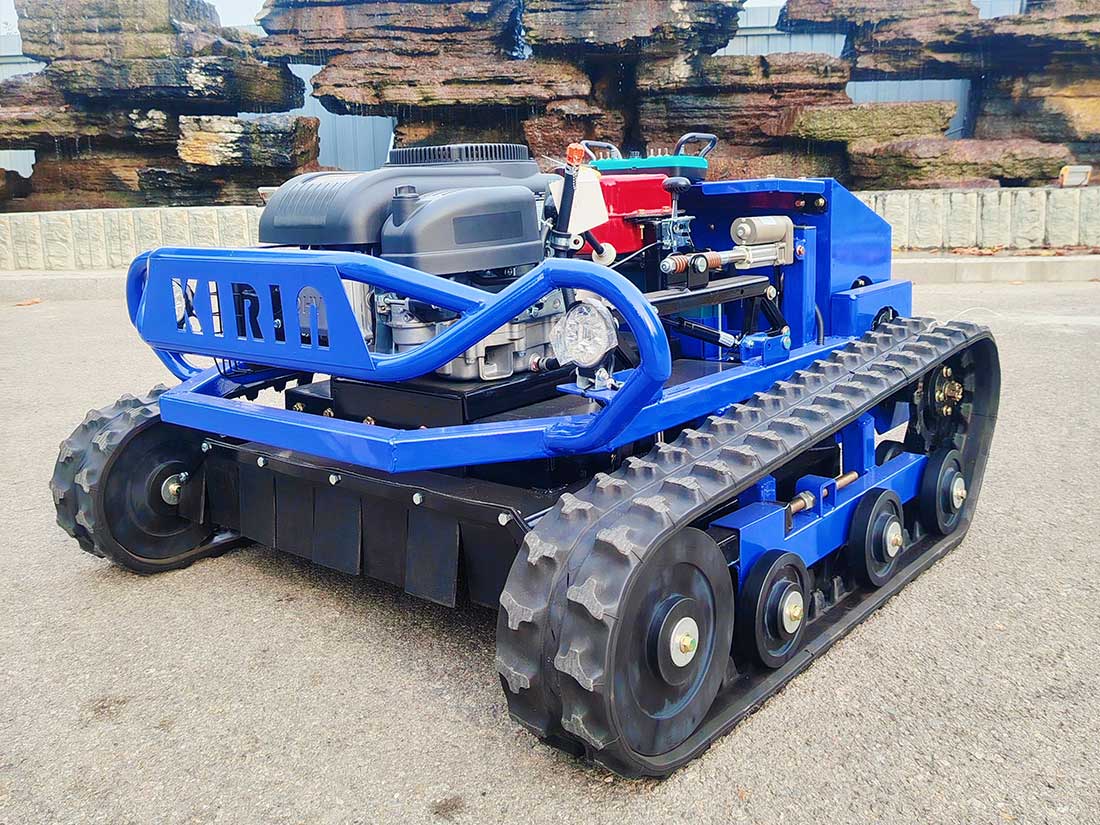
A remote controlled lawn mower combines professional cutting equipment with remote operation, allowing operators to control the machine from a suitable distance. When combined with tracked mobility and a heavy-duty cutting system, this type of equipment can be particularly useful for slopes, rough grass, roadside vegetation, orchards, and large landscapes.
For professional users, the value of a remote controlled lawn mower is not simply that it has a remote control. Its real advantage comes from combining machine mobility, cutting performance, operator control, and a more flexible working method.
Here are seven important benefits that are changing professional lawn care.
1. Improved Operator Safety
Safety is one of the most important reasons professionals consider a remote controlled lawn mower.
Mowing a flat lawn is relatively straightforward. Working on steep slopes, embankments, ditches, rough fields, or uneven ground presents a very different set of challenges.
An operator working directly beside a conventional mower may need to deal with difficult footing, unstable surfaces, flying debris, obstacles, and changing terrain.
With a remote controlled lawn mower, the operator can control the machine from a suitable observation position rather than remaining directly beside it during every stage of mowing.
This can provide a valuable additional layer of separation between the operator and challenging working conditions.
Remote operation does not eliminate risk, and professional operators still need to follow the manufacturer's instructions, maintain appropriate visibility, assess terrain conditions, and use proper safety procedures.
However, a remote controlled lawn mower can fundamentally change how operators interact with difficult mowing environments.
2. Better Performance on Difficult Terrain
Professional lawn care does not always take place on smooth, level surfaces.
Landscapers and vegetation-management contractors may encounter:
Steep slopes
Uneven grassland
Rough fields
Orchard terrain
Roadside embankments
Drainage ditches
Areas with limited access
Large properties with changing ground conditions
A tracked remote controlled lawn mower can be designed specifically to address these challenges.
Crawler tracks provide a broad contact area with the ground and can contribute to traction and controlled movement on appropriate uneven terrain.
This makes a remote controlled lawn mower particularly interesting for applications where conventional wheeled equipment may be less convenient.
Of course, machine capabilities vary, and users should always verify the manufacturer's maximum operating slope and terrain specifications before selecting equipment.
3. Greater Control During Mowing
Control becomes increasingly important as terrain becomes more complicated.
A remote controlled lawn mower allows the operator to control the machine's movement while maintaining a clear view of the working area.
The operator can adjust direction and speed according to terrain conditions and stop the machine when an obstacle or unexpected situation is identified.
This can be especially useful when mowing around:
Trees
Fences
Rocks
Drainage structures
Roadside infrastructure
Uneven ground
Narrow working areas
For experienced operators, remote control also allows the mowing route to be planned more systematically.
Instead of simply following the machine, the operator can concentrate on machine positioning, cutting coverage, terrain changes, and the quality of the finished area.
This makes the remote controlled lawn mower more than a convenient piece of equipment—it becomes part of a more controlled professional workflow.
4. Increased Productivity on Large Areas
Large landscapes require a different approach to productivity.
A professional contractor may be responsible for parks, commercial properties, agricultural land, roadside vegetation, estates, or extensive grass-covered areas.
When these areas require frequent maintenance, equipment productivity becomes an important part of operating costs.
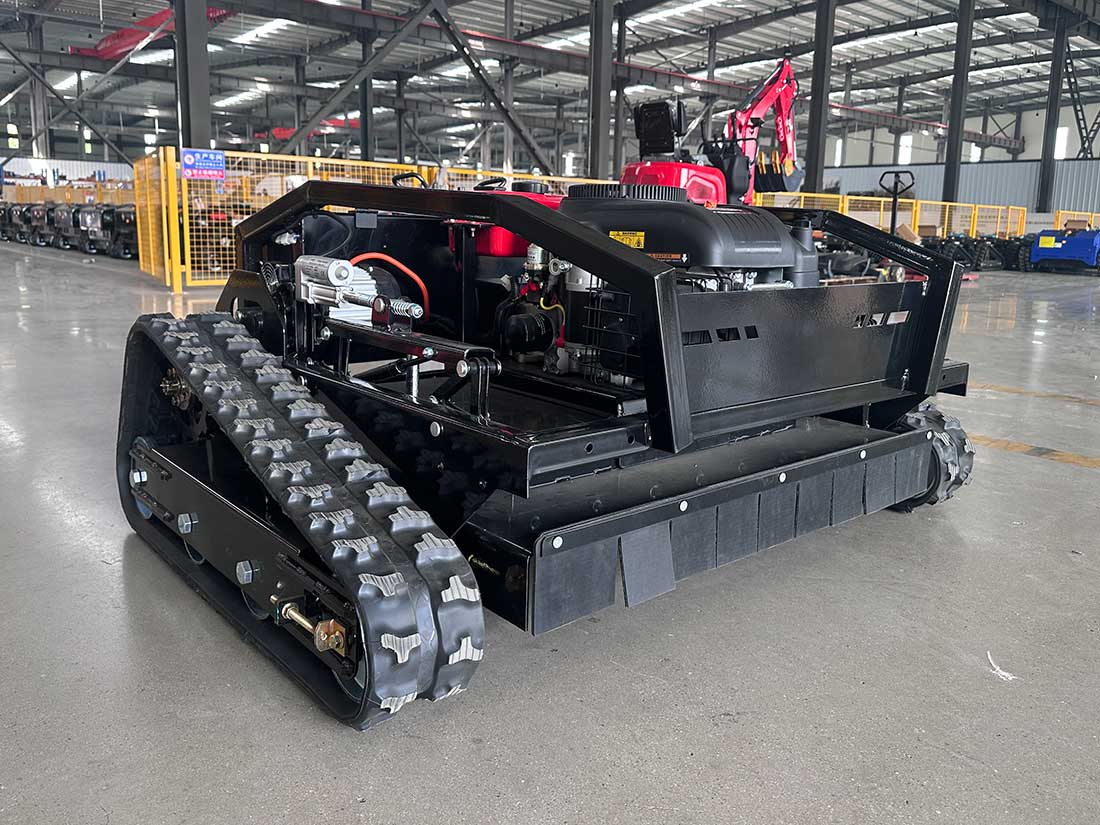
A remote controlled lawn mower can help improve workflow by combining mobility with remote operation.
For example, an operator can divide a large property into working zones and develop a systematic mowing route.
The workflow can include:
Inspecting the working area.
Identifying slopes and obstacles.
Selecting the appropriate cutting configuration.
Establishing a safe observation position.
Mowing each zone systematically.
Checking the finished area.
Performing routine machine inspection.
This approach can reduce unnecessary repositioning and make the mowing process easier to organize.
The actual productivity of a remote controlled lawn mower will depend on cutting width, vegetation density, terrain, operator experience, travel speed, and other machine specifications. Professional buyers should therefore evaluate productivity using their real operating conditions.
5. Professional Cutting for Different Vegetation
A mower's remote-control system is only one part of its professional capability.
The cutting system remains critical.
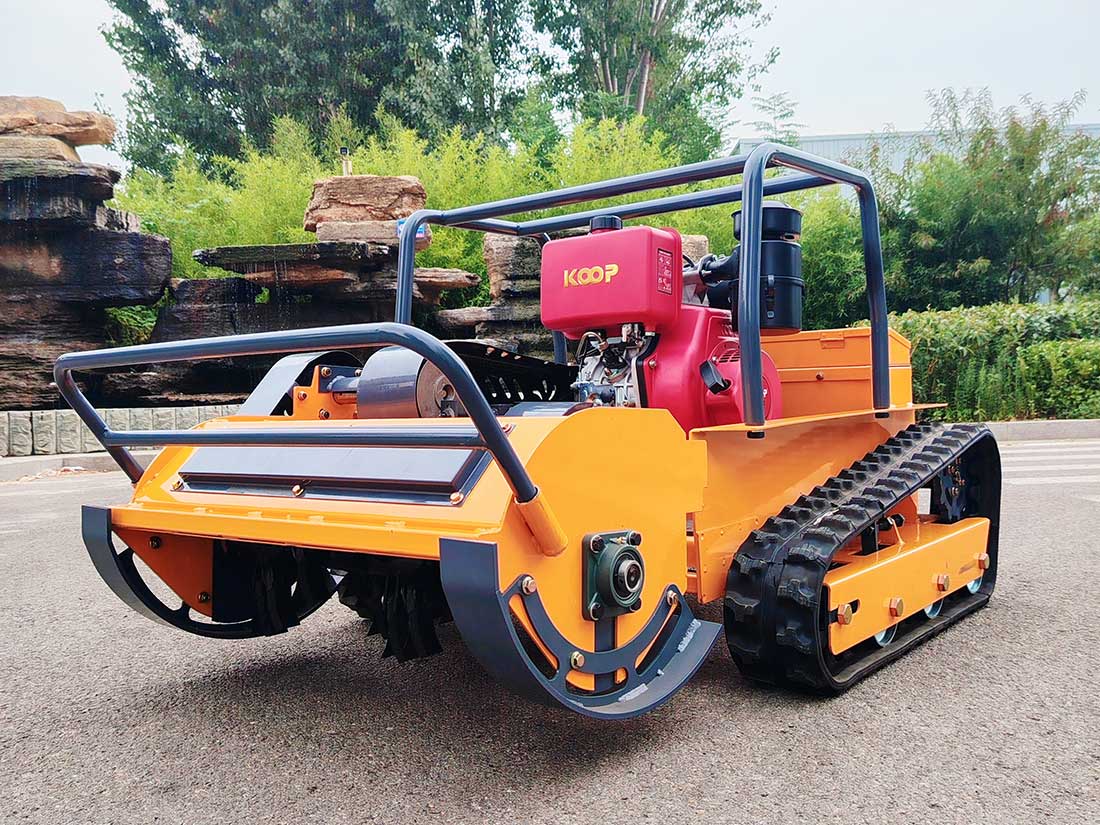
A remote controlled lawn mower may be configured for different vegetation-management requirements, depending on the machine and attachment.
Professionals may need to manage:
Short grass
Tall grass
Dense vegetation
Weeds
Rough grassland
Field margins
Roadside vegetation
For lighter grass, a rotary cutting system may be appropriate for certain applications. For heavier vegetation and rougher conditions, a flail-style system can offer different cutting characteristics.
The right choice depends on the required finish, vegetation density, terrain, working speed, and frequency of maintenance.
Therefore, when evaluating a remote controlled lawn mower, professionals should look beyond horsepower and consider the entire cutting system.
6. Greater Versatility Across Professional Applications
One of the strongest advantages of modern remote-controlled mowing equipment is versatility.
A remote controlled lawn mower can potentially serve several professional sectors rather than being limited to one specific type of property.
Landscaping
Large parks, estates, commercial properties, public green spaces, and difficult landscape areas can benefit from specialized mowing equipment.
Agriculture
Agricultural contractors can use suitable remote-controlled mowing equipment for grass management in fields, orchards, slopes, and other difficult areas.
Roadside Maintenance
Roadside vegetation and embankments often require equipment capable of operating on uneven terrain while allowing the operator to maintain an appropriate working position.
Difficult Green Areas
Remote-controlled equipment can also be considered for rough grassland, slopes, and locations where conventional mowing equipment has limited accessibility.
Professional mowing equipment is already associated with landscaping, agricultural, and roadside maintenance applications, making these important target markets for modern mowing technology.
The ability to address several applications can make a remote controlled lawn mower a more flexible investment for contractors managing different types of projects.
7. A More Modern Approach to Labor and Equipment Management
The final advantage is broader than machine performance.
Professional lawn care is also changing because companies are looking for ways to manage labor more efficiently while improving working conditions.
A remote controlled lawn mower allows one trained operator to control the machine remotely, depending on the application and operating conditions.
This does not mean that remote-controlled mowing automatically replaces workers. Instead, it changes how the operator's time and physical position are used.
The operator can focus on machine control, route planning, hazard awareness, and monitoring the mowing process rather than physically walking behind or riding on the machine throughout the entire operation.
For contractors, this can contribute to a more modern approach to equipment utilization and workforce management.
The key is to combine appropriate machinery with properly trained personnel and clearly defined operating procedures.
What Makes a Remote Controlled Lawn Mower Different?
A professional remote controlled lawn mower should be considered as a complete system rather than simply a mower equipped with a remote.
Several components determine its actual performance.
Machine Mobility
Tracked systems can provide advantages when operating on suitable uneven terrain.
Cutting Capability
The cutting mechanism should match the vegetation and desired finish.
Remote-Control System
The controls should provide precise management of machine movement and mowing functions.
Stability
Machine design, weight distribution, and track configuration all influence performance on difficult terrain.
Serviceability
Professional equipment requires regular inspection and maintenance. Easy access to key components can help reduce downtime.
Long-Term Support
Availability of spare parts, technical assistance, and maintenance support should also be considered when making a commercial investment.
These factors should be evaluated together when choosing a remote controlled lawn mower.
How Professionals Should Choose the Right Machine
The best remote controlled lawn mower is not necessarily the largest or most powerful machine.
Instead, professional buyers should begin with their actual application.
Ask:
What terrain will the machine operate on?
If slopes and uneven ground are common, traction and stability should receive particular attention.
What vegetation needs to be cut?
The cutting system should be appropriate for the grass, weeds, brush, or other vegetation encountered.
How large are the working areas?
Large properties increase the importance of cutting width, travel speed, maneuverability, and productivity.
How frequently will the mower operate?
Commercial machines used regularly require durable components and straightforward maintenance.
What level of remote control is required?
The control system should allow the operator to manage the machine precisely while maintaining appropriate visibility.
What other applications could the machine support?
A versatile remote controlled lawn mower can provide greater value if it can be used across landscaping, agriculture, roadside maintenance, and difficult terrain.
Maintenance Is Essential for Professional Performance
Even a highly capable remote controlled lawn mower requires preventive maintenance.
Before operation, operators should inspect the tracks, cutting components, drive system, fasteners, and safety equipment.
After mowing, accumulated grass and debris should be removed from relevant machine areas.
Cutting blades, flails, or other cutting components should be inspected regularly for wear or damage.
The remote-control system should also be maintained according to the manufacturer's recommendations.
For commercial contractors, preventive maintenance is particularly important because unexpected equipment downtime can affect project schedules and operating costs.
A professional remote controlled lawn mower should therefore be maintained as a long-term working asset rather than treated as disposable equipment.
The Future of Professional Lawn Care
The rise of the remote controlled lawn mower is part of a larger transformation in professional vegetation management.
The industry is moving toward equipment that provides more than basic cutting capability.
Professionals increasingly need machines that can combine:
Safety
Mobility
Cutting power
Precision
Remote operation
Versatility
Productivity
Serviceability
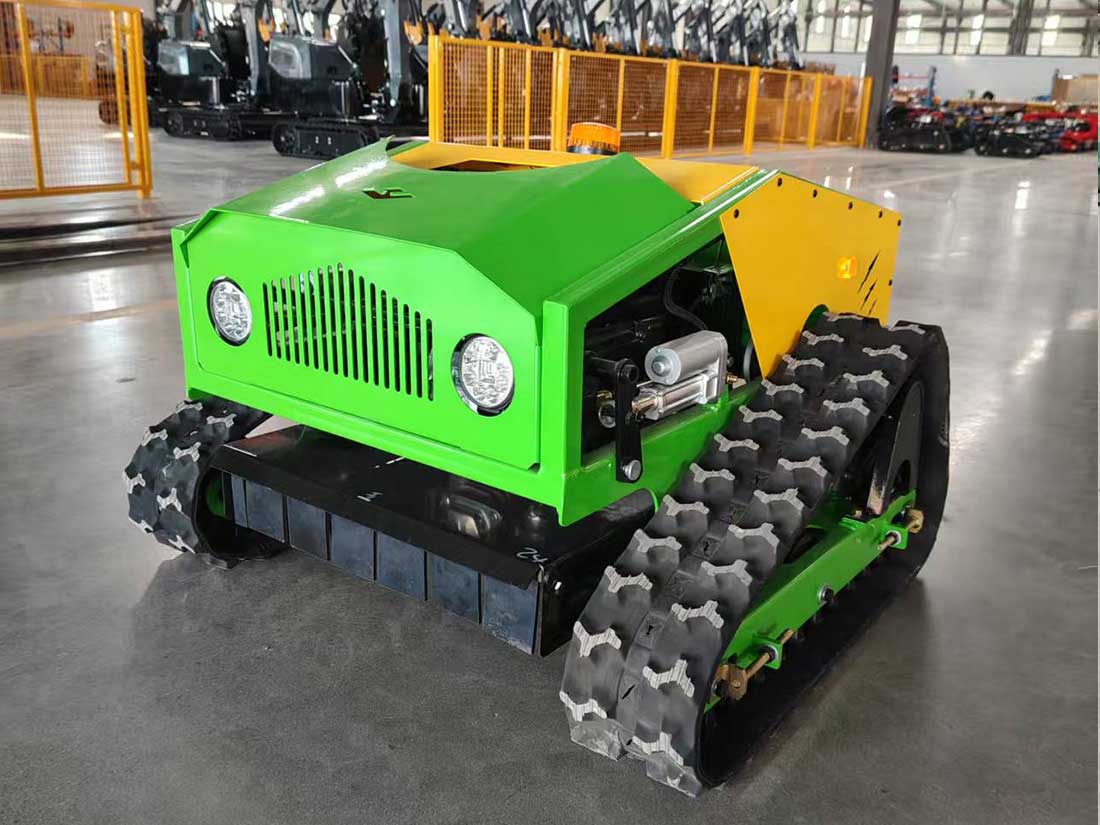
The remote controlled lawn mower addresses many of these requirements in a single platform.
For large landscapes and challenging terrain, the combination of remote control and specialized mobility can provide a different approach to professional mowing.
As landscaping companies, agricultural contractors, municipalities, and roadside maintenance teams continue to search for safer and more efficient equipment, remote-controlled mowing technology is likely to become increasingly important.
Conclusion
The remote controlled lawn mower is changing professional lawn care by combining remote operation with powerful mowing capability and terrain adaptability.
Its seven major benefits include improved operator safety, better performance on difficult terrain, greater control, increased productivity, professional cutting capability, application versatility, and a more modern approach to labor and equipment management.
For professionals working across large landscapes, farms, orchards, roadsides, slopes, and difficult green areas, the remote controlled lawn mower can offer a practical alternative to conventional mowing equipment.
The most important consideration is always to match the machine to the application. Terrain, vegetation, cutting requirements, operating frequency, safety procedures, maintenance, and after-sales support should all be evaluated before making a purchasing decision.
If you are looking for professional remote-controlled mowing equipment for landscaping, agriculture, roadside maintenance, slopes, or large landscapes, explore the solutions from JY Lawn Mower at JY Lawn Mower and discover equipment designed for demanding professional mowing applications.