 English
 Spanish
 Portuguese
 French
 Italian
 Remote Mower
The landscaping industry is experiencing a shift toward smarter, safer, and more efficient equipment. As professional contractors, property managers, and grounds maintenance teams face increasing demands to manage large areas and challenging terrain, traditional mowing methods are being complemented by advanced remote-controlled mowing equipment.
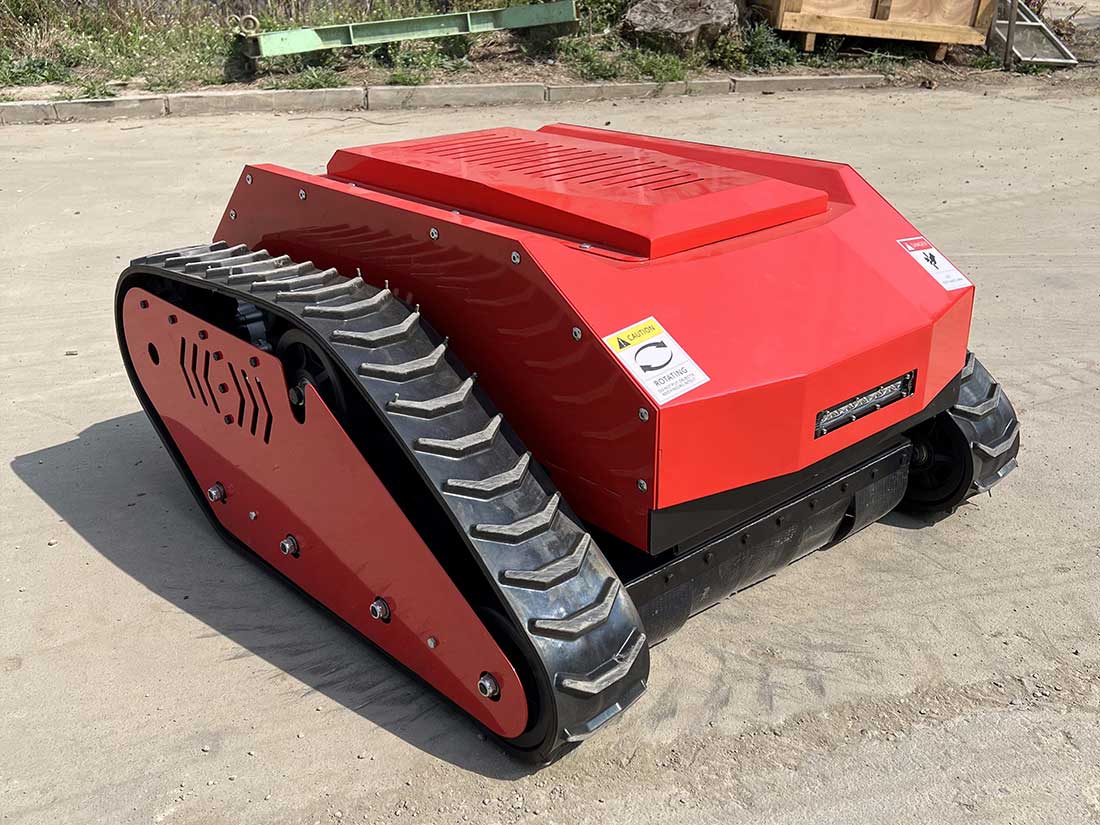
Modern lawn mower technology is no longer limited to conventional walk-behind and ride-on machines. A remote-controlled lawn mower allows operators to control movement and cutting functions from a distance, making it a practical option for selected applications involving slopes, uneven ground, roadside vegetation, and hard-to-access landscapes.
For landscaping businesses seeking to improve worksite management and equipment flexibility, understanding these innovations is essential. This article explores how remote-controlled mowers work, where they provide value, which features buyers should evaluate, and how businesses can choose equipment that matches their operational needs.

1. The Evolution of Lawn Mower Technology
For decades, the lawn mower has been a fundamental tool in landscaping and grounds maintenance. Traditional machines remain effective for many applications, particularly open lawns and relatively level surfaces. However, complex landscapes can create challenges that require more specialized equipment.
A conventional lawn mower may be difficult to operate efficiently on steep banks, narrow access routes, uneven terrain, or areas with dense vegetation. These conditions can increase the time needed to complete a job and expose operators to additional hazards.
Remote-controlled mowing equipment introduces a different operating approach. Instead of walking behind the machine or riding on it, the operator uses a remote controller to direct the mower from a suitable position.
Depending on the model, a modern remote-controlled lawn mower may incorporate:
Remote steering and movement control: Allows operators to guide the machine without directly accompanying it.
Specialized cutting systems: Designed for different grass heights, vegetation types, and maintenance requirements.
Tracked undercarriages: Available on certain models to improve traction on uneven ground.
Compact machine designs: Help access selected narrow or restricted areas.
Commercial-duty components: Support repeated use in professional landscaping environments.
These innovations are changing how businesses approach specific mowing tasks. The objective is not to replace every conventional lawn mower, but to provide a more suitable solution for work where conventional equipment may be less practical.
2. How Remote-Controlled Mowers Improve Landscaping Operations
The value of a remote-controlled lawn mower depends on how well its capabilities match the job. For professional operators, several advantages deserve particular attention.
Improved operator positioning
Mowing steep slopes or difficult terrain with conventional equipment can place operators in uncomfortable or hazardous positions. Remote operation can allow the operator to control the lawn mower while remaining away from the immediate cutting area.
This can reduce exposure to certain terrain-related hazards, provided the operator maintains a safe position and follows the manufacturer's instructions. Remote control does not eliminate all risks, and the machine must remain within its rated operating limits.
Better access to challenging terrain
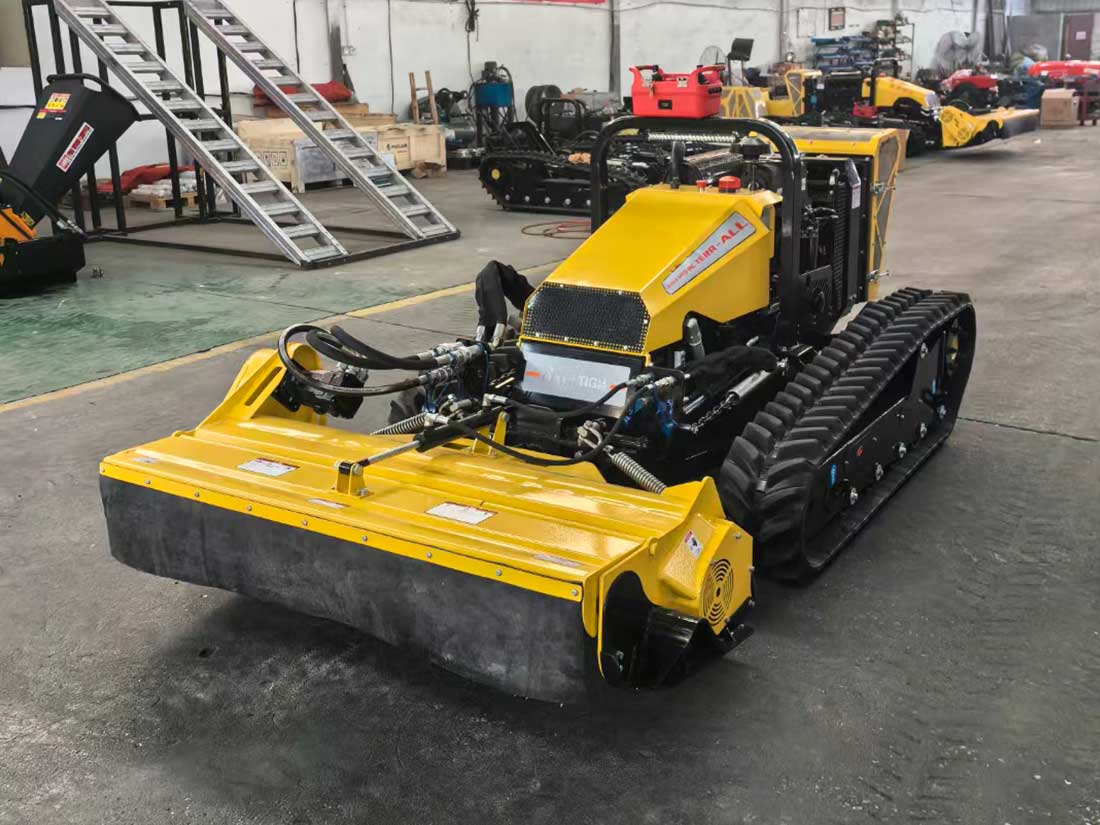
Some remote-controlled mowers use tracks rather than conventional wheels. Depending on the design, this configuration can provide useful traction on uneven ground and selected inclines.
For landscaping contractors, this may make a tracked lawn mower suitable for embankments, rough grass areas, orchard margins, and other locations where mobility is a major consideration.
Nevertheless, slope capability depends on several factors, including the machine's center of gravity, track design, surface conditions, vegetation, and permitted operating angle. Buyers should verify the manufacturer's specifications before using any lawn mower on an incline.
More flexible workforce planning
A remote-controlled lawn mower can help teams manage selected difficult areas without requiring the operator to walk directly behind the cutting deck or ride on the machine.
Depending on the site, this may simplify task allocation and reduce the need for certain labor-intensive mowing methods. However, actual labor savings depend on site preparation, transport, setup time, operator training, mowing speed, and maintenance requirements.
Professional businesses should measure these factors during a practical trial rather than relying on general productivity claims.
3. Where Remote-Controlled Lawn Mowers Deliver the Most Value
Remote-controlled mowing equipment can be useful across several landscaping and vegetation-management applications. Choosing the correct lawn mower starts with identifying the conditions that make a particular site difficult to maintain.
Slopes and embankments
Steep banks can be challenging to mow because conventional equipment may have limitations related to stability, traction, and operator positioning.
A remote-controlled lawn mower designed for slope work allows the operator to control the cutting process from a suitable location. Before selecting a model, contractors should assess the slope angle, surface stability, moisture, vegetation density, and the manufacturer's permitted operating conditions.
Safe operating procedures remain essential, even when the machine is specifically designed for sloped terrain.
Roadside vegetation management
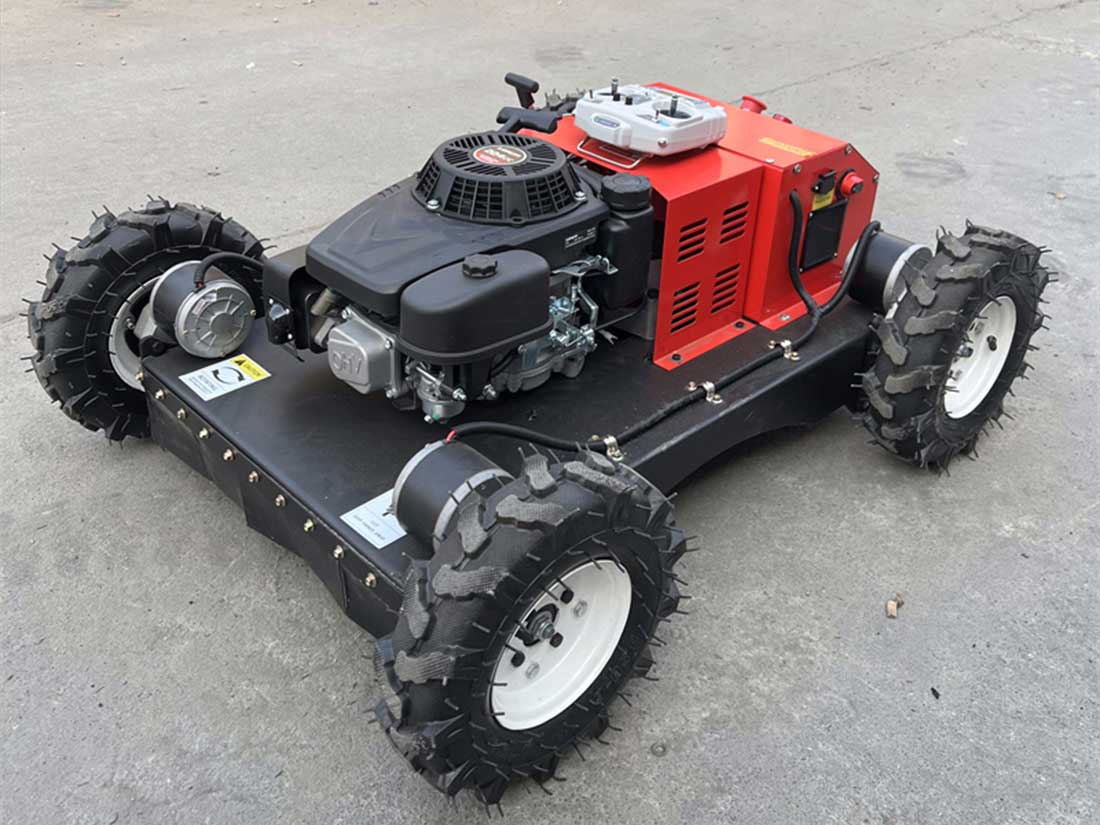
Roadside verges, drainage channels, and infrastructure boundaries often require regular grass and weed control. A suitable remote-controlled lawn mower may help maintenance crews manage selected areas while keeping the operator away from the immediate cutting zone.
Roadside operations still require appropriate traffic management, warning measures, exclusion zones, and compliance with applicable safety regulations. Machine selection should also account for access restrictions, transport requirements, debris risks, and the type of vegetation being cut.
Orchards and agricultural properties
Orchards and farms frequently contain uneven ground, narrow passages, tree rows, and vegetation growing around infrastructure. A compact remote-controlled lawn mower can be considered for selected mowing tasks where maneuverability and operator positioning are important.
Agricultural users should evaluate machine width, turning radius, cutting height, ground clearance, and the ability to handle the expected vegetation. They should also consider potential damage to tree trunks, irrigation lines, and other equipment.
Commercial landscapes and large properties
Commercial grounds maintenance often involves a mixture of open lawns, sloping areas, rough grass, and restricted-access sections. Using a single lawn mower for every task may not be the most effective approach.
A remote-controlled machine can complement ride-on and walk-behind equipment by handling selected areas that require different mobility or operating characteristics. This mixed-fleet approach allows contractors to choose the most suitable machine for each part of a property.
4. Important Innovations in Remote-Controlled Mowing Equipment
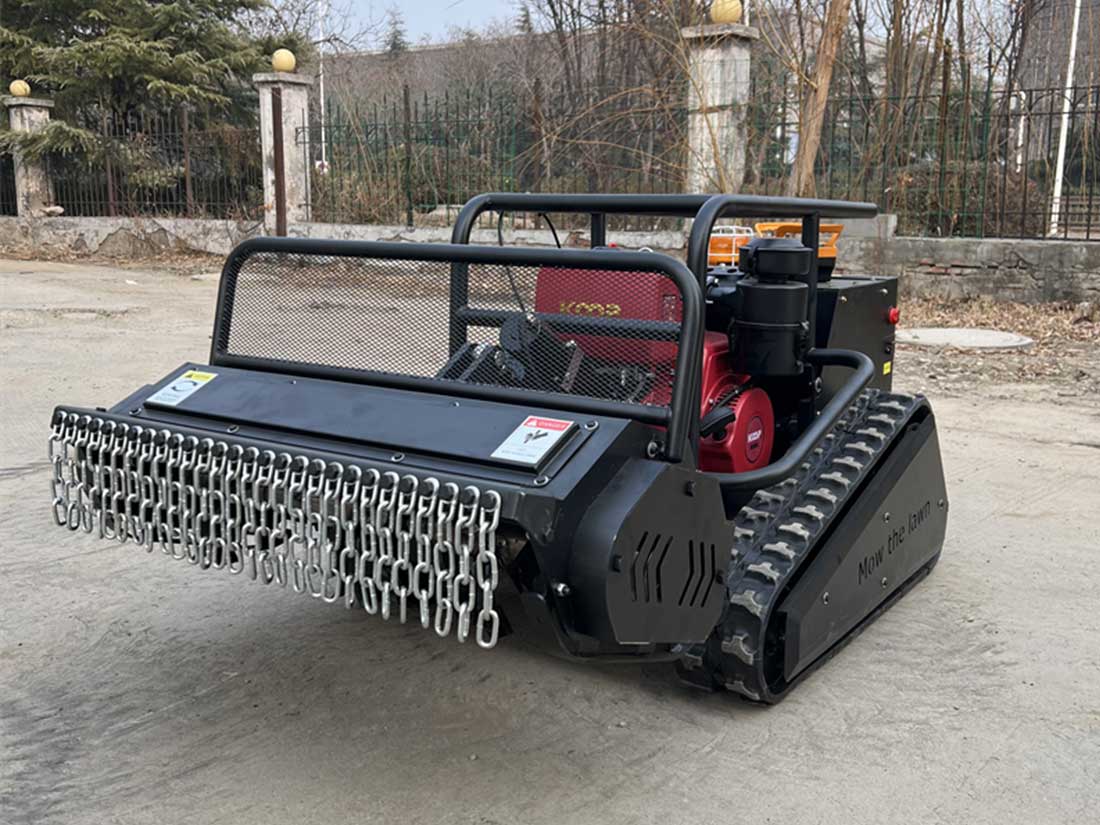
The development of remote-controlled lawn mower technology involves more than adding a remote transmitter to a conventional machine. The entire equipment design must support reliable operation under the intended working conditions.
Remote-control systems
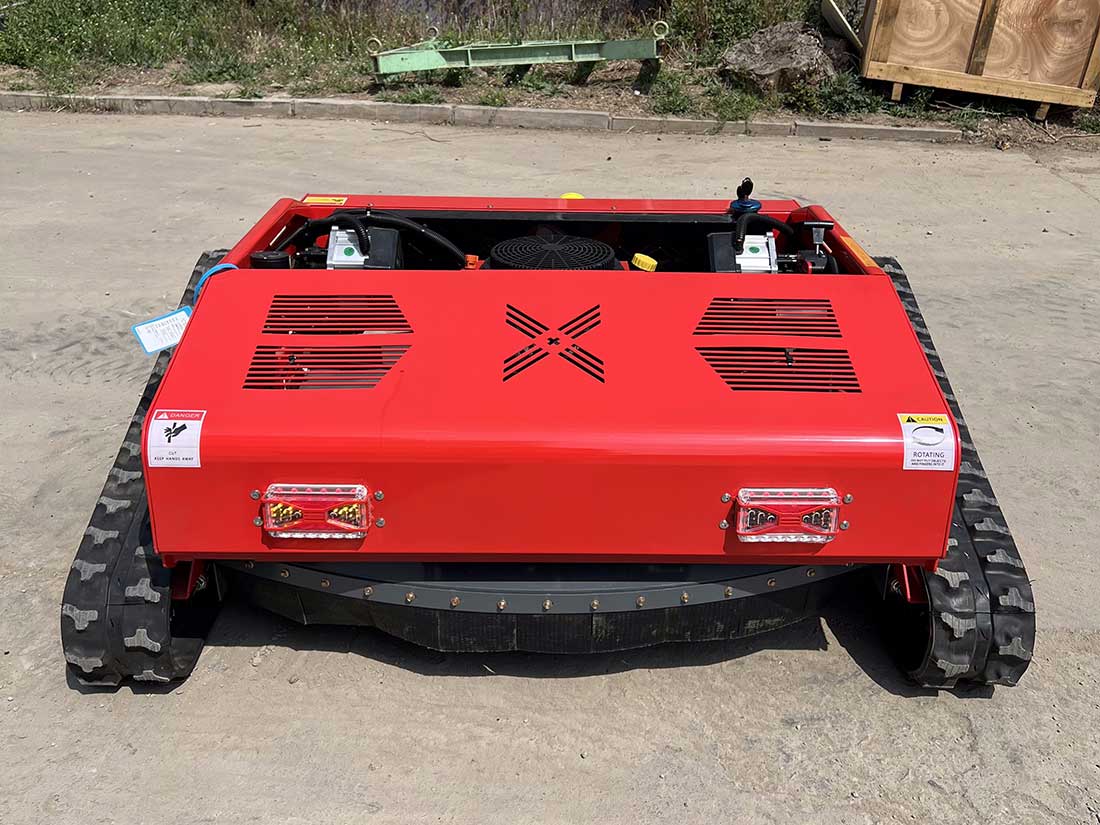
A remote-control system enables the operator to manage functions such as direction, speed, and cutting operation, depending on the model.
When comparing a lawn mower, buyers should examine the specified control range, signal reliability, operating interface, emergency-stop functionality, and procedures for responding to a lost connection. The rated range should never be treated as a guarantee of reliable operation in every environment.
Cutting-system design
Different landscaping tasks require different cutting capabilities. Fine grass maintenance, routine lawn care, tall grass cutting, and rough vegetation management may call for different cutting systems.
Buyers should consider cutting width, adjustable cutting height, blade configuration, vegetation density, and the expected finish. A wider cutting deck may cover more ground per pass, but a narrower machine may be easier to maneuver through confined spaces.
The most appropriate lawn mower is the one that meets the actual cutting requirements without compromising maneuverability or safety.
Tracked mobility and traction
Tracked remote-controlled mowers are designed for applications where ground contact and traction are important. Their performance depends on the track system, machine weight distribution, surface conditions, and operating technique.
Tracks may be advantageous on certain uneven or sloped surfaces, but they do not automatically make a lawn mower suitable for every incline. Wet grass, loose soil, hidden obstacles, and abrupt changes in gradient can still affect stability and traction.
Power-system options
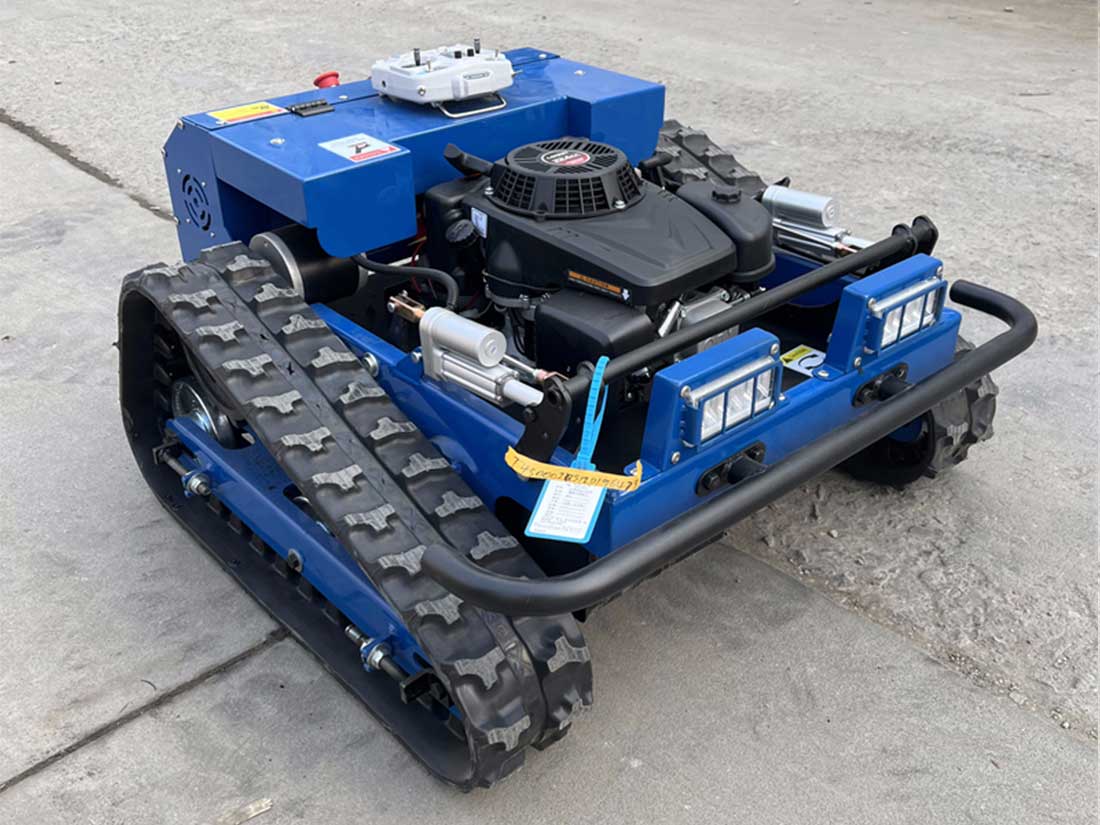
Remote-controlled mowing equipment may use different power configurations, depending on the machine and intended application. Buyers should compare available power, expected operating time, refueling or charging requirements, maintenance needs, and suitability for the planned workload.
The right power system depends on the working environment, daily operating schedule, and the availability of service support.
5. How to Choose the Right Lawn Mower for Professional Landscaping
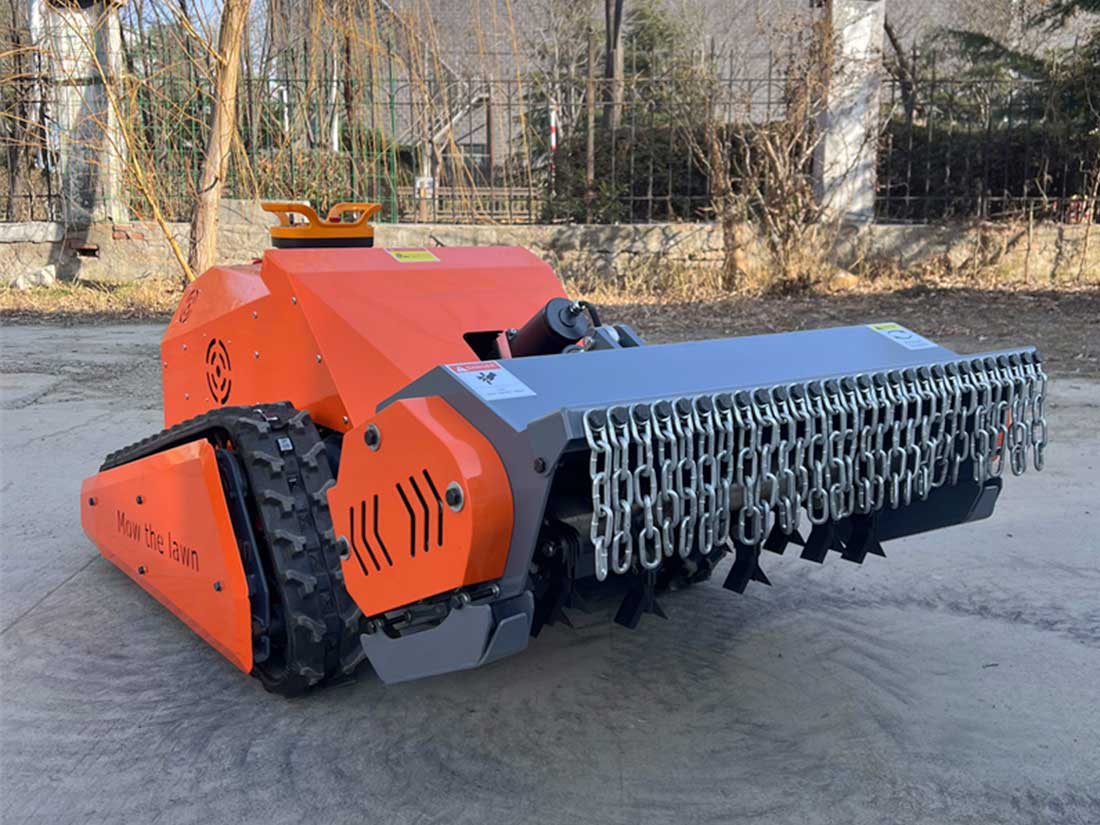
Selecting a lawn mower for commercial use requires a structured assessment of the job, the machine, and the long-term operating costs.
The following factors can help professional buyers compare options more effectively.
| Selection factor | What to evaluate |
|---|---|
| Terrain | Flat ground, uneven surfaces, slopes, and restricted-access areas |
| Vegetation | Fine grass, tall grass, weeds, or selected types of rough vegetation |
| Cutting width | Coverage per pass versus maneuverability |
| Slope rating | Manufacturer-approved operating limits |
| Mobility | Wheel or track design, traction, and ground clearance |
| Control system | Remote range, response, emergency stopping, and usability |
| Maintenance | Access to service points, replacement parts, and routine inspection requirements |
| Operating costs | Purchase price, energy or fuel, transport, maintenance, and expected service life |
| Support | Technical documentation, spare parts, warranty terms, and supplier assistance |
Buyers should also consider how the machine will be transported between job sites and whether operators need additional training.
A professional lawn mower should be assessed as part of the entire operation, not simply by its advertised cutting capacity. Equipment that performs well on one property may be unsuitable for a different site with steeper slopes, denser vegetation, or tighter access routes.
6. Remote-Controlled Mowers and Conventional Equipment: A Practical Comparison
Remote-controlled mowers and conventional machines serve overlapping but different purposes.
A conventional lawn mower may be the most economical option for large, level lawns where easy access and consistent cutting are the primary requirements. Ride-on equipment can cover broad areas efficiently, while walk-behind machines offer maneuverability for smaller properties.
A remote-controlled lawn mower may be better suited to selected difficult areas where remote operation, specialized mobility, or reduced direct exposure to the cutting zone is valuable.
When comparing these options, businesses should consider:
The percentage of the site that requires specialized mowing.
The time needed to transport, position, and operate each machine.
The quality and consistency of the finished cut.
Operator safety and the site's risk assessment.
Maintenance schedules and equipment availability.
Total cost of ownership over the expected operating life.
In many cases, the best solution is a combination of machines. Conventional equipment can handle routine mowing, while remote-controlled mowing equipment is assigned to challenging sections.
This approach can help landscaping businesses match equipment capabilities to specific tasks instead of expecting one lawn mower to perform equally well in every environment.
7. Safety and Maintenance: Protecting Operators and Equipment
Technology can improve how mowing work is performed, but it cannot replace proper training, inspection, and risk management.
Every lawn mower presents potential hazards involving rotating blades, flying debris, moving parts, unstable ground, and unexpected obstacles. Remote-controlled equipment requires particular attention to the operator's position, machine visibility, control connection, and emergency procedures.
Professional operators should follow these practices:
Inspect the site and identify hazards before mowing.
Read the manufacturer's operating instructions and confirm the machine's permitted working conditions.
Check the remote-control system and emergency-stop function before starting work.
Maintain the recommended exclusion zone around the operating machine.
Avoid slopes, surfaces, or vegetation conditions outside the machine's approved limits.
Stop the machine and follow the specified isolation procedure before clearing blockages or performing maintenance.
Inspect cutting components, tracks or wheels, fasteners, and other serviceable parts according to the maintenance schedule.
Preventive maintenance is especially important for contractors who rely on their equipment every working day. Keeping service records, replacing worn components promptly, and following recommended cleaning procedures can help reduce avoidable downtime and support consistent performance.
8. Understanding the Return on Investment
For landscaping businesses, investing in a remote-controlled lawn mower should be based on measurable operating needs and realistic financial expectations.
The initial purchase price is only one part of the total cost. Other expenses may include transportation, training, fuel or electricity, routine servicing, replacement parts, and equipment downtime.
Potential benefits may include improved access to difficult areas, more suitable operator positioning, and a better allocation of equipment across a site. The financial value of these benefits varies with the type of work and how frequently the machine is used.
A simple evaluation process includes:
Step 1: Establish the baseline. Record current labor hours, mowing time, transport time, maintenance costs, and any recurring difficulties.
Step 2: Test the equipment. Where possible, conduct a representative trial under normal working conditions.
Step 3: Measure the results. Compare completed area, cut quality, total working time, setup requirements, and maintenance demands.
Step 4: Calculate the economics. Estimate annual net savings and compare them with the additional investment and ongoing operating costs.
This process provides a more credible basis for purchasing decisions than assuming every remote-controlled lawn mower will automatically deliver a fixed percentage improvement in productivity.
9. The Future of Landscaping: Smarter, More Specialized Equipment
Landscaping requirements are becoming more diverse as contractors maintain larger properties, manage difficult terrain, and respond to changing workforce and safety needs. Remote-controlled mowing equipment represents one part of this wider shift toward application-specific machinery.
As machine design continues to develop, buyers will remain focused on practical considerations: reliable controls, appropriate cutting performance, suitable mobility, maintainability, and dependable supplier support.
The long-term value of any lawn mower innovation depends on whether it solves a real operational problem. Remote-controlled machines are most useful when their capabilities align with the terrain, vegetation, and workload of a particular job.
For professional landscaping businesses, a careful equipment selection process can help identify where remote-controlled technology complements existing machines and where conventional equipment remains the better choice.
10. Explore Remote-Controlled Lawn Mowers from JY Lawn Mower
Choosing suitable mowing equipment begins with understanding the site and its maintenance requirements. Whether the job involves sloped landscapes, uneven ground, agricultural properties, or commercial vegetation management, professional buyers should compare equipment specifications and confirm that each model is appropriate for its intended application.
JY Lawn Mower offers a starting point for exploring remote-controlled mowing equipment for professional grass-cutting and vegetation-management needs.
Visit the official website: https://www.jylawnmower.com/
When reviewing available options, consider the machine's cutting system, mobility, power configuration, permitted slope, safety features, maintenance requirements, and suitability for your working environment. Contacting the supplier with details about your terrain and vegetation can help you identify which specifications deserve the most attention.
Conclusion
Lawn mower innovation is changing the way landscaping professionals approach difficult and varied mowing tasks. Remote-controlled mowing equipment offers an additional option for managing selected slopes, uneven terrain, roadside areas, orchards, and other challenging locations.
Its main advantages come from matching remote operation and machine design to the specific demands of a job. By evaluating safety, cutting performance, mobility, maintenance, and total cost of ownership, businesses can make better-informed equipment decisions.
For contractors looking to expand their mowing capabilities, a remote-controlled lawn mower may be a valuable complement to conventional equipment. Explore the available solutions at JY Lawn Mower to learn more about remote-controlled mowing options for professional landscaping applications.