 English
 Spanish
 Portuguese
 French
 Italian
 Remote Mower
Maintaining grass on steep slopes is one of the most demanding tasks in professional landscaping and vegetation management. Hillsides, roadside embankments, drainage channels, and uneven rural properties can create challenges for conventional mowing equipment, particularly when traction, stability, and operator positioning become concerns.
A lawn mower for steep slopes must do more than cut grass effectively. It must also provide suitable traction, predictable handling, and reliable performance under the working conditions specified by its manufacturer. Remote-controlled mowing equipment offers an alternative approach by allowing operators to control the machine from a suitable position away from the immediate cutting area.
For landscaping contractors, agricultural operators, and professional grounds maintenance teams, understanding the capabilities and limitations of remote-controlled mowing technology can help improve equipment selection, work planning, and site safety.

1. Why Mowing Steep Slopes Is Challenging
Steep terrain introduces several operational risks that may be less significant on flat ground. A conventional lawn mower can lose traction, become difficult to maneuver, or expose the operator to hazardous positions when used outside its intended operating conditions.
Common challenges include:
Reduced traction: Loose soil, wet grass, mud, and uneven surfaces can reduce grip and affect machine movement.
Stability concerns: Operating across a slope may increase the risk of sliding or rollover, depending on the machine and terrain.
Difficult maneuvering: Narrow embankments and irregular ground can make turning and repositioning more complicated.
Operator exposure: Walking or riding on sloped ground while controlling cutting equipment can create additional hazards.
Variable vegetation: Tall grass, weeds, and dense growth may affect cutting performance and conceal obstacles.
These challenges explain why selecting the right lawn mower for steep slopes requires a careful assessment of the site rather than relying on engine power or cutting width alone.
2. How Remote-Controlled Lawn Mowers Improve Operator Safety
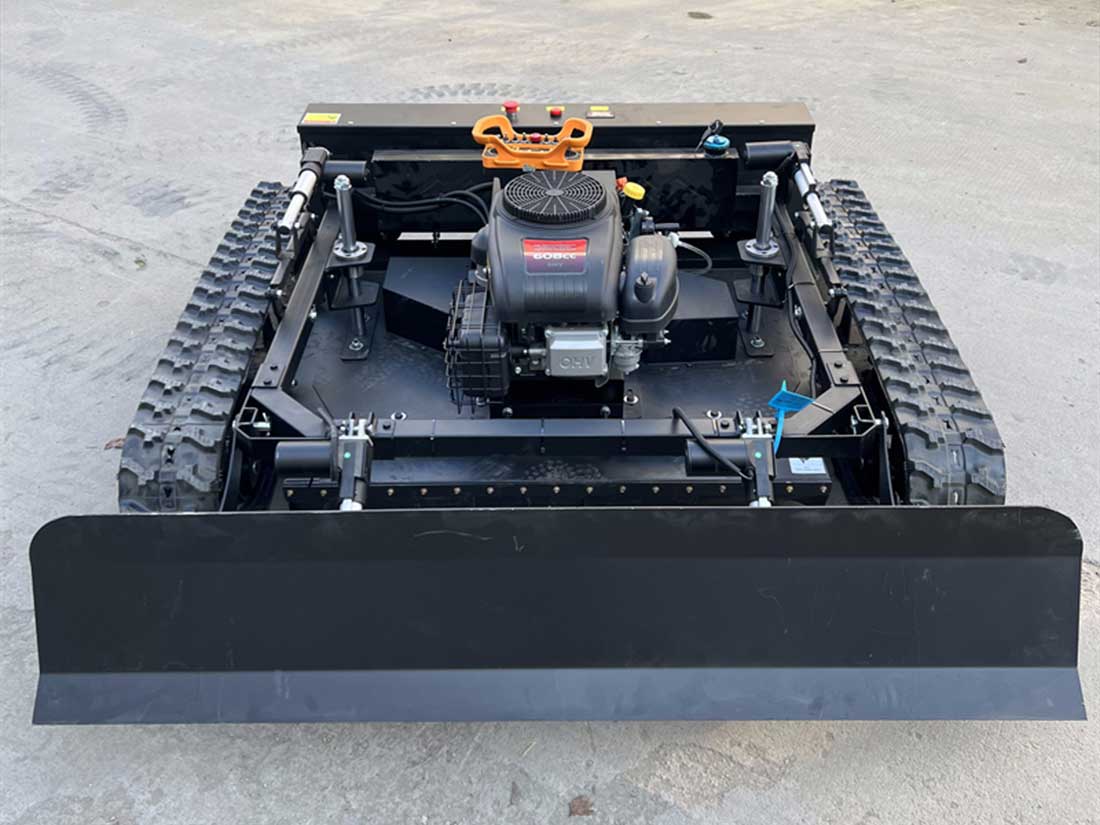
Remote-controlled mowing equipment changes the way operators interact with the machine. Instead of walking directly behind a mower or riding on it, the operator controls its movement and cutting functions using a remote transmitter.
When the machine is designed for the intended terrain and operated according to its instructions, this arrangement can reduce the need for the operator to occupy certain hazardous positions on a slope.
Keeping the operator away from the immediate cutting area
A remote-controlled lawn mower allows the operator to select a suitable position from which to observe and control the machine. This can be particularly useful when mowing selected embankments or uneven areas where standing directly alongside the cutting deck would be undesirable.
Remote operation does not eliminate every hazard. Operators must still maintain the required exclusion zone, preserve adequate visibility, and avoid positioning themselves in the path of a sliding or moving machine.
Reducing direct exposure to difficult terrain
A suitable remote-controlled lawn mower can allow the operator to control mowing operations without walking over the same sloping ground as the machine.
This may help reduce exposure to slipping and footing hazards. However, the operator must still assess the surrounding terrain and follow the manufacturer's requirements for safe operation.
Supporting more controlled mowing procedures
Remote-controlled equipment can provide dedicated controls for direction, speed, and cutting functions, depending on the model. Before starting work, operators should understand the control response, emergency-stop procedure, and actions required if the control signal is interrupted.
For professional contractors, these procedures should form part of a documented site-specific risk assessment and operator training program.
3. Why Tracked Mowers Are Often Considered for Slopes
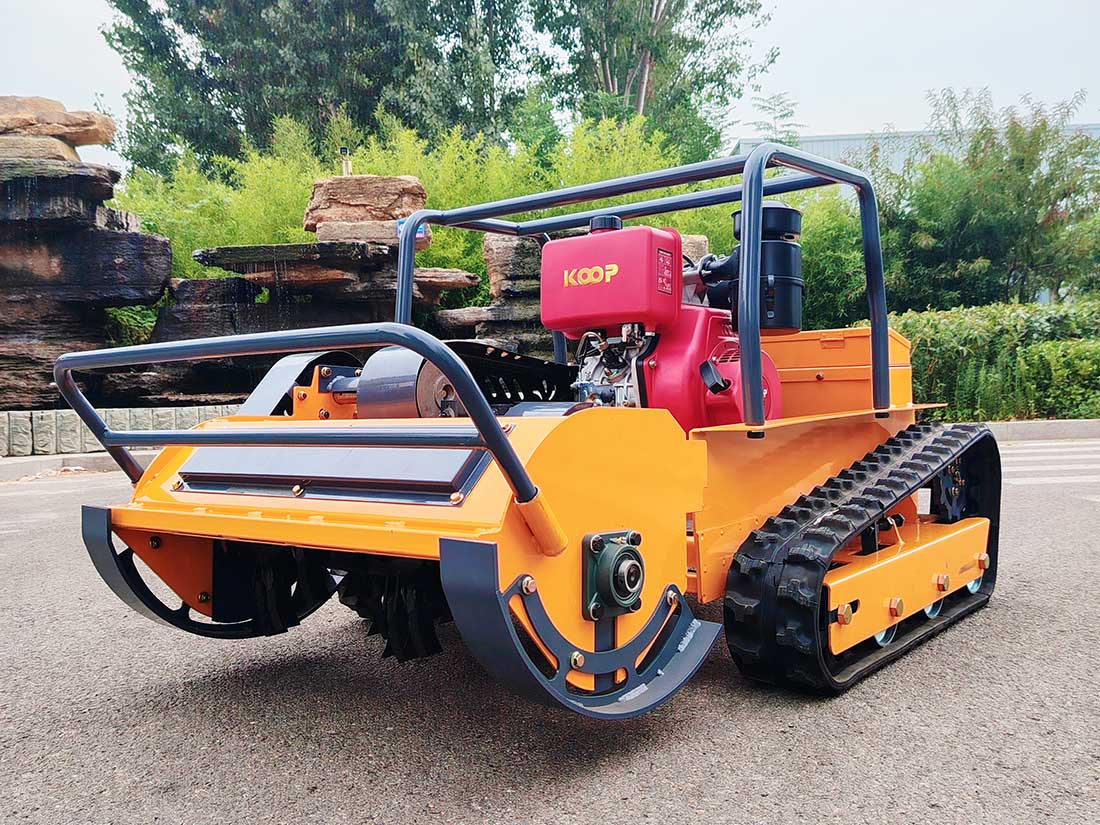
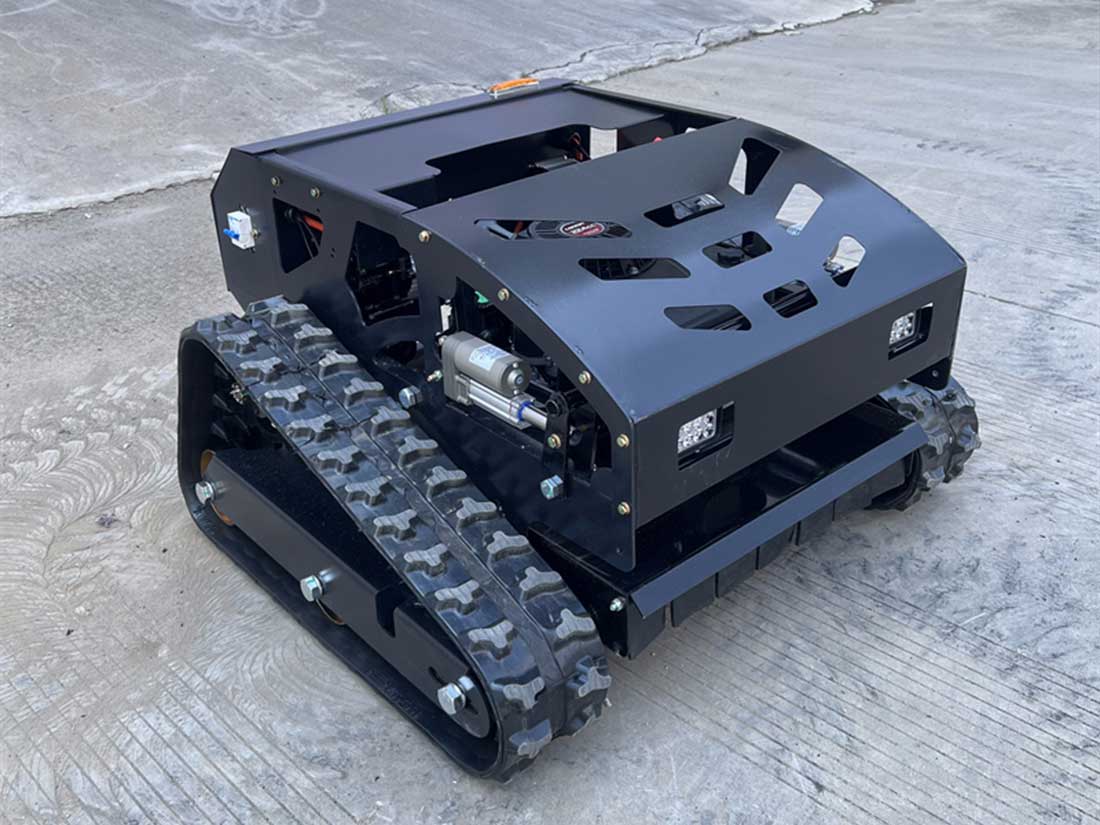
Many remote-controlled mowers intended for challenging terrain use tracked undercarriages. Tracks distribute the machine's weight over a contact area and may provide useful traction on certain uneven surfaces.
However, not every tracked lawn mower is suitable for every slope. The actual operating capability depends on the machine's design, center of gravity, track geometry, surface conditions, and manufacturer-approved limits.
When evaluating a tracked lawn mower for steep slopes, consider the following factors.
Track design and ground contact: Track configuration affects how the machine interacts with grass, soil, and irregular surfaces.
Machine stability: Weight distribution and overall geometry influence stability when traveling uphill, downhill, or across an incline.
Surface conditions: Wet vegetation, loose soil, mud, and hidden depressions can substantially affect traction.
Turning behavior: Changes in direction on a slope may introduce additional instability, so operating procedures should follow the manufacturer's guidance.
Transport and recovery: Contractors should understand how to move the machine safely to the work area and recover it if it becomes immobilized.
A tracked lawn mower can be a valuable tool for slope maintenance, but track design alone should never be treated as proof of safe operation on a particular gradient.
4. Key Applications for Remote-Controlled Slope Mowers
Remote-controlled mowing equipment can be useful in a range of professional environments where terrain makes conventional mowing more complicated.
Roadside embankments
Roadside slopes often require regular grass and weed management, but access can be limited by traffic, drainage structures, and uneven ground.
A suitable remote-controlled lawn mower may allow maintenance crews to control vegetation from a position away from the immediate cutting area. Contractors must still implement appropriate traffic controls, exclusion zones, warning measures, and other site-specific precautions.
Ditches and drainage channels
Drainage channels and sloped ditches may accumulate grass and vegetation that require periodic cutting. Their irregular profiles can make equipment access difficult.
Before selecting a lawn mower for this work, evaluate the ditch depth, side-slope angle, soil stability, moisture, hidden obstacles, and available access routes. The machine must be rated for the actual operating conditions.
Hillside properties and landscape gardens
Residential developments, commercial properties, and public landscapes may include steep banks that are difficult to maintain with conventional equipment.
A compact remote-controlled lawn mower can be considered for these areas if its cutting system, maneuverability, and operating limits match the site requirements.
Farms and orchards
Agricultural properties frequently contain sloping grass areas, uneven access paths, and vegetation growing around trees or infrastructure.
A suitable remote-controlled mower may help manage selected grass-cutting tasks while allowing the operator to control the machine from a suitable position. Buyers should check machine width, turning radius, ground clearance, cutting height, and the risk of damaging tree trunks or irrigation equipment.
5. How to Choose the Right Lawn Mower for Steep Slopes
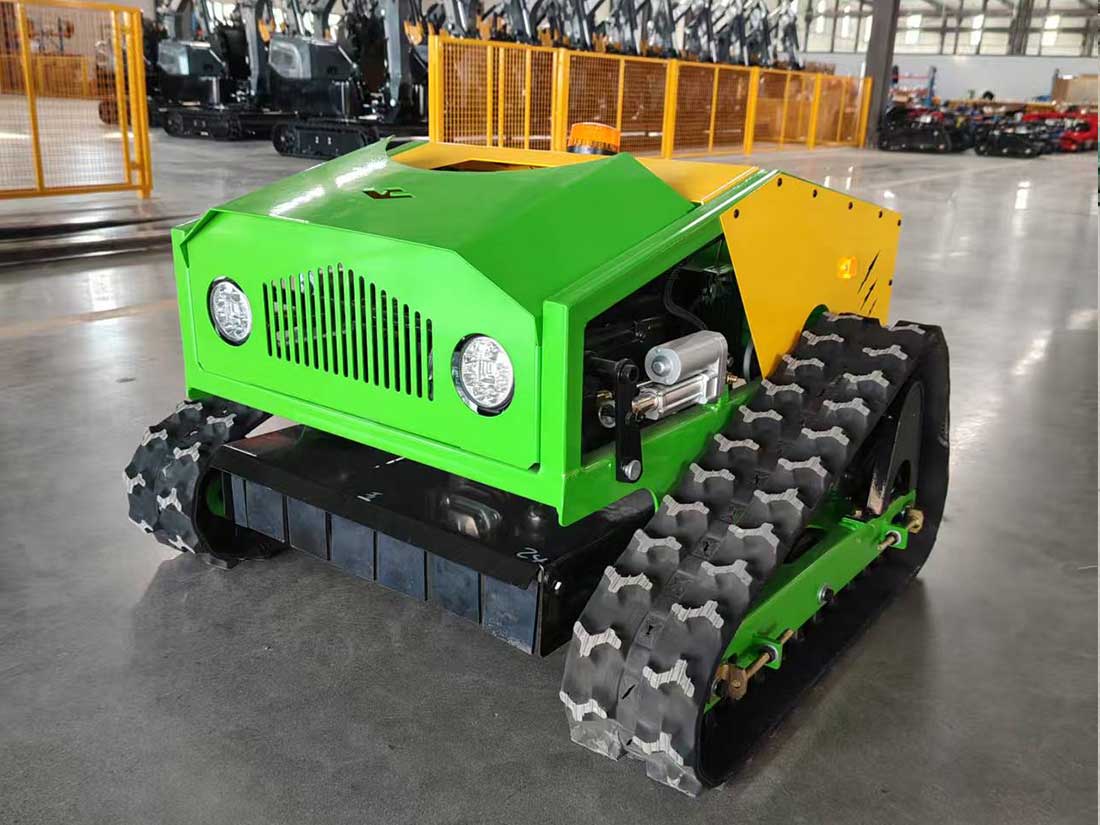
Selecting the right equipment requires more than comparing advertised power or maximum slope figures. Professional buyers should assess the entire working environment.
| Selection factor | What to check |
|---|---|
| Maximum permitted slope | Confirm the manufacturer's rated limit and any restrictions on direction of travel. |
| Traction system | Evaluate track or wheel design for the expected surface conditions. |
| Stability | Review machine geometry, weight distribution, and approved operating procedures. |
| Cutting system | Match the blade configuration and cutting capacity to the expected vegetation. |
| Cutting width | Balance mowing coverage with maneuverability in narrow areas. |
| Remote-control system | Check operating range, control response, emergency stop, and signal-loss procedures. |
| Power system | Compare operating time, power requirements, refueling or charging, and servicing. |
| Maintenance access | Assess how easily cutting components and running gear can be inspected and serviced. |
| Technical support | Confirm documentation, spare-parts availability, warranty terms, and supplier assistance. |
The permitted slope is particularly important. Buyers should ask whether the manufacturer's specification applies to uphill and downhill travel, cross-slope operation, or only certain conditions. A single advertised slope rating may not cover every direction of movement or surface type.
A lawn mower suitable for a dry, firm incline may perform differently on wet grass or loose soil. Always assess the real operating conditions and remain within the manufacturer's stated limits.
6. Remote-Controlled vs. Conventional Lawn Mowers for Slopes
Conventional lawn mowers remain effective for many routine grass-cutting tasks. Walk-behind machines may be suitable for accessible areas within their approved operating limits, while ride-on mowers can provide efficient coverage on appropriate terrain.
Remote-controlled equipment may be a better option for selected slopes and difficult-access areas where remote operation and specialized traction provide practical advantages.
The choice depends on the specific task:
Flat, open lawns: Conventional equipment may provide efficient and economical coverage.
Moderately uneven areas: The best option depends on ground conditions, machine design, and operating limits.
Steep or restricted-access areas: A purpose-designed remote-controlled lawn mower may offer a more suitable operating approach.
Mixed landscapes: Combining conventional and remote-controlled equipment may allow contractors to match each machine to the work.
No single lawn mower is ideal for every property. The most effective equipment strategy considers the proportion of the site that requires specialized mowing, the frequency of maintenance, transport requirements, operator training, and total ownership costs.
7. Improving Efficiency Without Compromising Safety
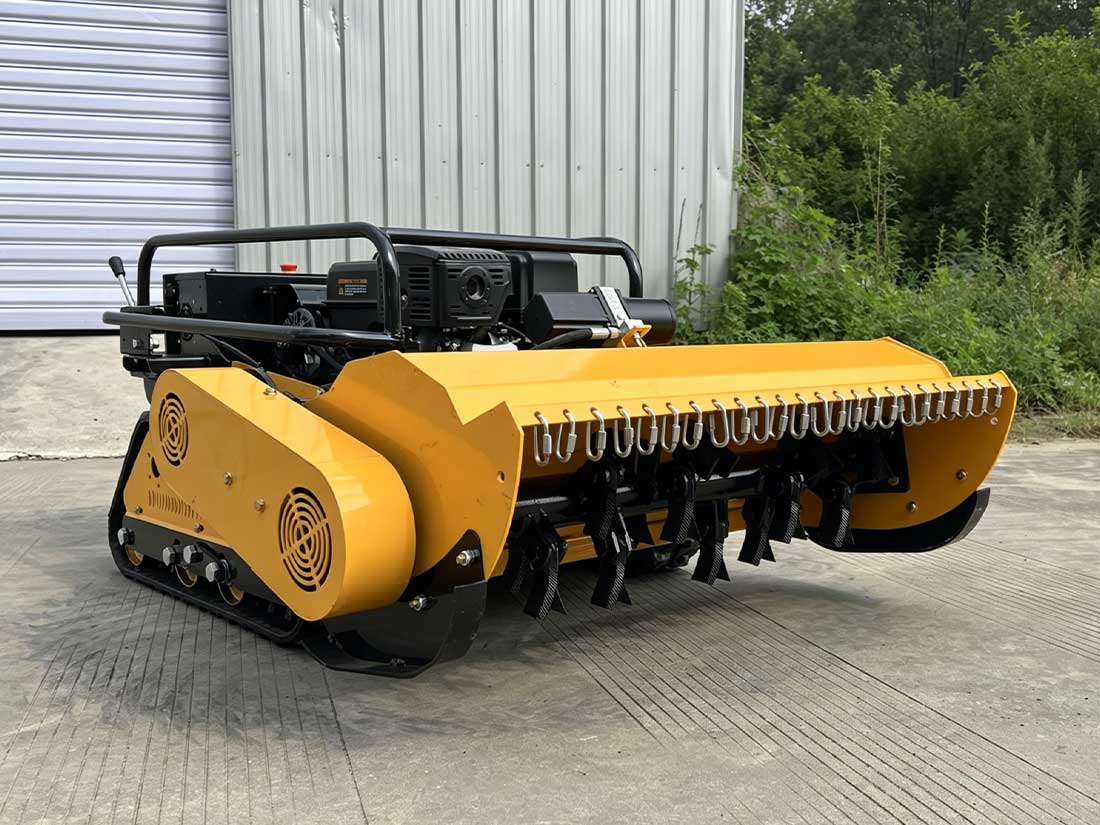
Remote-controlled mowing equipment can support more flexible work planning, but productivity depends on more than the machine's cutting speed.
For professional landscaping teams, efficiency should be measured across the entire job, including preparation, transport, setup, mowing, repositioning, cleaning, and maintenance.
Several practices can help improve performance:
Plan the mowing route
Inspect the site before work begins. Identify obstacles, access points, areas of unstable ground, and locations where the machine must not operate. Establish a suitable mowing sequence based on the machine's operating instructions.
Match the cutting system to vegetation
Grass height, density, moisture, and the presence of woody plants can affect cutting performance. Choose a lawn mower with a cutting system appropriate for the vegetation rather than assuming that one blade configuration will handle every condition.
Train operators before deployment
Operators should practice remote control, emergency stopping, maneuvering, and recovery procedures in a controlled environment before using the machine on a difficult slope.
Measure actual job performance
Record the area completed, total working time, setup time, maintenance requirements, and quality of the finished cut. These measurements can help contractors compare remote-controlled equipment with their existing mowing methods.
A representative trial is generally more reliable than assuming a fixed productivity improvement based on product descriptions alone.
8. Maintenance Practices for Long-Term Reliability
A lawn mower working in demanding terrain requires regular inspection and preventive maintenance. Slopes, dust, moisture, grass buildup, and repeated changes in direction can place additional demands on cutting and mobility components.
A practical maintenance routine should include:
Inspecting blades and cutting components for wear or damage.
Cleaning the machine according to the manufacturer's instructions.
Checking tracks, wheels, and running gear where applicable.
Inspecting fasteners, guards, and other safety-related components.
Checking the remote-control system and emergency-stop function.
Following the recommended service intervals for the power system.
Recording inspections, repairs, and replacement parts.
Always stop and secure the machine according to the manufacturer's isolation procedure before cleaning, clearing blockages, or performing maintenance.
For commercial operators, preventive maintenance can help identify developing problems early and reduce unexpected downtime during busy mowing periods.
9. Understanding the Return on Investment
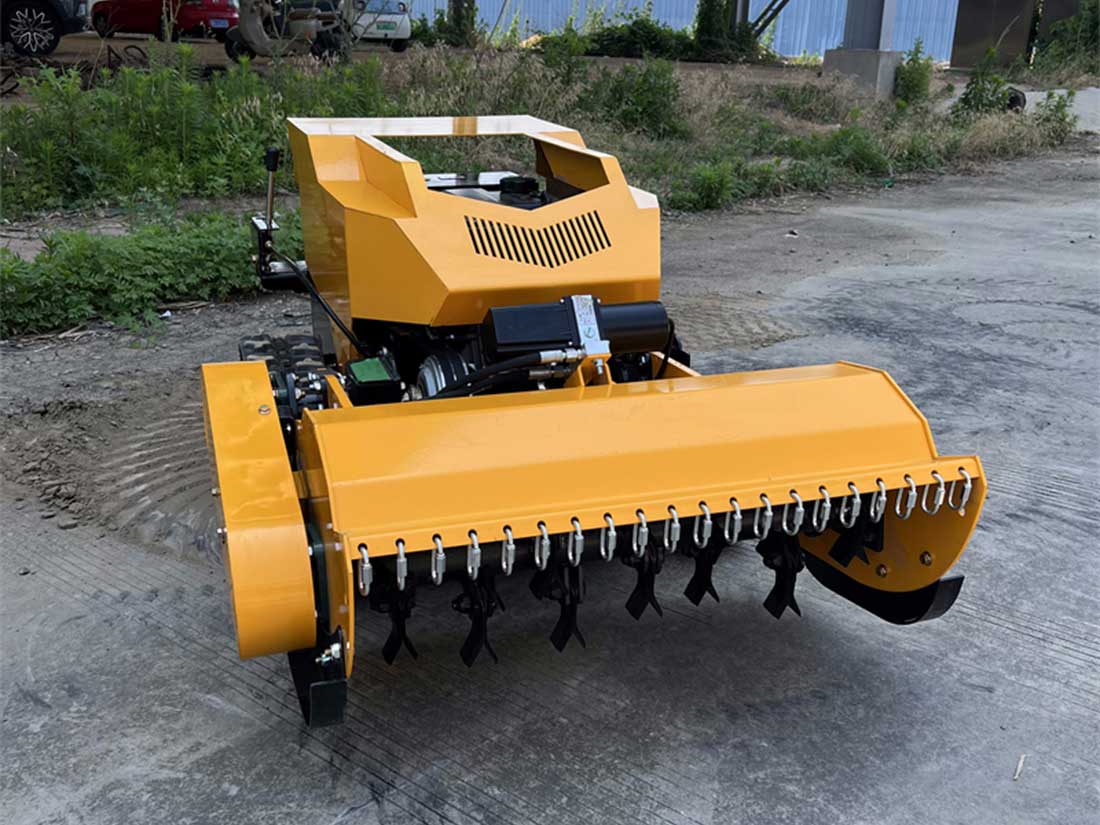
Purchasing a remote-controlled lawn mower should be treated as an operational investment. The potential financial value depends on the work it performs, how frequently it is used, and the costs it can realistically help manage.
Relevant costs include:
Initial purchase price.
Transportation and setup.
Operator training.
Fuel or electricity.
Routine servicing and replacement parts.
Equipment downtime and expected service life.
Potential benefits may include improved access to difficult areas, more flexible equipment allocation, and reduced operator exposure to certain hazardous positions. These benefits should be evaluated against actual operating data.
For example, a contractor maintaining extensive roadside embankments may have different equipment needs from a company that mainly cuts flat residential lawns. The first business may use a specialized remote-controlled lawn mower regularly, while the second may find conventional equipment more economical.
The best investment decision is based on the frequency of difficult mowing tasks, site conditions, measured performance, and total cost of ownership—not on purchase price alone.
10. Explore Remote-Controlled Slope Mowers from JY Lawn Mower
Finding a suitable lawn mower for steep slopes begins with identifying the site's terrain, vegetation, and operating requirements. Buyers should confirm the machine's permitted slope, mobility, cutting system, remote-control functions, and maintenance needs before making a decision.
JY Lawn Mower provides a starting point for exploring remote-controlled mowing equipment for professional grass-cutting and vegetation-management applications.
Visit the official website: https://www.jylawnmower.com/
When comparing equipment, prepare details about the slope angle, surface conditions, vegetation height, working area, and frequency of use. Sharing this information with the supplier can help you identify which machine specifications are most relevant to your application.
Conclusion
Choosing a lawn mower for steep slopes requires careful attention to traction, stability, cutting performance, and operator safety. Remote-controlled mowing equipment offers a practical option for selected challenging areas by allowing operators to control the machine from a suitable position away from the immediate cutting zone.
Tracked designs may provide useful mobility on certain surfaces, while remote-control systems can support more flexible operating procedures. Nevertheless, equipment must always be used within its manufacturer-approved limits, with proper training, site assessment, and maintenance.
For landscaping contractors, agricultural operators, and professional maintenance teams, the right remote-controlled lawn mower can complement conventional equipment and help address difficult mowing tasks more effectively.
Explore remote-controlled mowing solutions at JY Lawn Mower to learn more about equipment options for slopes, uneven terrain, and demanding professional applications.