 English
 Spanish
 Portuguese
 French
 Italian
 Remote Mower
Maintaining steep embankments, roadside slopes, drainage channels, and other difficult landscapes has traditionally been one of the most demanding tasks in professional vegetation management. Uneven ground, tall grass, limited access, and steep gradients can make conventional mowing equipment inefficient and potentially hazardous.
This is where the embankment mower is becoming an increasingly valuable solution. Designed specifically for challenging terrain, modern embankment mower systems combine robust cutting technology, strong traction, and precise maneuverability. When integrated with remote-controlled mowing equipment, they can also allow operators to control the machine from a safer position away from the steepest sections of a slope.
What Is an Embankment Mower?
An embankment mower is specialized mowing equipment designed to maintain vegetation on slopes, banks, embankments, and other uneven terrain.
Unlike conventional lawn mowers primarily designed for relatively flat surfaces, an embankment mower focuses on stability, cutting performance, and maneuverability in demanding environments.
Depending on the model and application, an embankment mower may be suitable for:
- Roadside embankments
- Drainage channels
- Riverbanks
- Steep grass slopes
- Railway and infrastructure corridors
- Large commercial properties
- Overgrown fields and rough terrain
For professional contractors, selecting the correct embankment mower requires careful consideration of slope conditions, vegetation density, accessibility, and required cutting frequency.
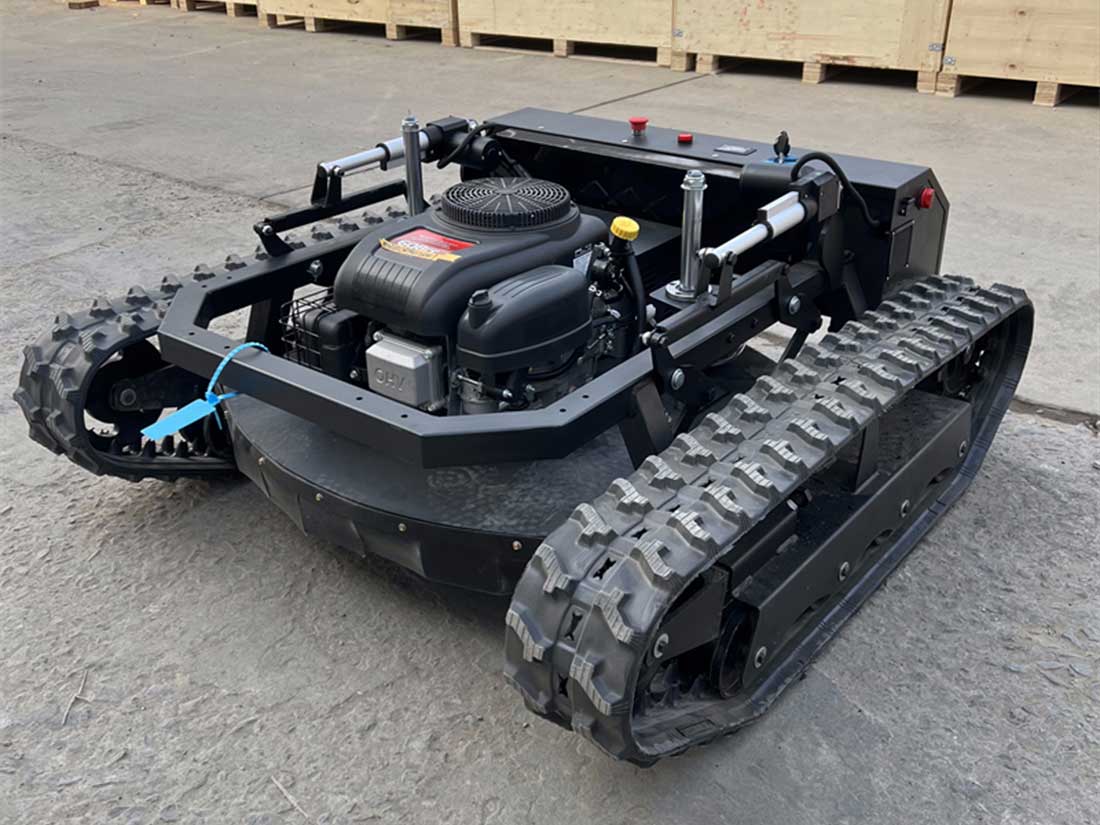
Why Remote-Controlled Mowing Equipment Matters
One of the most significant developments in professional slope maintenance is the integration of remote-control technology.
A modern embankment mower equipped with remote operation allows the operator to control the machine without physically walking alongside it on a steep slope. This approach can make difficult mowing operations more practical and can reduce the physical demands placed on workers.
Remote-controlled mowing equipment can provide control over functions such as:
- Forward and reverse movement
- Steering
- Operating speed
- Cutting functions
- Emergency stopping
- Machine positioning
The precise functions depend on the specific machine, so operators should always follow the manufacturer's operating instructions.
Improving Safety on Steep Slopes
Safety is one of the primary reasons professionals consider an embankment mower instead of conventional mowing equipment.
Steep slopes introduce several challenges, including reduced footing, uneven surfaces, hidden obstacles, and changing ground conditions. Keeping an operator directly on or immediately beside a machine can increase exposure to these hazards.
With remote-controlled mowing equipment, the operator can maintain a greater working distance from the machine while observing its movement.
However, remote operation does not eliminate risk. A professional embankment mower should always be operated within its specified slope limits, and the work area should be inspected before mowing begins.
Operators should also consider:
- Ground stability
- Weather conditions
- Wet or slippery grass
- Hidden rocks and debris
- Nearby roads or pedestrians
- The manufacturer's maximum operating angle
Handling Tall Grass and Dense Vegetation
Slope maintenance is often performed less frequently than residential lawn mowing. As a result, vegetation may become tall, thick, and difficult to manage.
A professional embankment mower needs sufficient cutting capability to deal with these conditions consistently.
Important performance factors include motor power, cutting width, blade configuration, drivetrain capacity, and overall machine design.
A properly selected embankment mower can help contractors maintain overgrown areas more efficiently while reducing the number of passes required.
Traction and Stability Are Critical
Power alone does not determine whether an embankment mower can perform effectively on a slope.
Traction is equally important. A machine must maintain sufficient contact with the ground while traveling across uneven surfaces.
Professional remote-controlled mowing equipment may incorporate features designed to improve stability, such as specialized track or wheel configurations, optimized weight distribution, and robust drivetrains.
Before purchasing an embankment mower, professionals should evaluate the actual terrain where the equipment will be used rather than relying solely on general marketing claims.
Applications Across Multiple Industries
The versatility of an embankment mower makes this type of equipment relevant to several professional industries.
Roadside Maintenance
Roadside slopes can be difficult to access with conventional mowing equipment. An embankment mower can provide a practical solution for controlling vegetation while allowing the operator to remain away from the steepest section.
Landscaping
Professional landscaping companies managing large estates and commercial properties can use an embankment mower for areas that are unsuitable for standard lawn equipment.
Agriculture
Farmers and land managers may require specialized equipment for maintaining grass-covered slopes, field boundaries, and rough terrain.
Infrastructure Maintenance
Railways, drainage systems, utility corridors, and other infrastructure can contain difficult-to-access vegetation. Remote-controlled mowing equipment can help improve access to these areas.
Choosing the Right Embankment Mower
Not every embankment mower is designed for the same conditions. A professional purchasing decision should consider several technical factors.
Slope Capability
Determine the maximum operating slope specified by the manufacturer and compare it with the actual terrain.
Cutting Performance
Consider the height, thickness, and type of vegetation that needs to be removed.
Traction System
Evaluate whether wheels, tracks, or another drive configuration is appropriate for the terrain.
Remote-Control Range
For remote-controlled mowing equipment, the effective operating range should be sufficient for the worksite.
Machine Dimensions
A compact embankment mower may be advantageous when working in confined areas, while larger machines may provide greater productivity.
Maintenance and Support
Professional users should consider access to replacement parts, technical support, maintenance requirements, and long-term operating costs.
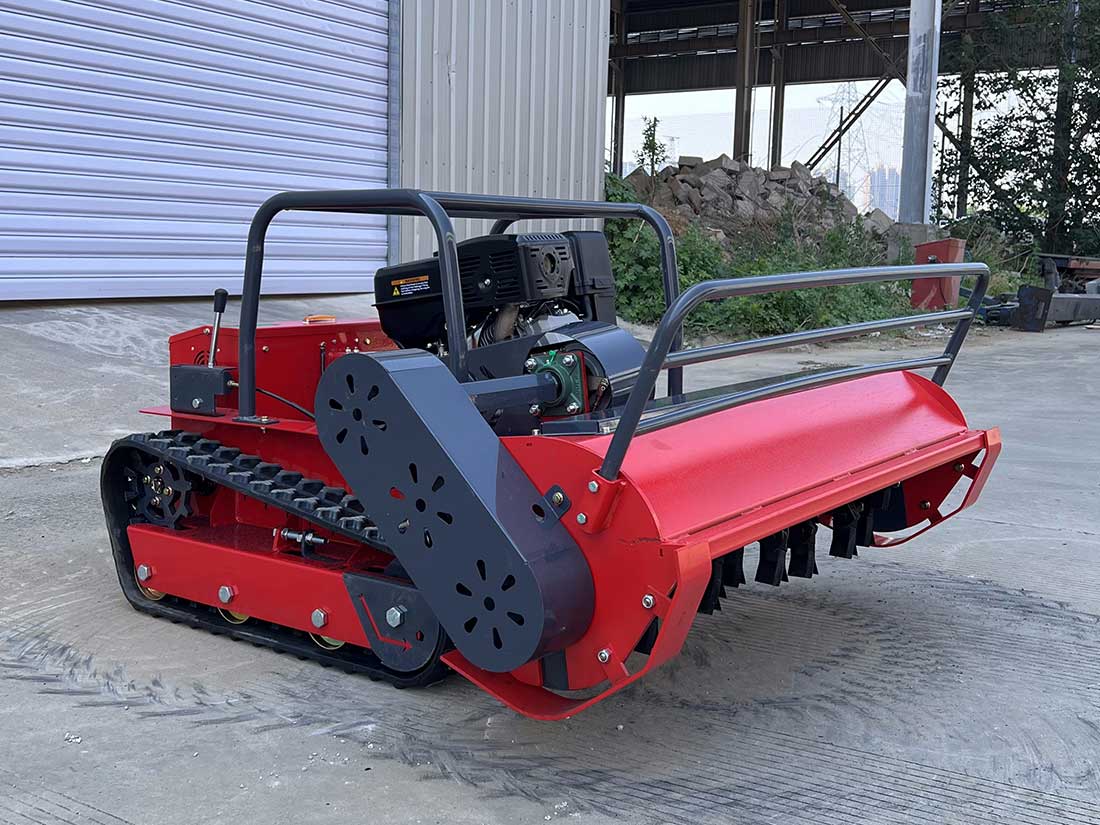
Engineering Experience Makes a Difference
Designing an embankment mower for professional use requires more than simply installing a powerful engine and cutting deck.
Engineers must consider the interaction between the drivetrain, chassis, cutting mechanism, weight distribution, remote-control system, and terrain.
For demanding applications, the reliability of these integrated systems can have a direct impact on productivity.
This is why buyers should evaluate the manufacturer's engineering experience and product support when comparing remote-controlled mowing equipment.
Maintenance for Long-Term Performance
Regular maintenance is essential for keeping an embankment mower operating reliably.
After use, professional operators should inspect:
- Cutting blades
- Drive components
- Tracks or tires
- Hydraulic or mechanical systems, where applicable
- Electrical connections
- Remote-control equipment
- Battery condition
- Structural components
Grass, mud, and debris should also be removed according to the manufacturer's maintenance recommendations.
Preventive maintenance can help identify wear before it develops into a more serious equipment problem.
The Future of Embankment Mowing
The development of remote-controlled mowing equipment is changing expectations for professional vegetation management.
Future generations of embankment mower technology may incorporate more advanced sensors, improved control systems, automated safety features, enhanced navigation, and better energy efficiency.
These developments could make slope maintenance increasingly productive while giving operators greater control over difficult working environments.
For companies responsible for maintaining large areas, this evolution represents an important step toward smarter and more efficient vegetation management.
Explore Professional Remote-Controlled Mowing Equipment
For businesses and land managers looking for professional solutions, choosing equipment specifically designed for difficult terrain is essential.
JY Lawn Mower provides remote-controlled mowing equipment designed for challenging mowing applications. You can explore its product range and learn more about professional solutions here:
JY Lawn Mower — Remote-Controlled Mowing Equipment
Conclusion
The embankment mower is becoming an important tool for maintaining steep slopes, roadside banks, rough fields, and other difficult landscapes.
By combining specialized cutting systems, strong traction, robust construction, and remote operation, modern embankment mower technology can help professional users approach challenging terrain with greater efficiency and flexibility.
For contractors, landscapers, agricultural operators, and infrastructure maintenance teams, the right embankment mower should be selected according to the actual slope, vegetation, working environment, and required productivity.
As remote-controlled mowing equipment continues to evolve, embankment mower technology is likely to play an increasingly important role in the future of professional slope maintenance.