 English
 Spanish
 Portuguese
 French
 Italian
 Remote Mower
Uneven ground is one of the biggest challenges in professional vegetation management. Slopes, rough surfaces, drainage areas, dense grass, embankments, and irregular terrain can make ordinary mowing operations more demanding.
For professional landscapers, agricultural contractors, municipalities, and vegetation-management teams, choosing the right Lawn mower is therefore about much more than cutting grass. The machine must be selected according to terrain, vegetation, mobility, operator control, cutting requirements, and maintenance needs.
This is one reason remote-controlled mowing equipment is attracting attention. A professional remote-controlled Lawn mower can provide greater flexibility when working in areas where conventional mowing equipment is difficult to operate.
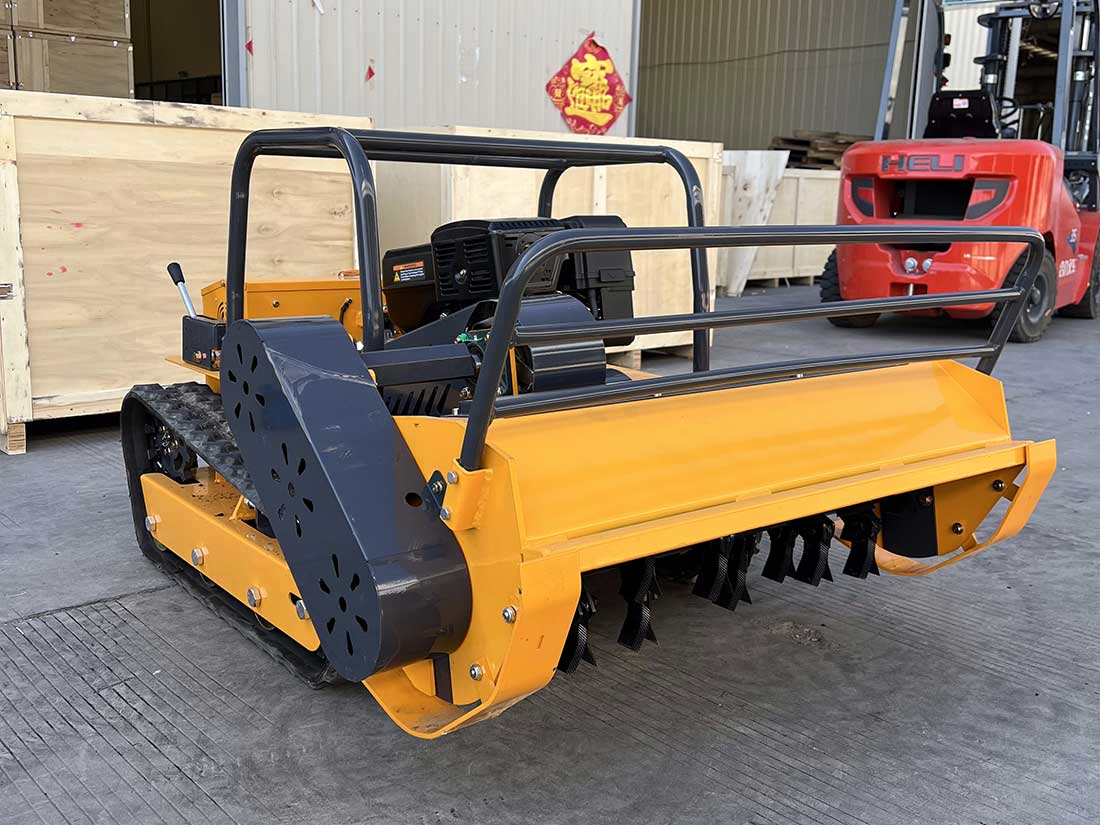
Why Uneven Ground Is Challenging for a Lawn mower
A flat lawn offers relatively predictable working conditions. Uneven ground creates a completely different operating environment.
Changes in terrain can affect machine movement, traction, cutting consistency, and operator visibility. Rocks, holes, slopes, wet areas, and dense vegetation can further increase the difficulty of maintaining a consistent mowing operation.
A professional Lawn mower should therefore be selected based on the actual worksite rather than simply its advertised specifications.
Before choosing equipment, operators should consider:
- the shape and condition of the terrain;
- the presence of slopes or embankments;
- the type and density of vegetation;
- access to the working area;
- required cutting system;
- machine mobility;
- maintenance requirements;
- operating and safety procedures.
How Remote-Controlled Lawn mower Equipment Helps
Remote-controlled mowing equipment changes the relationship between the operator and the machine.
Instead of operating directly from the machine, the operator controls the Lawn mower remotely while maintaining visual contact with the working area.
This can be particularly useful for difficult terrain. When a machine is working in a challenging location, remote operation allows the operator to remain positioned away from the machine rather than needing to occupy the same location.
A remote-controlled Lawn mower can therefore be considered for applications involving:
- uneven grassland;
- slopes and embankments;
- roadside vegetation;
- agricultural areas;
- orchards;
- parks;
- large green spaces;
- difficult-to-access locations.
Remote operation does not remove hazards, however. Professional operators must always follow manufacturer instructions, assess the terrain, maintain suitable distances, and keep people and animals away from the operating area.
Lawn mower Mobility Matters on Uneven Terrain
One of the most important characteristics of a professional Lawn mower is its ability to move predictably across the intended terrain.
For uneven ground, machine mobility becomes especially important. A mower may encounter changes in elevation, loose material, wet ground, grass accumulation, and obstacles.
Tracked remote-controlled mowing equipment can be particularly relevant to professional applications where traction and controlled movement are important.
The machine should be evaluated as a complete system, including its chassis, drive system, cutting equipment, and remote-control functions.
Rather than asking only, “How powerful is this Lawn mower?”, professional buyers should also ask, “How well does this machine match my terrain?”
Lawn mower Performance Depends on the Cutting System
Uneven ground is only one part of the mowing challenge. Vegetation type also has a major influence on equipment selection.
Short grass requires different cutting characteristics from dense weeds, tall vegetation, or brush.
For this reason, the cutting attachment is an important component of a professional Lawn mower.
Depending on the application, professional mowing equipment may use different cutting configurations to handle different vegetation conditions.
A proper match between the Lawn mower and its cutting system can help operators achieve more consistent results while reducing unnecessary stress on the machine.
Lawn mower Applications in Landscaping
Professional landscaping projects rarely involve perfectly uniform terrain.
Parks, commercial properties, green spaces, and large landscaped areas can contain slopes, uneven ground, drainage areas, and sections that are difficult to access.
A remote-controlled Lawn mower can provide an additional solution for these challenging areas.
Instead of replacing every conventional mower, remote-controlled equipment can complement an existing fleet by handling applications where conventional equipment is less convenient.
For landscaping companies, this flexibility can be particularly valuable when the same project contains both accessible flat areas and more demanding terrain.
Lawn mower Solutions for Agriculture
Agricultural land can present similarly complex conditions.
Fields and orchards may contain uneven surfaces, grass margins, slopes, and vegetation that requires regular management.
A professional Lawn mower for agricultural applications should therefore be evaluated according to the terrain and vegetation rather than treated as a standard residential grass-cutting machine.
Remote-controlled mowing equipment can be useful where the operator needs greater flexibility in positioning the machine.
Agricultural contractors should also consider transport, maintenance, cutting configuration, working frequency, and access conditions before purchasing a Lawn mower.
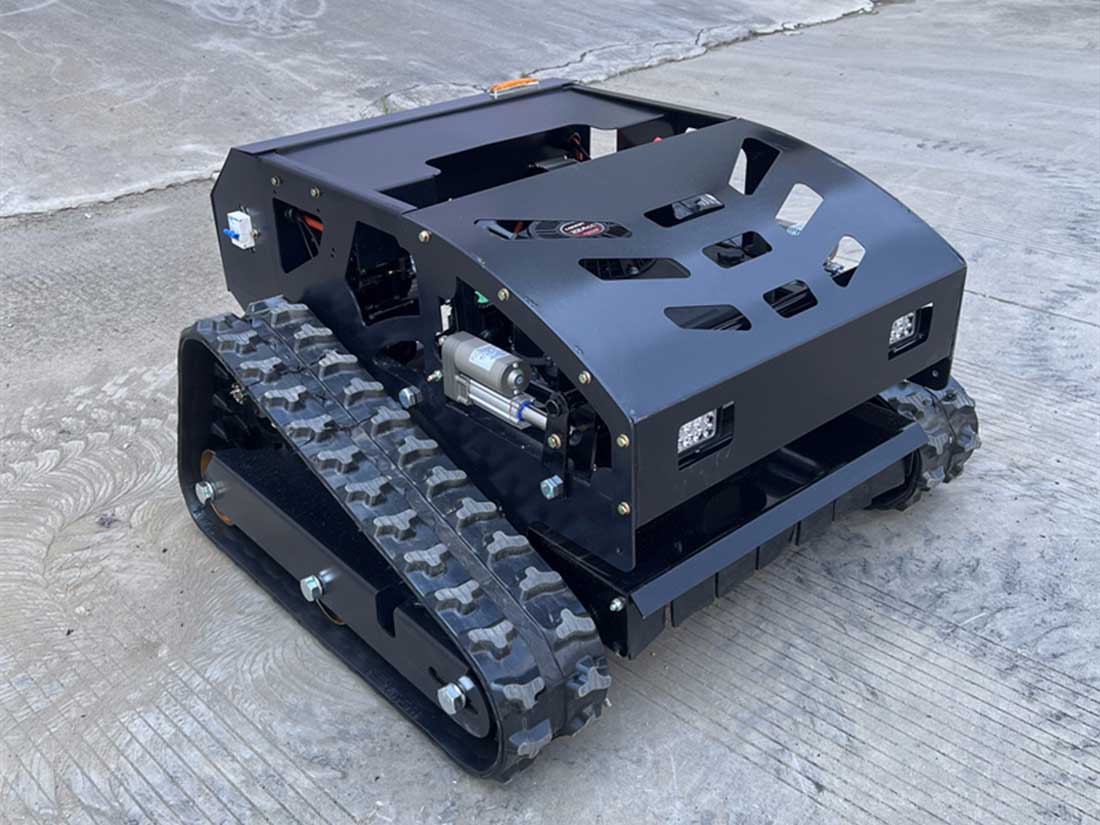
Lawn mower Equipment for Roadside Maintenance
Roadside vegetation management is another application where uneven terrain can create significant challenges.
Road edges may include embankments, drainage channels, slopes, rough grass, and other obstacles. Professional roadside mowing equipment is therefore designed around more demanding vegetation-management requirements.
The uploaded industry material specifically identifies roadside mowing equipment as relevant to municipalities, landscaping companies, and agricultural contractors.
A remote-controlled Lawn mower can be considered for suitable roadside applications because it allows the operator to control the machine remotely.
However, roadside mowing requires more than appropriate equipment. Work-zone protection, traffic management, visibility, operator training, and compliance with applicable local requirements remain essential.
How Professional Operators Approach Uneven Ground
Experience plays an important role in professional mowing.
Experienced operators do not simply drive a Lawn mower onto uneven terrain and begin cutting. They first evaluate the worksite.
A professional workflow may include:
Step 1: Inspect the Terrain
Identify slopes, holes, rocks, drainage areas, loose ground, and other obstacles.
Step 2: Assess the Vegetation
Determine whether the area contains ordinary grass, tall weeds, dense vegetation, or brush.
Step 3: Select the Cutting Configuration
Match the cutting system to the vegetation and intended result.
Step 4: Establish the Operating Area
Keep people and animals outside the work zone and establish appropriate operating procedures.
Step 5: Test Machine Movement
Before full operation, confirm that the Lawn mower responds correctly to remote commands and moves appropriately over the terrain.
Step 6: Monitor Conditions
Terrain and vegetation conditions can change during the work. Operators should continuously monitor the machine and surrounding environment.
This structured approach is one of the key differences between casual mowing and professional vegetation management.
Lawn mower Safety on Difficult Terrain
Safety should always be considered before productivity.
Remote-controlled mowing equipment can help separate the operator from the machine, but it does not eliminate operational risks.
Before using a remote-controlled Lawn mower, operators should inspect the terrain and identify potential hazards.
Particular attention should be given to:
- steep or changing slopes;
- unstable ground;
- hidden objects;
- rocks;
- holes;
- people and animals;
- nearby infrastructure;
- roadside traffic;
- wet or slippery surfaces.
The machine should always be operated within the limits specified by the manufacturer.
A professional Lawn mower is only as safe as the equipment, operating procedure, training, and worksite management surrounding it.
Lawn mower Maintenance for Uneven Ground
Uneven terrain can expose mowing equipment to demanding operating conditions.
Routine maintenance is therefore essential for professional users.
A Lawn mower should be inspected regularly, with particular attention to:
- cutting components;
- tracks or wheels;
- drive components;
- fasteners;
- remote-control functions;
- electrical connections;
- accumulated vegetation;
- signs of abnormal wear.
Cleaning the machine after operation is also important, particularly after working in wet grass, mud, or dense vegetation.
Preventive maintenance allows operators to identify developing problems before they result in unnecessary downtime.
Choosing a Professional Lawn mower
When purchasing a professional Lawn mower, it is useful to evaluate the entire machine rather than focusing on a single specification.
Terrain Compatibility
Can the machine handle the type of uneven ground where it will be used?
Mobility
Does the machine provide suitable movement and traction for the intended application?
Cutting Capability
Is the cutting system appropriate for the vegetation?
Remote Control
Does the operator have sufficient control over machine movement and mowing functions?
Serviceability
Can routine inspections and maintenance be performed efficiently?
Application Flexibility
Can the Lawn mower be used across the different areas your business manages?
These questions help professional users avoid selecting equipment based solely on power, price, or appearance.
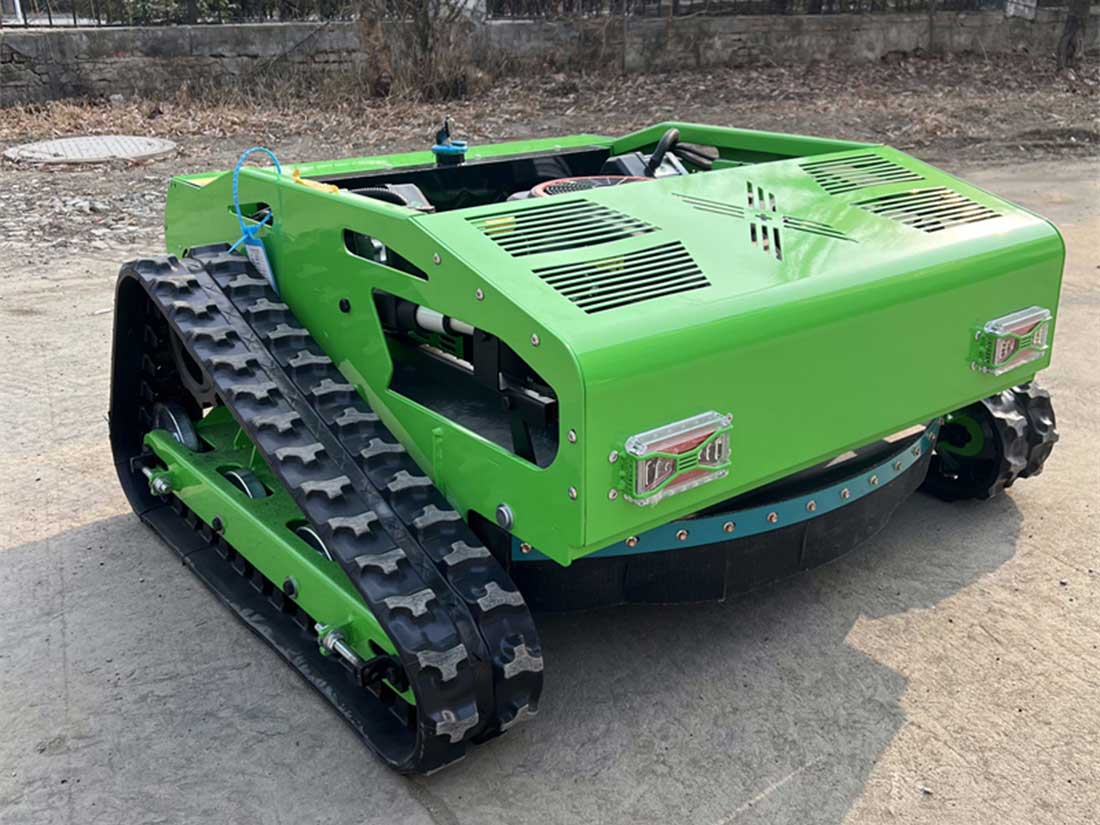
Remote-Controlled Lawn mower vs Traditional Mowers
Traditional mowing equipment remains highly useful for flat and accessible areas.
A conventional Lawn mower may be the most practical choice for a maintained lawn or other straightforward terrain.
Remote-controlled mowing equipment becomes more interesting when the working environment includes uneven terrain, slopes, embankments, roadside areas, or difficult access.
The objective is not to claim that remote-controlled equipment is better for every situation. Instead, a remote-controlled Lawn mower provides another professional option when the working conditions justify its use.
The best equipment is always the equipment that matches the application.
Why Professional Lawn mower Technology Is Evolving
The development of professional mowing technology reflects a broader demand for more specialized vegetation-management equipment.
Modern users increasingly need solutions that can work across different terrain conditions while providing greater operator flexibility.
Remote-controlled mowing equipment combines machine mobility with remote operation, making it particularly relevant to challenging applications.
For professional users, a Lawn mower is increasingly viewed as part of a complete vegetation-management system rather than simply a grass-cutting machine.
This approach can help contractors and maintenance teams make more informed equipment decisions.
Explore Remote-Controlled Lawn mower Solutions
If your business regularly manages uneven ground, slopes, agricultural areas, roadside vegetation, parks, or difficult-to-access green spaces, a remote-controlled Lawn mower may be worth considering.
JY Lawn Mower provides professional mowing equipment solutions for demanding vegetation-management applications. To explore remote-controlled mowing equipment and learn more about available solutions, visit the official website.
Conclusion
Handling uneven ground requires a different approach to mowing.
A professional Lawn mower must be selected according to terrain, vegetation, mobility, cutting requirements, operator control, safety, and maintenance.
Remote-controlled mowing equipment offers an alternative solution for difficult applications by allowing operators to control the machine from a distance. For suitable professional applications, a remote-controlled Lawn mower can provide greater flexibility when working on uneven terrain, slopes, roadside areas, agricultural land, and other challenging locations.
The most effective approach is not simply to choose the most powerful Lawn mower, but to select equipment that matches the actual working environment.
With proper terrain assessment, suitable cutting equipment, responsible operation, and regular maintenance, professional remote-controlled mowing equipment can become a valuable part of modern vegetation-management operations.