 English
 Spanish
 Portuguese
 French
 Italian
 Remote Mower
Maintaining grass on steep slopes is one of the most challenging tasks in professional lawn care and vegetation management. Uneven ground, loose soil, dense grass, and limited access can make traditional mowing equipment difficult to operate safely and efficiently. For landscaping contractors, property managers, and grounds maintenance teams, choosing the right grass lawn mower is essential for achieving consistent cutting results while managing operational risks.
Remote-controlled mowing equipment offers a practical alternative for many challenging environments. By allowing operators to control the machine from a distance, a remote-controlled grass lawn mower can help reduce direct exposure to hazardous terrain and improve access to areas that are difficult to maintain with conventional equipment.
In this article, we explore how remote-controlled mowers work, their main benefits for steep-slope mowing, and the key factors to consider when selecting equipment for professional applications.
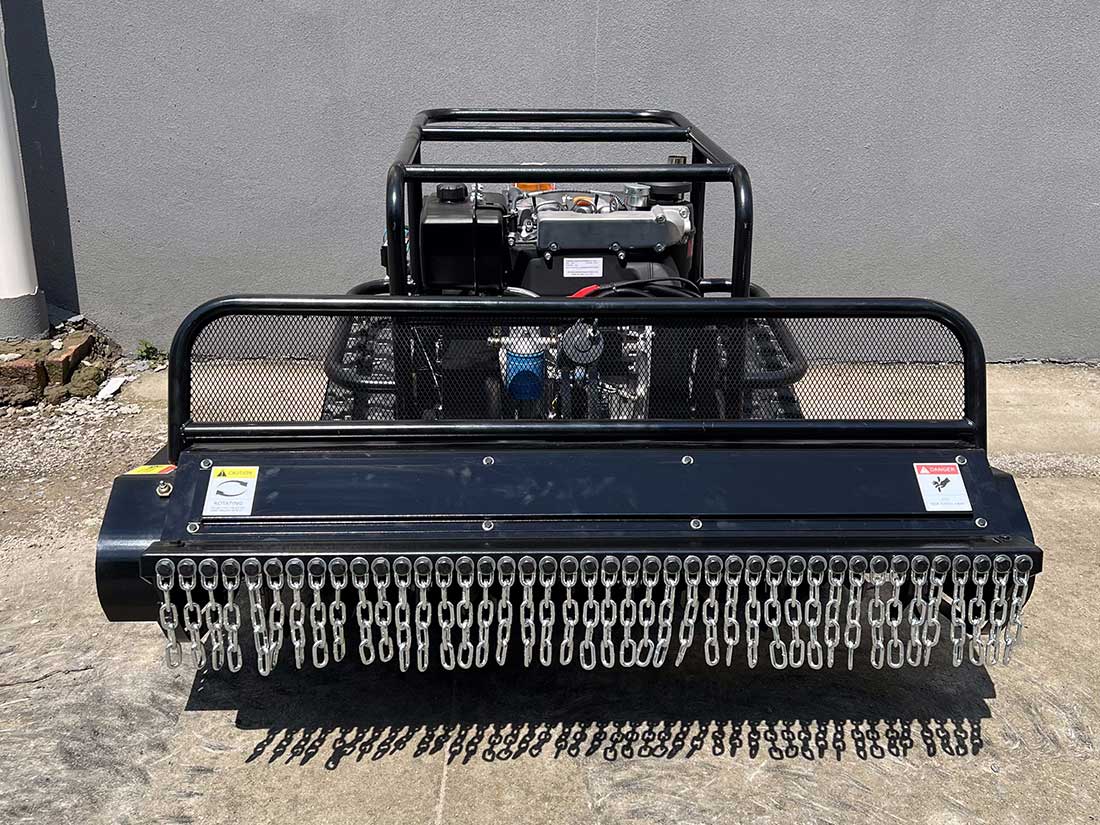
1. Why Steep-Slope Mowing Requires Specialized Equipment
Not every grass lawn mower is designed to work effectively on steep or uneven terrain. Standard walk-behind mowers may require considerable physical effort, while ride-on machines can present stability challenges on slopes outside their specified operating limits.
Several factors make steep-slope mowing more demanding:
Reduced traction: Wet grass, loose soil, gravel, and uneven surfaces can increase the risk of slipping.
Machine stability: A high center of gravity or unsuitable operating angle can increase the risk of tipping.
Difficult access: Narrow paths, drainage channels, embankments, and roadside areas may limit equipment movement.
Dense vegetation: Tall grass and weeds can increase cutting resistance and place additional demands on the mower.
Operator exposure: Working directly on steep or unstable ground can increase the risk of falls and other injuries.
These conditions explain why professional users increasingly consider specialized remote-controlled mowing equipment. A suitable grass lawn mower must combine cutting performance with appropriate traction, stability, and control.
2. How Remote-Controlled Grass Lawn Mowers Work
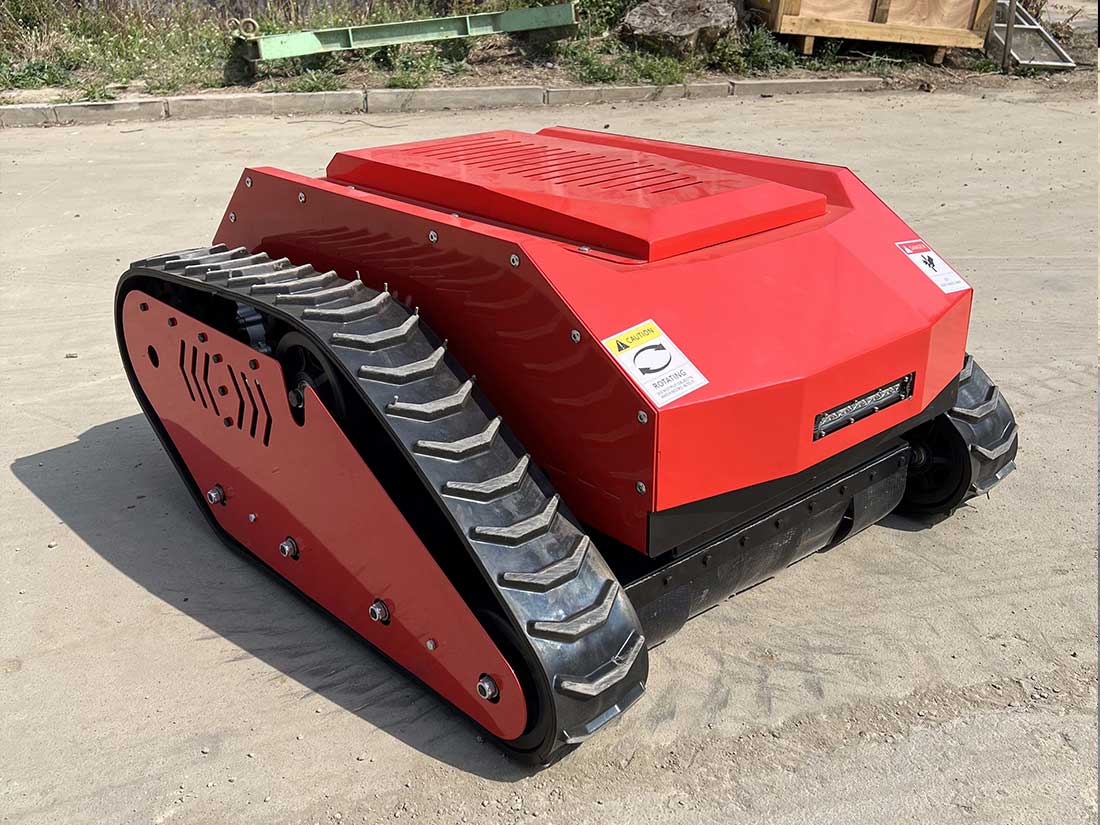
A remote-controlled grass lawn mower uses a wireless transmitter to let the operator control the machine from a separate position. Depending on the model, the controls may include forward and reverse movement, steering, cutting engagement, speed adjustment, and emergency stopping.
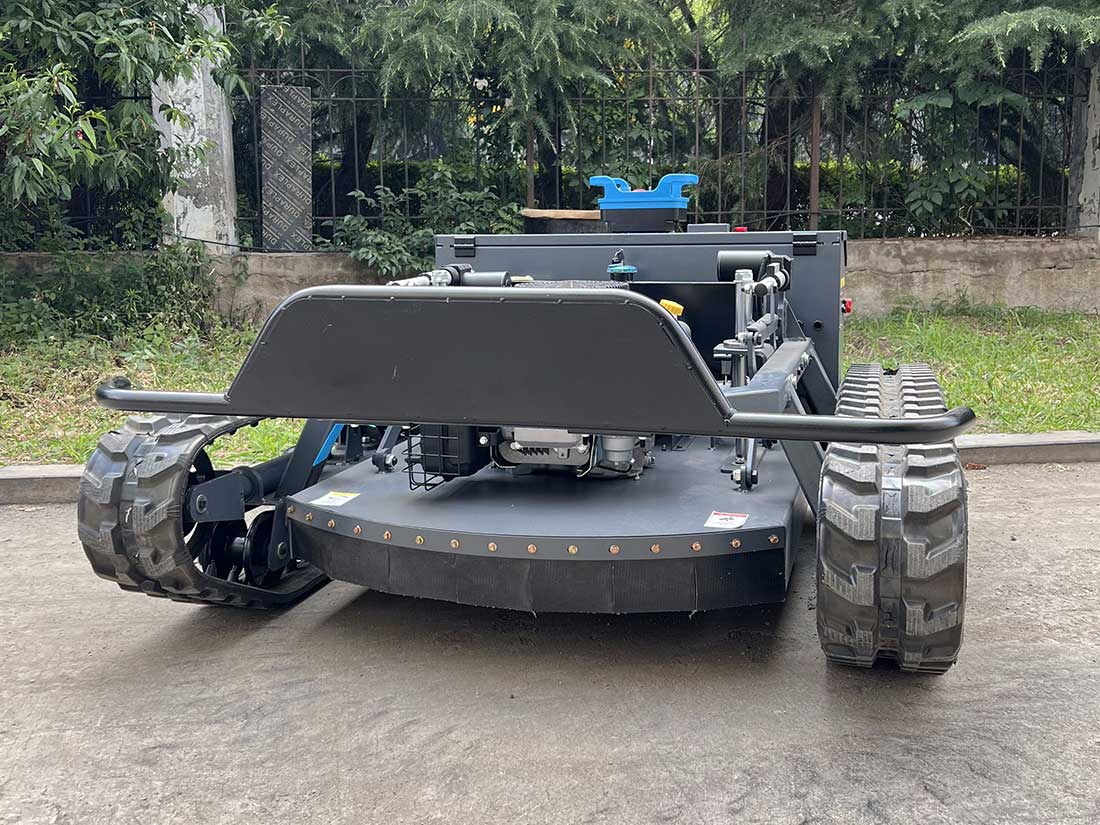
Many remote-controlled slope mowers use tracked undercarriages instead of conventional wheels. Tracks can provide greater ground contact and useful traction on suitable surfaces, helping the machine move across uneven terrain. However, actual performance depends on track design, machine weight, soil conditions, vegetation, and slope angle.
The cutting system also matters. A mower designed for regularly maintained grass may use a rotary cutting deck, while a machine intended for rough vegetation may use a flail mowing system.
When choosing a grass lawn mower for steep slopes, buyers should examine the complete machine rather than focusing only on remote-control capability. Chassis design, cutting mechanism, power output, ground clearance, and the manufacturer's operating limits all influence suitability.
3. Key Benefits of Remote-Controlled Mowing on Steep Slopes
Improved Operator Safety
One of the main advantages of a remote-controlled grass lawn mower is the ability to operate the machine without standing directly behind it or riding on it.
This separation can reduce the operator's direct exposure to some hazards associated with steep embankments, uneven ground, and difficult-to-access mowing areas. It can also make it easier to maintain a suitable operating position while monitoring the machine.
Remote operation does not make every slope safe. Operators must follow the manufacturer's slope ratings, keep the machine within their line of sight when required, and use the specified safety procedures. They should also avoid operating on unstable, excessively wet, or otherwise unsuitable surfaces.
Better Traction on Suitable Terrain
Tracked remote-controlled mowers are often considered for slopes because their undercarriage can help maintain traction and distribute machine weight over a larger contact area than some conventional wheel configurations.
This can be useful when mowing rough grass, uneven embankments, or other challenging areas. Nevertheless, tracks alone do not guarantee stability. The correct operating angle, surface conditions, machine balance, and travel direction must all be considered.
Before purchasing a grass lawn mower for steep terrain, confirm its rated maximum slope and whether the specification applies to straight-line travel, cross-slope operation, or both.
Access to Difficult-to-Reach Areas
Steep embankments, roadside verges, drainage areas, and uneven property boundaries can be difficult to maintain using conventional mowing equipment.
A compact remote-controlled grass lawn mower may provide more flexibility in these environments, particularly where access is restricted or where operators need to remain away from the immediate cutting area.
For contractors responsible for large or irregularly shaped properties, this flexibility can simplify maintenance planning and reduce reliance on some labor-intensive mowing methods.
Reduced Physical Demands
Manual mowing on steep ground can require prolonged walking, careful footing, and repeated maneuvering. Remote-controlled equipment allows the operator to guide the mower from a more suitable position, reducing some of these physical demands.
For professional landscaping teams, this can make demanding maintenance work more manageable. Productivity gains, however, depend on vegetation density, terrain, transport arrangements, operator experience, and the machine's cutting width.
Consistent Cutting Performance
A well-matched grass lawn mower can provide consistent cutting results when its cutting mechanism and power capacity are suitable for the vegetation.
Rotary cutting systems are commonly used for maintained grass, while flail systems may be better suited to certain rough-grass and weed-control applications. Selecting the correct cutting height and operating speed can also help prevent excessive loading and improve the finished appearance.
Remote control makes positioning more convenient, but cutting quality still depends on the machine's design, maintenance, and operating technique.
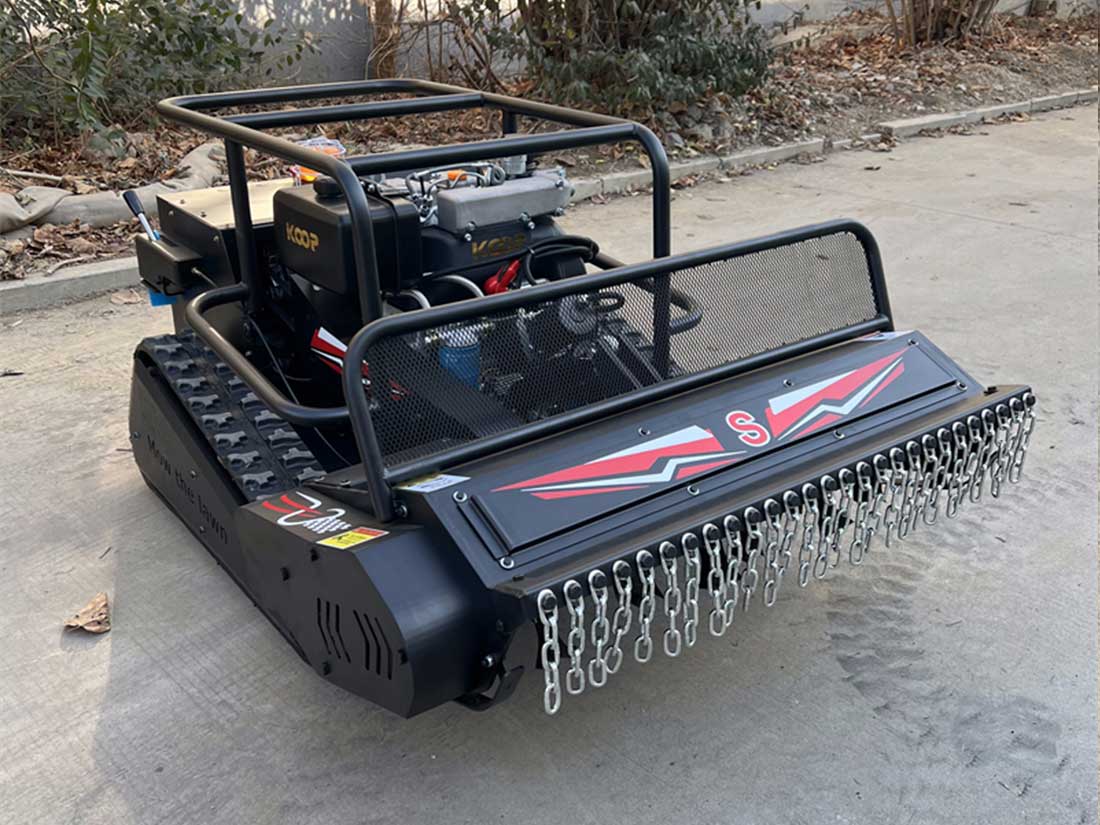
4. Choosing the Right Cutting System for Sloped Grass
The best grass lawn mower for a steep slope depends partly on the type of vegetation that needs to be cut.
Rotary Mowers
Rotary mowing systems use rotating blades to cut grass and are suitable for many lawn maintenance tasks. They can be a good choice for regularly maintained grass where appearance and an even finish are priorities.
When comparing remote-controlled rotary mowers, consider cutting width, blade configuration, available power, and the recommended vegetation conditions.
Flail Mowers
Flail mowers use multiple cutting tools attached to a rotating shaft. Depending on the machine design, they can handle thicker grass, weeds, and rough vegetation that may be unsuitable for equipment designed primarily for fine lawn finishing.
For roadside embankments, overgrown property boundaries, and rough grass areas, a remote-controlled grass lawn mower equipped with a flail head may offer a practical solution.
However, flail systems may require different maintenance and operating procedures from rotary decks. Buyers should compare the cutting system with the actual vegetation and desired finish rather than assuming one type is universally superior.
5. Important Factors to Consider Before Buying
Selecting the right remote-controlled grass lawn mower involves more than comparing purchase prices. Professional buyers should evaluate the following factors.
Slope capability: Check the manufacturer's stated operating limits and distinguish between straight-line and cross-slope ratings. Do not assume that a machine rated for one direction is equally suitable in another.
Track design and traction: Review track width, tread pattern, ground clearance, and suitability for the expected soil conditions. Consider how wet grass, loose soil, and surface irregularities may affect movement.
Cutting width: A wider cutting deck may improve productivity on open slopes, while a narrower machine may be easier to maneuver around obstacles or along restricted access routes.
Power and vegetation capacity: Match the machine's power and cutting mechanism to the expected grass height, density, and workload. Heavy vegetation can increase resistance and reduce effective working speed.
Remote-control functions: Evaluate the control range, steering precision, emergency-stop function, signal-loss behavior, and visibility requirements. Make sure operators understand how to respond to faults or unexpected machine movement.
Transport and storage: Consider machine dimensions, loading arrangements, transport vehicle capacity, and the space required for routine maintenance.
Service and spare parts: Check the availability of replacement blades or flails, tracks, filters, and other wear components. Clear maintenance documentation and responsive technical support can help reduce downtime.
A grass lawn mower that meets these requirements is more likely to provide dependable performance in its intended working environment.
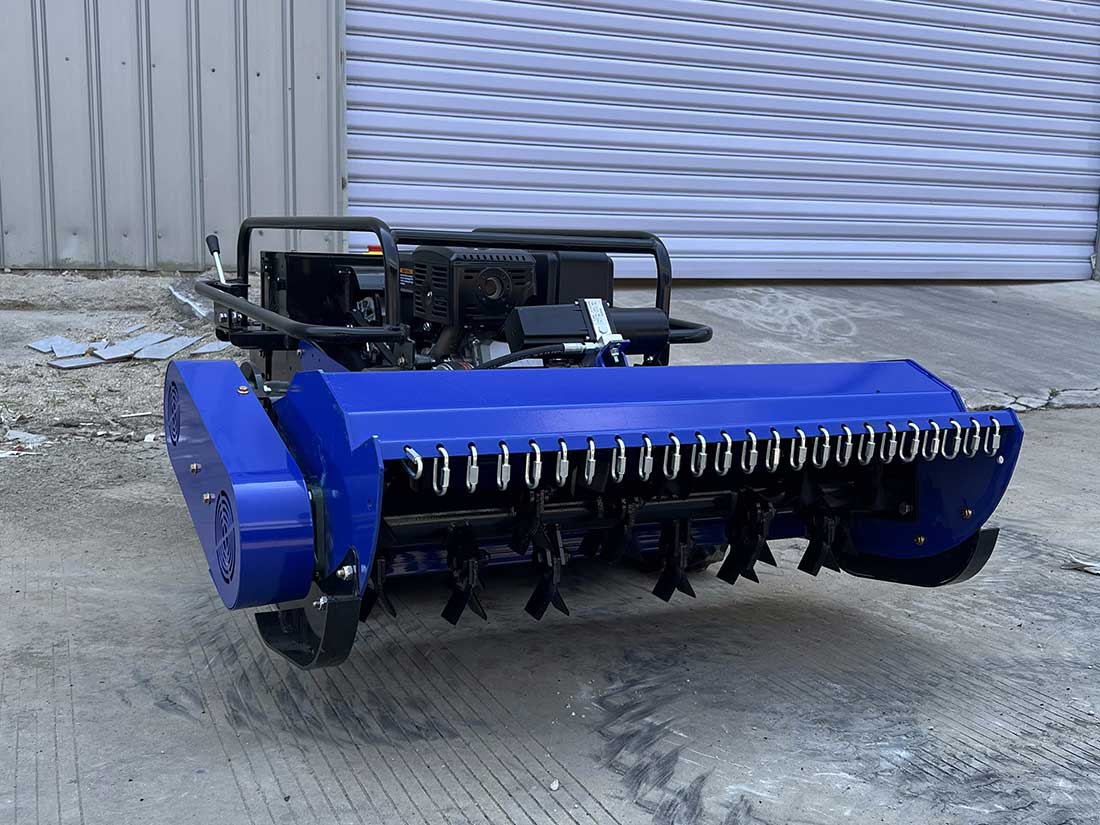
6. Maintenance Practices for Reliable Slope Mowing
Regular maintenance is particularly important for remote-controlled mowing equipment used in demanding terrain. Preventive inspections can help identify wear and operating issues before they cause avoidable downtime.
Before each use, operators should inspect the cutting components, fasteners, tracks or wheels, visible cables, guards, and remote-control equipment. They should also check for oil leaks, loose parts, or damage that could affect operation.
After mowing, remove accumulated grass and debris according to the manufacturer's cleaning instructions. Check the cutting system for damage and inspect the undercarriage for packed soil, stones, or other material that could interfere with movement.
Periodic servicing should follow the manufacturer's schedule and may include checking lubricants, filters, drive components, tension settings, and electrical connections, depending on the machine type.
Operators should never inspect or service cutting components while the machine is running. Follow the prescribed shutdown and isolation procedures before cleaning, adjusting, or replacing parts.
A properly maintained grass lawn mower is better positioned to deliver consistent cutting performance and dependable operation throughout the mowing season.
7. Common Applications for Remote-Controlled Slope Mowers
Remote-controlled mowing equipment can serve a range of commercial and property maintenance needs.
Roadside embankments: Maintaining suitable grass-covered slopes and verges while helping operators remain away from the immediate cutting area.
Drainage channels: Cutting vegetation in accessible areas where conventional equipment may be difficult to maneuver.
Commercial properties: Maintaining uneven green spaces around industrial facilities, business parks, and large sites.
Agricultural properties: Managing selected field margins, rough grass areas, and other suitable vegetation.
Parks and landscaped grounds: Maintaining sloped green spaces where a suitable remote-controlled machine offers practical access and control.
Solar installations: Cutting vegetation around suitable installation areas, subject to site-specific access and safety requirements.
In every application, a grass lawn mower should be selected according to terrain, vegetation, access, and the manufacturer's stated operating limits. Roadside work and other exposed environments may also require traffic management, barriers, and additional site-specific controls.
8. Why Professional Equipment Selection Matters
Remote-controlled mowing equipment can be a valuable investment, but the benefits depend on selecting a machine that matches the intended task.
For example, a contractor maintaining short grass on moderate slopes may prioritize a clean finish, maneuverability, and efficient transport. A contractor dealing with dense weeds on rough embankments may instead need a suitable flail system, durable undercarriage, and appropriate power capacity.
These are different requirements, and a single grass lawn mower may not be ideal for both.
Before making a purchase, prepare a practical equipment checklist covering terrain, slope angle, vegetation type, cutting frequency, daily workload, transport, maintenance, and operator training. Discuss these details with the supplier and request relevant technical specifications.
This approach helps buyers compare equipment on operational suitability rather than relying solely on marketing claims.
9. Explore Remote-Controlled Mowing Equipment from JY Lawn Mower
If you are looking for a grass lawn mower designed to meet challenging mowing requirements, exploring specialized remote-controlled equipment is a useful starting point.
JY Lawn Mower provides information about remote-controlled mowing equipment that buyers can review when researching options for lawn care and vegetation management. When comparing models, focus on their intended applications, cutting systems, terrain capabilities, and maintenance requirements.
Visit the official website at https://www.jylawnmower.com/ to explore available equipment and learn more about potential solutions for your mowing operations.
Before contacting a supplier, it helps to prepare details about the slope, ground conditions, vegetation height, desired cutting finish, and expected working frequency. These details can support a more informed discussion about machine suitability and operating limitations.
10. The Future of Grass Lawn Mower Technology
The grass lawn mower industry continues to develop as professional users seek equipment that offers greater flexibility, more convenient controls, and reliable performance in demanding conditions.
Remote-controlled mowers are an important option within this evolving market. Improvements in control systems, chassis design, cutting mechanisms, and maintenance access may continue to expand their usefulness across suitable applications.
However, remote-controlled machines are not a universal replacement for conventional mowers. Traditional walk-behind and ride-on equipment remain practical for many flat lawns and routine maintenance tasks. The strongest use case for a remote-controlled grass lawn mower is where remote operation, terrain adaptability, or access provides a meaningful advantage.
Careful equipment selection, operator training, and preventive maintenance will remain essential regardless of future technological developments.

Conclusion
Maintaining steep slopes requires a grass lawn mower that combines suitable cutting performance, traction, stability, and controllability. Remote-controlled mowing equipment can help operators manage difficult terrain from a more appropriate position while reducing some of the physical demands associated with conventional mowing.
For landscaping contractors, commercial property managers, and vegetation maintenance teams, the key is to match the machine to the slope, ground conditions, vegetation, and expected workload. Checking technical specifications, safety features, maintenance requirements, and supplier support can help ensure a more informed purchasing decision.
To explore remote-controlled mowing solutions for challenging grass areas, visit JY Lawn Mower and review the available equipment for your application.