 English
 Spanish
 Portuguese
 French
 Italian
 Remote Mower
The lawn care industry is evolving as property owners, landscaping professionals, and vegetation management contractors look for safer, more efficient, and more versatile mowing solutions. Traditional mowing equipment remains useful for many everyday tasks, but challenging terrain, steep slopes, dense vegetation, and large maintenance areas can create significant operational difficulties. This is where innovations in the grass lawn mower market are making a difference, particularly through the development of remote-controlled mowing equipment.
Remote-controlled mowers combine practical cutting performance with wireless operation, helping operators manage difficult mowing environments while maintaining a safer working distance from the machine. As technology advances, the modern grass lawn mower is becoming more than a basic lawn maintenance tool. It is an increasingly sophisticated piece of equipment designed to improve productivity, flexibility, and operational control.

1. The Evolution of Grass Lawn Mower Technology
For decades, the conventional grass lawn mower has been a fundamental tool for residential landscaping, commercial groundskeeping, and agricultural vegetation management. Walk-behind mowers, ride-on mowers, and zero-turn machines each offer advantages for particular applications. However, they may become less suitable when operators encounter steep slopes, uneven ground, narrow access routes, or areas where maintaining a safe operating position is difficult.
Modern remote-controlled technology addresses some of these limitations. Instead of walking directly behind the cutting machine or sitting on it, the operator controls the equipment from a distance using a handheld transmitter.
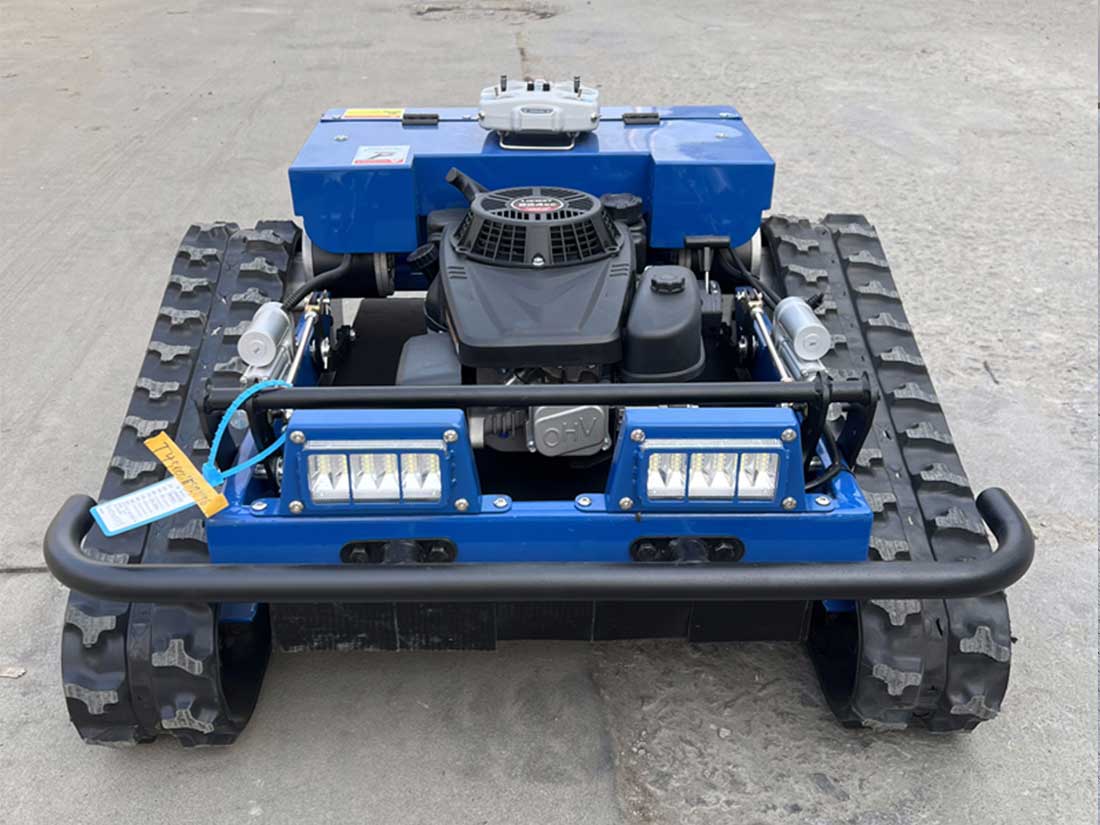
A remote-controlled grass lawn mower can be designed with features such as tracked mobility, a low center of gravity, adjustable cutting heights, and specialized cutting decks. Depending on the model, these features can help the machine maintain traction on uneven ground and cut vegetation in locations that are difficult to access with conventional equipment.
For professional users, the key innovation is not simply remote operation. It is the integration of mobility, cutting performance, machine stability, and operator control into one practical mowing system.
2. Why Remote-Controlled Mowers Are Gaining Popularity
The growing interest in remote-controlled mowing equipment reflects several practical needs in the landscaping and vegetation management industries.
Improved Operator Safety
Mowing steep embankments, roadside slopes, drainage channels, and uneven terrain can expose operators to potential hazards. Conventional ride-on equipment may be unsuitable for certain slopes, while walk-behind mowing can require considerable physical effort and careful footing.
A remote-controlled grass lawn mower allows the operator to stand at a safer, more suitable position while controlling the machine. This separation can reduce direct exposure to some hazards associated with operating mowing equipment on difficult terrain.
However, remote operation does not eliminate risk. Operators must follow the manufacturer's slope limits, maintain visibility of the machine, inspect the work area, and observe applicable safety procedures.
Greater Flexibility on Challenging Terrain
Terrain adaptability is another important reason for the popularity of remote-controlled mowers. Sloped grass, rough ground, overgrown areas, and roadside vegetation can present challenges for conventional mowing systems.
Tracked remote-controlled mowers are particularly useful in applications where traction and ground contact matter. Their track systems can help distribute machine weight and improve mobility on suitable surfaces. Actual performance depends on track design, ground conditions, slope angle, vegetation density, and the machine's specifications.
When selecting a grass lawn mower for demanding environments, buyers should evaluate the manufacturer's stated maximum operating slope and distinguish between straight-line and cross-slope capabilities. These ratings are not interchangeable, and real-world conditions can significantly affect stability.
Reduced Physical Strain
Traditional mowing often requires operators to walk for extended periods, steer heavy equipment, or repeatedly maneuver around obstacles. Remote-controlled machines can reduce some of these physical demands, especially when maintaining large or difficult areas.
For landscaping teams, this can make mowing operations more manageable and allow operators to focus on machine positioning, cutting quality, and work-area monitoring.
A remote-controlled grass lawn mower is therefore worth considering for contractors who regularly maintain embankments, industrial grounds, utility corridors, and other challenging sites.
3. Cutting Systems: Matching the Mower to the Vegetation
Not every mowing application requires the same cutting mechanism. Understanding the differences between cutting systems is essential when choosing a remote-controlled grass lawn mower.
Rotary Cutting Systems
Rotary cutting decks use rotating blades to cut grass and are commonly associated with lawn maintenance. They can be suitable for regularly maintained grass, open green spaces, and applications where a conventional lawn finish is the main priority.
Their effectiveness depends on blade design, cutting height, vegetation conditions, and the machine's available power.
Flail Mowing Systems
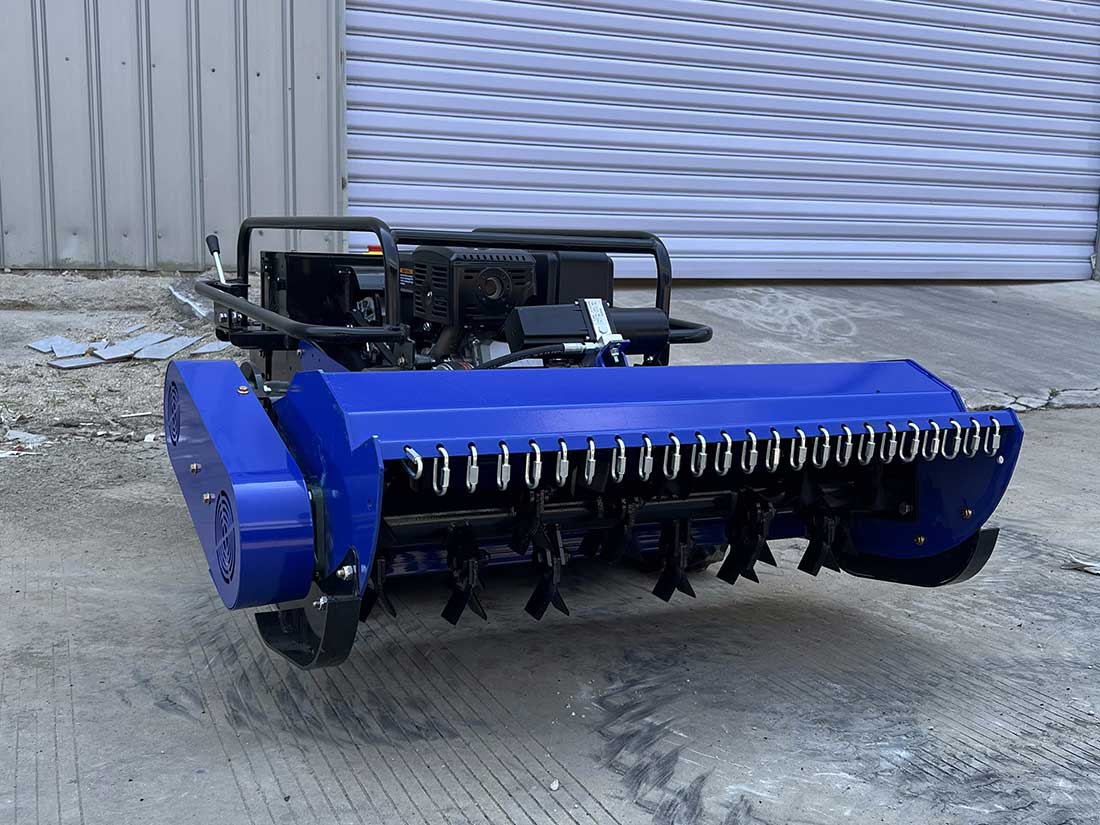
Flail mowers use multiple small cutting tools mounted on a rotating horizontal shaft. Depending on their configuration, they can handle thicker grass, weeds, and some rough vegetation more effectively than equipment designed exclusively for fine lawn finishing.
For commercial vegetation management, a remote-controlled mower equipped with a flail cutting head may be a practical option for roadside verges, overgrown embankments, and rough grass areas.
When comparing a rotary or flail grass lawn mower, buyers should consider the vegetation type, desired finish, maintenance requirements, and operating conditions rather than assuming one cutting system is best for every job.
The right cutting mechanism can improve work quality and reduce unnecessary strain on the machine.
4. Key Innovations Driving the Remote-Controlled Mower Market
The latest developments in the grass lawn mower industry focus on making equipment more controllable, durable, and adaptable to different working environments.
Remote control systems: Modern transmitters allow operators to control movement, steering, and cutting functions from a distance. Control range, signal reliability, and the availability of emergency-stop functions are important purchasing considerations.
Tracked chassis design: Tracks can provide useful traction on suitable uneven or sloped surfaces. Their performance depends on tread design, track width, machine weight, and the ground's condition.
Compact machine dimensions: A compact remote-controlled grass lawn mower may be easier to transport and maneuver around obstacles. Buyers should still verify the cutting width, overall dimensions, and access requirements of the intended site.
Improved cutting performance: Cutting deck design, blade configuration, motor output, and cutting-height adjustment all influence mowing quality. Dense vegetation may require a different machine configuration from frequently maintained turf.
Simplified maintenance: Accessible service points, replaceable wear components, and clear maintenance instructions can help reduce avoidable downtime. Routine inspections remain essential for blades, tracks, fasteners, electrical components, and the drive system.
These innovations demonstrate how the modern grass lawn mower is evolving to meet the practical needs of both professional contractors and property maintenance teams.

5. Choosing the Right Grass Lawn Mower for Your Application
Selecting suitable equipment requires more than comparing prices or advertised cutting widths. Buyers should begin by identifying the conditions in which the machine will operate.
Evaluate Terrain and Slope Requirements
Determine whether the work involves flat lawns, uneven ground, steep embankments, or a mixture of surfaces. Check the manufacturer's operating limits and confirm that the machine is suitable for the intended slope and ground conditions.
Do not rely on a general claim that a mower is suitable for steep slopes. Ask for the relevant specifications and operating guidance.
Assess Grass Height and Density
Regularly maintained turf typically requires a different cutting approach from tall grass, weeds, and rough vegetation. Match the cutting system and available power to the expected workload.
A grass lawn mower intended for fine lawn maintenance may not be the most economical choice for heavy-duty vegetation control. Similarly, a rough-cut machine may not deliver the finish required for ornamental lawns.
Consider Productivity and Operating Costs
Compare cutting width, working speed, fuel or electricity requirements, maintenance intervals, and transportation needs. A wider cutting deck may improve productivity in open areas, but a narrower machine can be more practical in confined spaces.
Total ownership cost should include the purchase price, routine servicing, replacement cutting components, track or tire wear, and expected downtime.
Check Control and Safety Features
Before purchasing a remote-controlled grass lawn mower, review the control system, emergency-stop capability, visibility requirements, operating range, and instructions for handling signal loss or other faults.
The equipment should also have clear maintenance procedures and readily available technical documentation. These factors are particularly important for professional users who depend on consistent machine availability.

6. Applications Across Multiple Industries
Remote-controlled mowing equipment is increasingly relevant to more than residential lawn care. Its value depends on choosing a machine that matches the work environment.
Landscaping and grounds maintenance: Contractors can use a suitable remote-controlled grass lawn mower to maintain lawns, parks, commercial properties, and uneven green spaces.
Roadside vegetation management: Remote operation may help crews maintain suitable roadside slopes and verges while allowing the operator to remain away from the immediate cutting area. Traffic management and site-specific safety controls are still necessary.
Industrial facilities: Warehouses, factories, solar installations, and other large properties may have grass-covered perimeter areas or uneven sections that require regular vegetation control.
Agricultural and rural properties: Remote-controlled mowers can be useful for maintaining certain field margins, orchards, rough grass areas, and other locations where conventional lawn equipment may be inconvenient.
Drainage channels and embankments: Where access is difficult, a suitable remote-controlled machine can provide an alternative to manual mowing or other maintenance methods. The machine must be selected according to slope, surface stability, vegetation, and environmental conditions.
Across these applications, the principal advantage is operational flexibility. A properly selected grass lawn mower can help teams address challenging mowing tasks while improving control over how and where cutting work is performed.
7. The Importance of Manufacturer Expertise and Reliable Support
Technology alone does not guarantee successful mowing operations. Equipment selection, operator training, preventive maintenance, and technical support are equally important.
Experienced equipment suppliers understand that different customers have different requirements. A landscaping contractor maintaining residential lawns may prioritize cutting quality and maneuverability, while a vegetation management company may place greater emphasis on slope capability, traction, and durability.
When evaluating a remote-controlled grass lawn mower, buyers should request detailed product specifications, operating instructions, maintenance guidance, and information about replacement parts. They should also confirm warranty terms and after-sales support before making a purchasing decision.
A reliable supplier should explain the machine's intended applications and limitations instead of presenting every model as suitable for all terrain and vegetation types.
For professional buyers, this practical approach can help prevent mismatched equipment purchases and support better long-term operating performance.
8. Explore Remote-Controlled Mowing Solutions from JY Lawn Mower
As demand for specialized mowing equipment grows, choosing a supplier with products suited to the intended working environment becomes increasingly important.
JY Lawn Mower provides a starting point for buyers researching remote-controlled mowing equipment and comparing possible solutions for lawn maintenance and vegetation management. Customers can explore the available product information to understand machine configurations and identify models that may suit their operational requirements.
Visit JY Lawn Mower to explore remote-controlled mowing equipment and learn more about available options.
Before selecting a grass lawn mower, prepare a clear list of requirements, including terrain type, maximum slope, vegetation density, cutting width, power source, transport arrangements, and maintenance expectations. Sharing these details with a supplier can make it easier to identify an appropriate model and clarify its operating limitations.
9. The Future of Grass Lawn Mower Innovations
The future of the grass lawn mower market is likely to be shaped by continued improvements in remote control systems, machine design, energy efficiency, and maintenance convenience.
As landscaping and vegetation management operations become more specialized, buyers are increasingly interested in equipment that can handle demanding conditions without compromising controllability or serviceability.
Remote-controlled mowers are not a universal replacement for conventional lawn mowers. Standard walk-behind and ride-on models remain practical choices for many lawns and open areas. However, for suitable applications involving steep slopes, rough terrain, or difficult access, remote-controlled equipment can offer meaningful operational advantages.
The most successful purchasing decisions will come from matching machine capabilities to real working conditions, evaluating safety requirements carefully, and choosing equipment supported by clear technical information.
Conclusion
Grass lawn mower innovations are changing how professionals approach lawn care and vegetation management. Remote-controlled mowers offer a combination of operator separation, terrain adaptability, and practical control that can be valuable in demanding environments.
From landscaping and commercial groundskeeping to roadside maintenance and rural property management, the right remote-controlled grass lawn mower can help address tasks that are difficult or inefficient with conventional equipment.
The key is to evaluate terrain, cutting requirements, machine specifications, safety features, and long-term operating costs before making a decision.
If you are researching remote-controlled mowing equipment for your business or property, visit https://www.jylawnmower.com/ to explore available solutions and identify equipment that matches your mowing requirements.