 English
 Spanish
 Portuguese
 French
 Italian
 Remote Mower
Choosing the right grass lawn mower can make a significant difference in mowing efficiency, cutting quality, and operational safety. While traditional lawn mowers remain effective for many residential and commercial applications, they may not be the best choice for steep slopes, uneven ground, dense vegetation, or areas with limited access.
Remote-controlled mowing equipment has become an increasingly attractive option for landscaping contractors, property managers, and vegetation maintenance professionals who regularly work in challenging environments. These machines allow operators to control mowing operations from a distance, offering an alternative to conventional walk-behind and ride-on equipment.
So, which grass lawn mower is better for difficult terrain: a remote-controlled model or a traditional mower? The answer depends on the terrain, vegetation type, required cutting quality, operating conditions, and total cost of ownership. Understanding these factors will help you select the most suitable equipment for your needs.
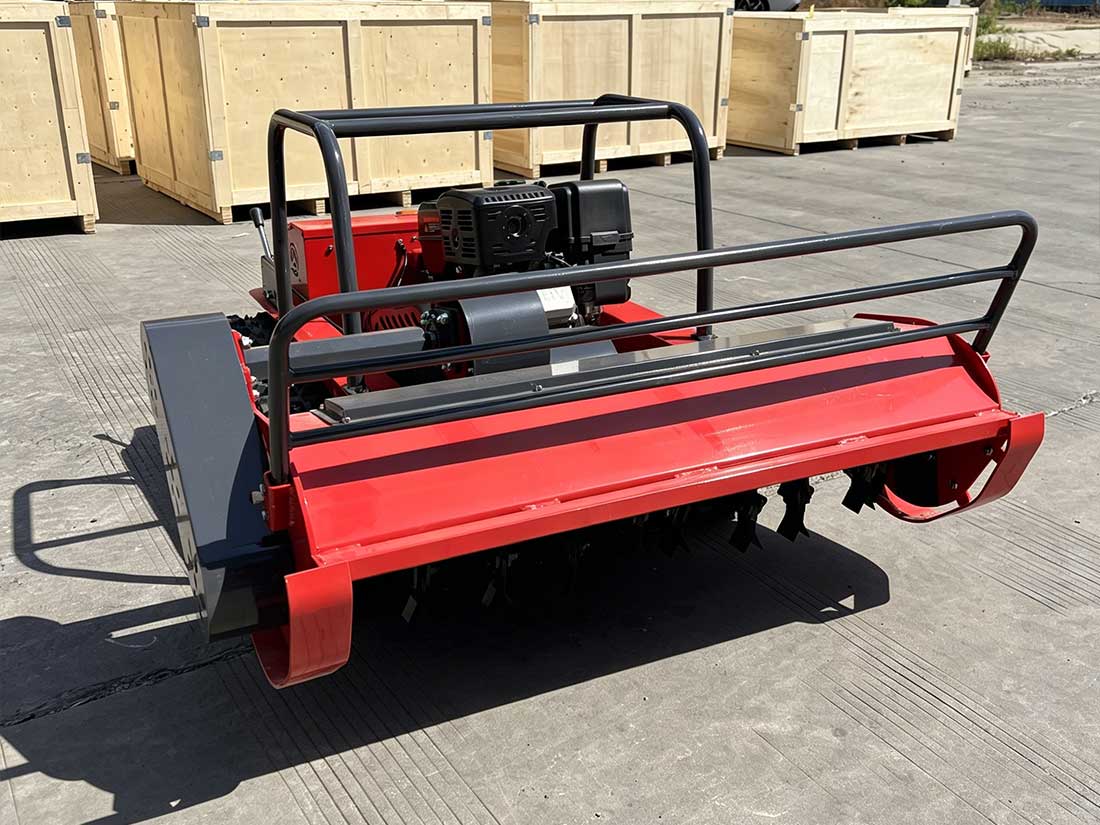
1. Understanding Traditional and Remote-Controlled Grass Lawn Mowers
Before comparing their performance, it is important to understand how the main mower types differ.
Traditional Lawn Mowers
Traditional mowing equipment includes walk-behind mowers, ride-on mowers, and zero-turn mowers. These machines are widely used for residential lawns, parks, sports grounds, commercial landscapes, and other areas with relatively accessible terrain.
Walk-behind mowers offer maneuverability and are suitable for smaller lawns. Ride-on and zero-turn mowers can cover large, relatively level areas efficiently because operators can mow continuously without walking behind the machine.
However, traditional equipment has limitations. On steep slopes, the operator's position, machine stability, traction, and cutting-deck design become important considerations. Some conventional mowers are not designed for steep inclines, and operating them beyond the manufacturer's limits can create serious hazards.
Remote-Controlled Grass Lawn Mowers
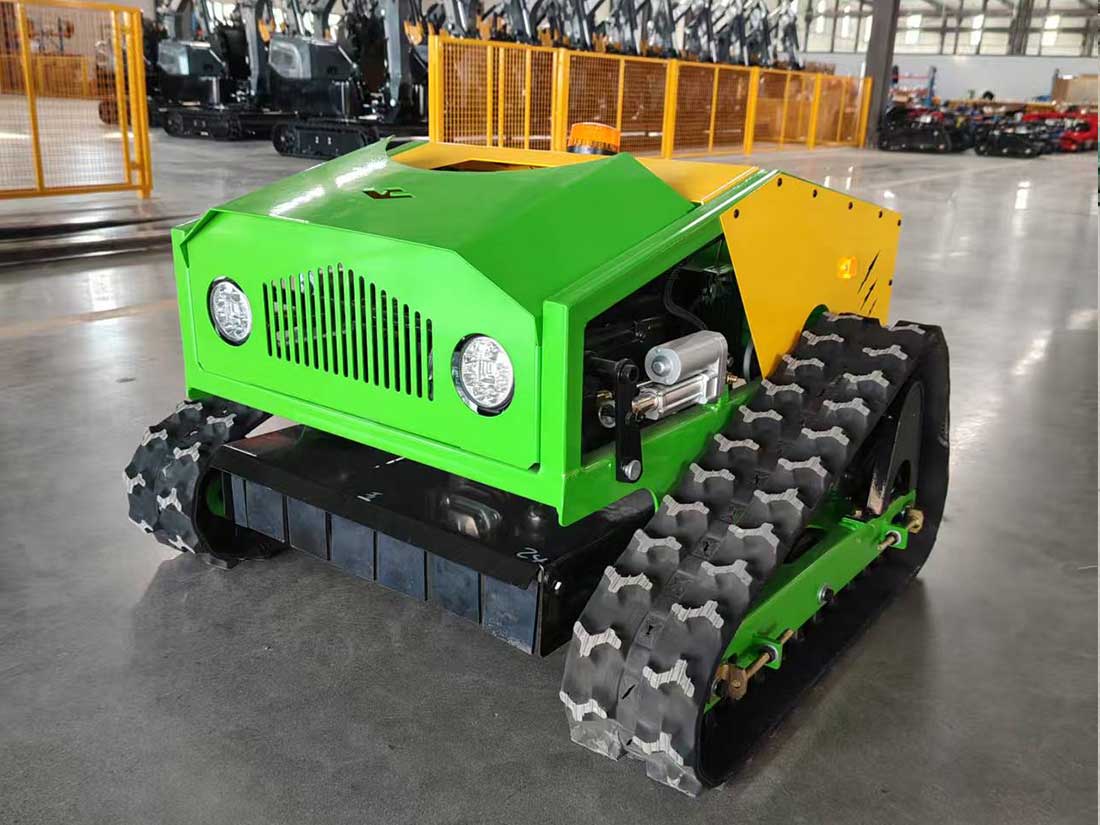
A remote-controlled grass lawn mower allows the operator to control machine movement and mowing functions using a wireless transmitter. Depending on the model, controls may include steering, forward and reverse travel, cutting engagement, and speed adjustment.
Many remote-controlled mowers use tracked undercarriages to improve traction on suitable uneven or sloped surfaces. Their compact designs can also help them access certain areas where larger equipment is difficult to maneuver.
A remote-controlled grass lawn mower is particularly worth considering when operators need to maintain difficult terrain without riding on the machine or walking directly behind it.
Nevertheless, remote control alone does not guarantee safe operation on every slope. Buyers must evaluate the manufacturer's operating limits, terrain requirements, and safety instructions before selecting a model.
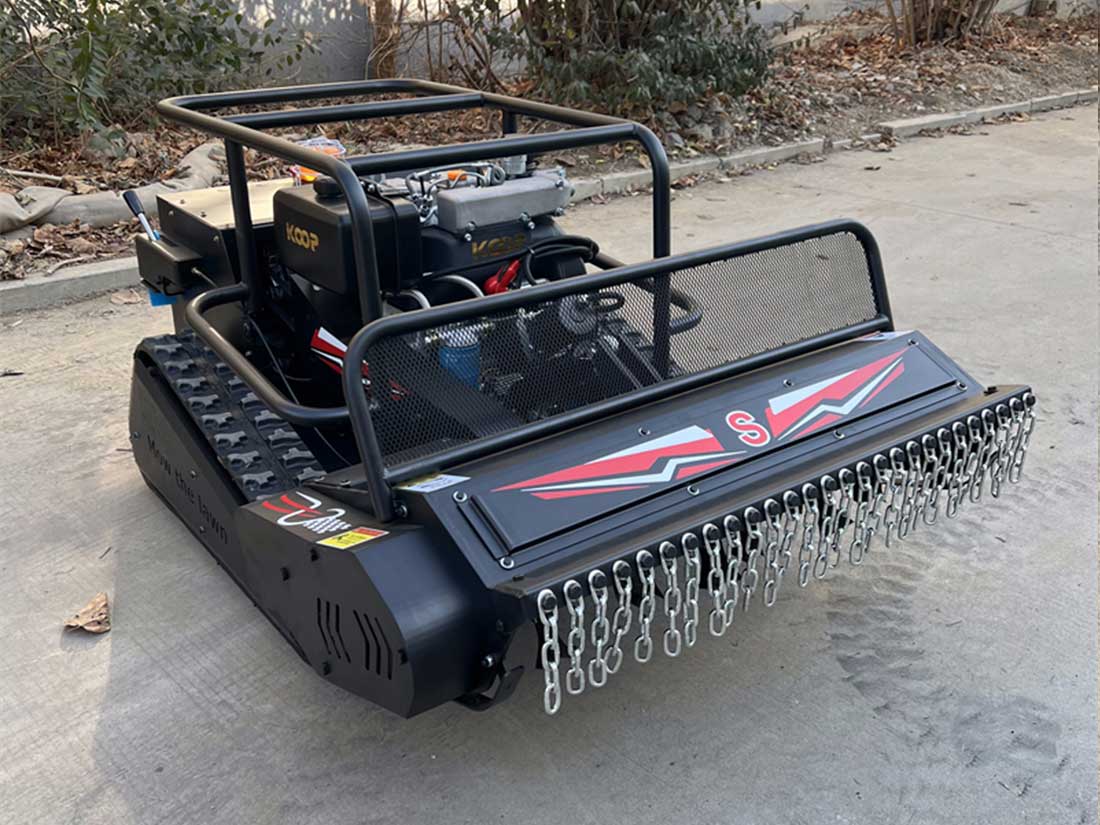
2. Performance Comparison: Difficult Terrain
When comparing a remote-controlled grass lawn mower with a traditional mower, several performance factors deserve attention.
| Performance factor | Traditional mower | Remote-controlled mower |
|---|---|---|
| Flat, maintained lawns | Often highly efficient | Suitable, depending on model |
| Steep slopes | Depends heavily on machine design and rated limits | Can be advantageous when specifically designed for slope mowing |
| Uneven ground | Varies by wheel, chassis, and deck design | Tracked models may offer useful traction and ground contact |
| Dense, rough vegetation | Depends on cutting system and power | Flail-equipped models may suit rough vegetation |
| Operator position | Walks behind or rides on the machine | Operates from a separate position |
| Tight or difficult access | Depends on machine dimensions | Compact models may offer greater flexibility |
| Initial investment | Often lower for basic residential models | Specialized models may require a larger budget |
| Maintenance | Varies by machine type | Includes the relevant cutting, drive, control, and undercarriage components |
This comparison illustrates an important point: neither type of grass lawn mower is automatically superior in every situation. The right choice depends on the actual working environment.
3. Safety: A Major Consideration on Slopes
Safety is one of the most important differences between conventional mowing and remote-controlled mowing on difficult terrain.
Challenges with Traditional Mowers
On sloping ground, traditional mowers may face reduced traction, uneven weight distribution, and a greater risk of sliding or tipping when operated outside their intended conditions.
Walk-behind mowing can also expose operators to unstable footing, especially on wet grass, loose soil, or steep embankments. Ride-on equipment introduces additional considerations because the operator is physically positioned on the machine.
For these reasons, users should never assume that a conventional grass lawn mower can safely handle a slope simply because it performs well on flat ground.
Advantages of Remote Operation
A remote-controlled grass lawn mower allows the operator to stand away from the machine and choose a suitable viewing and control position. This can reduce direct exposure to some hazards associated with steep or uneven terrain.
Remote operation may be especially useful for maintaining suitable embankments, rough grass areas, and difficult-to-access green spaces.
However, safe performance still depends on the mower's design and operating conditions. Always verify the manufacturer's maximum slope rating, including whether it applies to straight-line travel or cross-slope operation. Wet surfaces, loose soil, hidden obstacles, and abrupt changes in gradient can affect stability.
Operators should also understand emergency-stop procedures, signal-loss behavior, visibility requirements, and exclusion zones. A remote-controlled grass lawn mower should only be used within its specified operating limits.
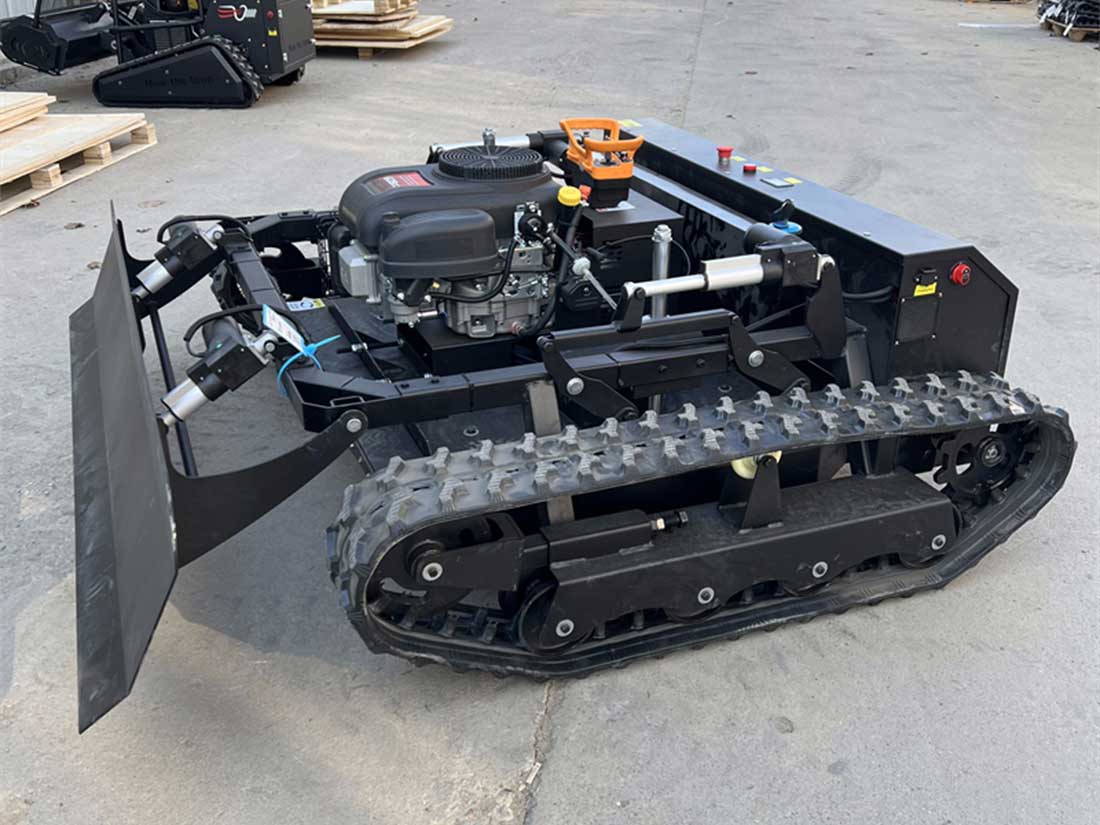
4. Traction and Stability: Which Mower Handles Uneven Ground Better?
Traction and stability are critical when working on rough terrain. A mower that performs well on short, dry grass may struggle when the surface becomes muddy, rocky, or uneven.
Traditional Mower Traction
Traditional mowers use different wheel sizes, tire patterns, chassis layouts, and drive systems. These features can provide effective traction on suitable surfaces.
However, conventional wheels may be less suitable for some steep or irregular environments, particularly when the mower is not specifically designed for that application. The machine's center of gravity, tire condition, weight distribution, and operating direction all influence performance.
Tracked Remote-Controlled Mowers
Many remote-controlled grass lawn mower models use rubber tracks to provide greater ground contact than comparable wheel-based configurations. Depending on the design, tracks may help distribute machine weight and improve traction on certain uneven surfaces.
This can be beneficial when mowing suitable slopes, rough grass, and irregular ground.
Still, tracks are not a guarantee of stability. Track width, tread pattern, machine weight, ground pressure, and slope angle all matter. Operators should follow the manufacturer's instructions rather than relying on general claims about slope capability.
For difficult terrain, the best grass lawn mower is the one whose traction system and stability characteristics are specifically suited to the site.
5. Cutting Performance: Rotary vs. Flail Mowing Systems
Terrain is only part of the selection process. Vegetation type also determines which grass lawn mower will deliver the best results.
Rotary Mowers for Maintained Grass
Rotary cutting systems use rotating blades to cut grass and are commonly used for residential lawns, landscaped gardens, parks, and regularly maintained green spaces.
They can provide an attractive lawn finish when operated at the correct cutting height and maintained properly. Traditional rotary mowers and remote-controlled rotary mowers can both be effective when the terrain and vegetation suit their design.
Flail Mowers for Rough Vegetation
Flail mowing systems use multiple cutting tools mounted on a rotating shaft. Depending on the configuration, they can handle taller grass, weeds, and some rough vegetation more effectively than systems intended primarily for fine lawn finishing.
A remote-controlled grass lawn mower equipped with a flail cutting head may be suitable for roadside verges, overgrown embankments, and other vegetation management tasks.
When choosing between rotary and flail equipment, consider the vegetation's height and density, desired cutting finish, maintenance requirements, and available power. Neither system is ideal for every mowing application.
The cutting mechanism should match the job rather than being selected solely because the mower is remote-controlled or traditional.

6. Productivity and Efficiency on Difficult Terrain
Productivity is another important factor when comparing a remote-controlled grass lawn mower with traditional equipment.
Where Traditional Mowers Excel
On large, relatively flat lawns, traditional ride-on and zero-turn mowers can be highly productive. Their cutting widths, travel speeds, and operator controls are well suited to maintaining accessible areas.
For routine residential mowing and commercial groundskeeping on level surfaces, a traditional mower may provide the most economical solution.
Where Remote-Controlled Mowers Can Help
Remote-controlled mowers can be advantageous when terrain makes conventional mowing slow, difficult, or unsuitable. Operators may be able to maintain certain slopes and uneven areas without physically following the machine across the terrain.
A suitable grass lawn mower with a tracked chassis and appropriate cutting system can help improve access to challenging areas. It may also reduce the need for some manual mowing methods, depending on the site and work requirements.
However, productivity should be measured realistically. Effective working speed depends on grass density, cutting width, terrain, maneuvering requirements, transport time, and maintenance interruptions.
For a fair comparison, assess the total time required to complete the job rather than relying solely on advertised cutting speeds.
7. Cost Comparison: Initial Price vs. Long-Term Value
Budget is often a decisive factor when purchasing mowing equipment.
Traditional walk-behind mowers are generally available at relatively accessible prices, while specialized ride-on machines may require a larger investment. Remote-controlled grass lawn mower models can also involve a higher initial cost because of their control systems, specialized chassis, and terrain-focused design.
However, purchase price is only one part of the overall cost.
Consider the following factors:
Labor requirements: How many operators are needed, and how much time does the task take?
Productivity: How quickly can the mower complete the intended area under realistic conditions?
Maintenance: What are the costs of servicing the engine or drive system, replacing cutting components, and maintaining tracks or tires?
Transportation: Does the mower require a trailer, loading equipment, or special transport arrangements?
Downtime: How quickly can replacement parts be obtained, and how easy is the machine to service?
Safety requirements: What training, site controls, and operating procedures are necessary?
A remote-controlled grass lawn mower may provide better long-term value for businesses that regularly maintain difficult terrain. Conversely, a traditional mower may be more economical when most work involves flat, accessible lawns.
The best decision comes from comparing total ownership costs against the actual tasks the machine will perform.
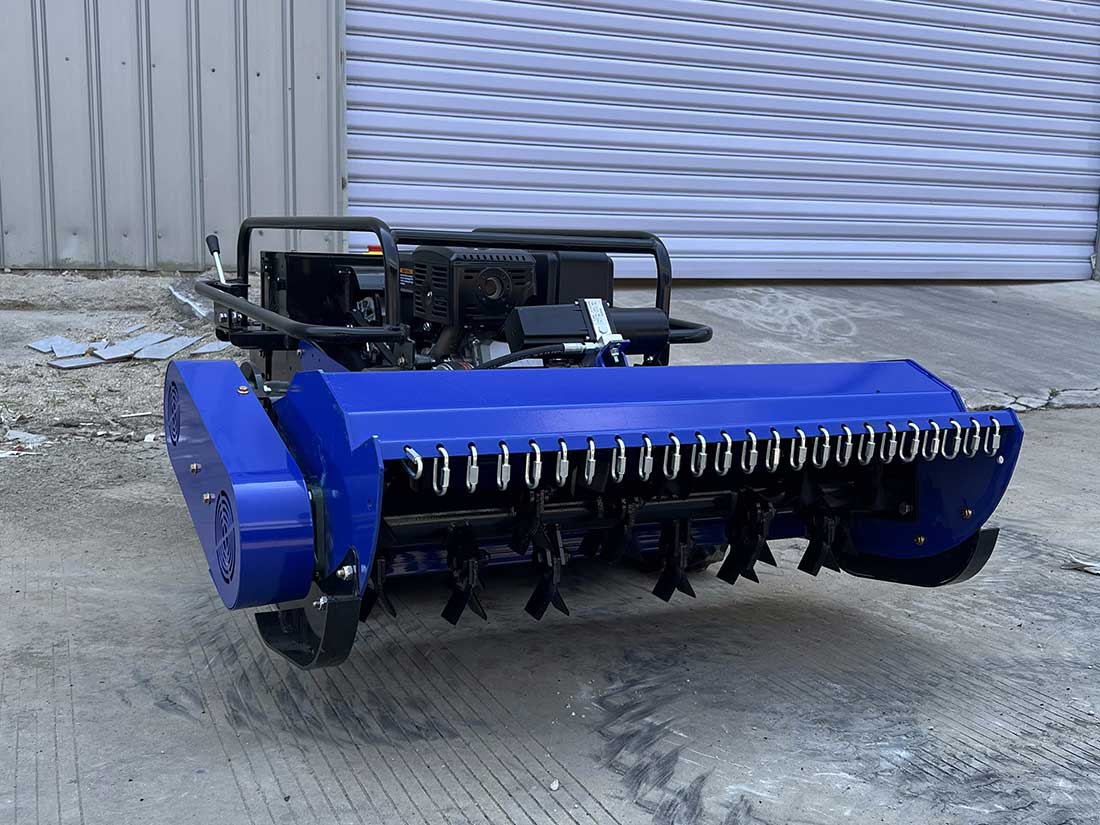
8. Which Mower Is Better for Different Applications?
The following examples can help clarify which equipment type may be more appropriate.
Residential Lawns
For small, flat residential lawns, a traditional walk-behind mower is often a practical and economical choice. A remote-controlled grass lawn mower may be unnecessary unless the property includes difficult slopes or other special conditions.
Commercial Landscaping
Landscaping contractors often manage a mixture of open lawns, narrow access routes, slopes, and landscaped areas. A traditional mower may be ideal for level sections, while remote-controlled equipment can complement the fleet for more challenging locations.
Roadside Embankments
Roadside slopes can create access and safety challenges. A suitable remote-controlled grass lawn mower may help maintain vegetation while allowing the operator to remain away from the immediate cutting area.
Traffic exposure, slope limits, ground conditions, and local work-zone requirements must still be considered.
Industrial and Commercial Properties
Factories, warehouses, solar installations, and other large properties may include rough grass, perimeter vegetation, and uneven areas. The choice between traditional and remote-controlled equipment depends on access, vegetation type, and maintenance frequency.
Agricultural and Rural Land
Rural properties often contain a mixture of maintained lawns, field margins, and rough vegetation. A traditional mower may be suitable for accessible areas, while a remote-controlled grass lawn mower with an appropriate cutting system may be better for selected difficult sections.
These examples show why many professional operations benefit from choosing equipment according to the task instead of relying on a single mower for every condition.
9. How to Choose the Right Grass Lawn Mower
Before purchasing equipment, evaluate the site and establish clear operating requirements.
Step 1: Assess the terrain. Identify flat sections, uneven ground, slope angles, narrow access points, and potential obstacles.
Step 2: Identify the vegetation. Determine whether the mower will cut short grass, thick grass, weeds, or mixed rough vegetation.
Step 3: Select the cutting system. Compare rotary and flail configurations based on the required finish and vegetation conditions.
Step 4: Check operating limits. Review slope ratings, traction specifications, machine dimensions, and other technical requirements. Confirm that the model is appropriate for the intended terrain.
Step 5: Compare operating costs. Consider purchase price, servicing, replacement parts, labor, transport, and expected downtime.
Step 6: Evaluate support and documentation. Look for clear operating instructions, maintenance guidance, warranty information, and access to relevant spare parts.
Following this process can help buyers select a grass lawn mower that balances performance, safety, and long-term value.
10. Explore Remote-Controlled Mowing Solutions from JY Lawn Mower
For contractors and property managers who regularly maintain difficult terrain, remote-controlled mowing equipment may offer a useful addition to their existing machinery.
JY Lawn Mower provides a starting point for researching remote-controlled mowing solutions for lawn care and vegetation management. When reviewing available models, pay attention to their intended applications, cutting systems, terrain capabilities, and maintenance requirements.
Visit JY Lawn Mower to explore available equipment and learn more about potential solutions for your mowing operations.
Before contacting a supplier, prepare details about your terrain, slope angles, vegetation type, required cutting finish, daily workload, and transport arrangements. These details can help you compare equipment more effectively and determine whether a remote-controlled grass lawn mower is suitable for your application.
11. The Future of Mowing Difficult Terrain
Mowing technology continues to evolve as landscaping professionals look for ways to improve operational efficiency, control, and access to challenging environments.
Remote-controlled grass lawn mower designs are an important part of this development. Advances in control systems, tracked chassis, cutting mechanisms, and serviceability may help make specialized mowing equipment more useful for a wider range of applications.
Nevertheless, conventional mowers remain effective for many everyday tasks. Remote-controlled equipment is best understood as a specialized solution for applications where remote operation and terrain adaptability provide clear advantages.
Successful mowing operations will continue to depend on selecting the right machine, training operators, following safety procedures, and maintaining equipment according to the manufacturer's recommendations.
Conclusion
When comparing a grass lawn mower with a traditional mower for difficult terrain, the best choice depends on the working conditions.
Traditional mowers are often practical and economical for flat, accessible lawns. Remote-controlled mowers can offer important advantages for suitable slopes, uneven ground, rough vegetation, and areas where maintaining a safe operating position is difficult.
By comparing terrain capability, cutting performance, traction, safety features, maintenance needs, and total ownership costs, buyers can make a more informed equipment decision.
If your business regularly handles steep slopes or challenging mowing environments, explore the remote-controlled mowing equipment available at JY Lawn Mower to identify potential solutions for your specific requirements.