 English
 Spanish
 Portuguese
 French
 Italian
 Remote Mower
The professional landscaping industry is changing as businesses look for more efficient ways to maintain commercial properties, agricultural land, roadside vegetation, and large green spaces. Rising labor costs, challenging terrain, and increasing expectations for workplace safety are encouraging contractors to reconsider how they select and operate mowing equipment.
A professional lawn mower is no longer defined solely by engine power or cutting width. Today's commercial buyers also evaluate maneuverability, operator safety, maintenance requirements, operating costs, and the ability to handle different ground conditions. As a result, remote-controlled mowing equipment is attracting interest from landscaping companies, grounds maintenance teams, farms, and vegetation management contractors.
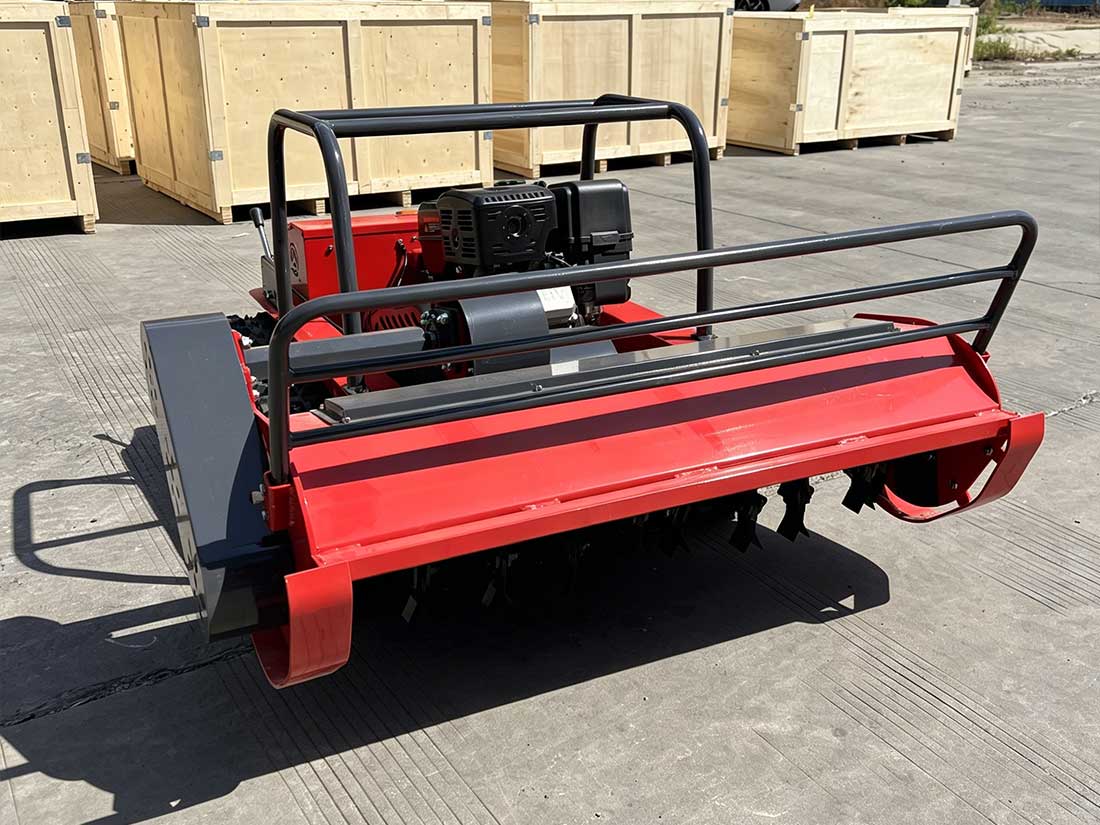
A remote-controlled lawn mower allows an operator to direct the machine from a suitable position using a remote-control system. Depending on the model, features such as tracked mobility, specialized cutting systems, and compact construction can make this equipment suitable for selected areas that are difficult to maintain with conventional mowers.
This article examines why businesses are considering remote-controlled equipment, what professional buyers should evaluate, and how to determine whether this technology is a worthwhile addition to an existing fleet.

1. What Defines a Professional Lawn Mower?
A professional lawn mower is designed to meet the demands of repeated mowing operations, commercial workloads, or specialized vegetation management. Unlike equipment intended only for occasional residential use, commercial machines must be evaluated against the actual requirements of the working environment.
Important considerations include:
Cutting performance: The machine should handle the expected grass height, vegetation density, and required cutting finish.
Durability: Components must be suitable for the intended workload and operating conditions.
Maneuverability: The machine should access the areas where it will be used without unnecessary repositioning.
Operational safety: Controls, guards, emergency-stop systems, and operating procedures should support safe use.
Maintainability: Routine inspections, servicing, and replacement of wear components should be practical.
Total cost of ownership: Purchase price should be considered alongside energy or fuel, maintenance, transport, downtime, and expected service life.
A remote-controlled lawn mower can meet these professional requirements when its design and specifications match the application. However, remote operation alone does not make a machine suitable for every commercial job. Buyers must still verify cutting capacity, terrain limits, component quality, and available technical support.
2. Why Businesses Are Considering Remote-Controlled Mowing Equipment
Traditional mowing equipment remains effective for many routine tasks, particularly on open, relatively flat ground. However, some commercial environments present challenges that make specialized equipment worth considering.
Improved operator positioning
Slopes, roadside embankments, and uneven terrain can create risks when operators walk directly behind a mower or ride on a machine. A remote-controlled lawn mower allows the operator to control the machine from a suitable position away from the immediate cutting area.
This can reduce exposure to certain terrain-related hazards, although it does not eliminate all risks. Operators must maintain visibility, follow the manufacturer's instructions, and stay clear of potential machine movement, flying debris, and other hazards.
Greater flexibility on difficult terrain
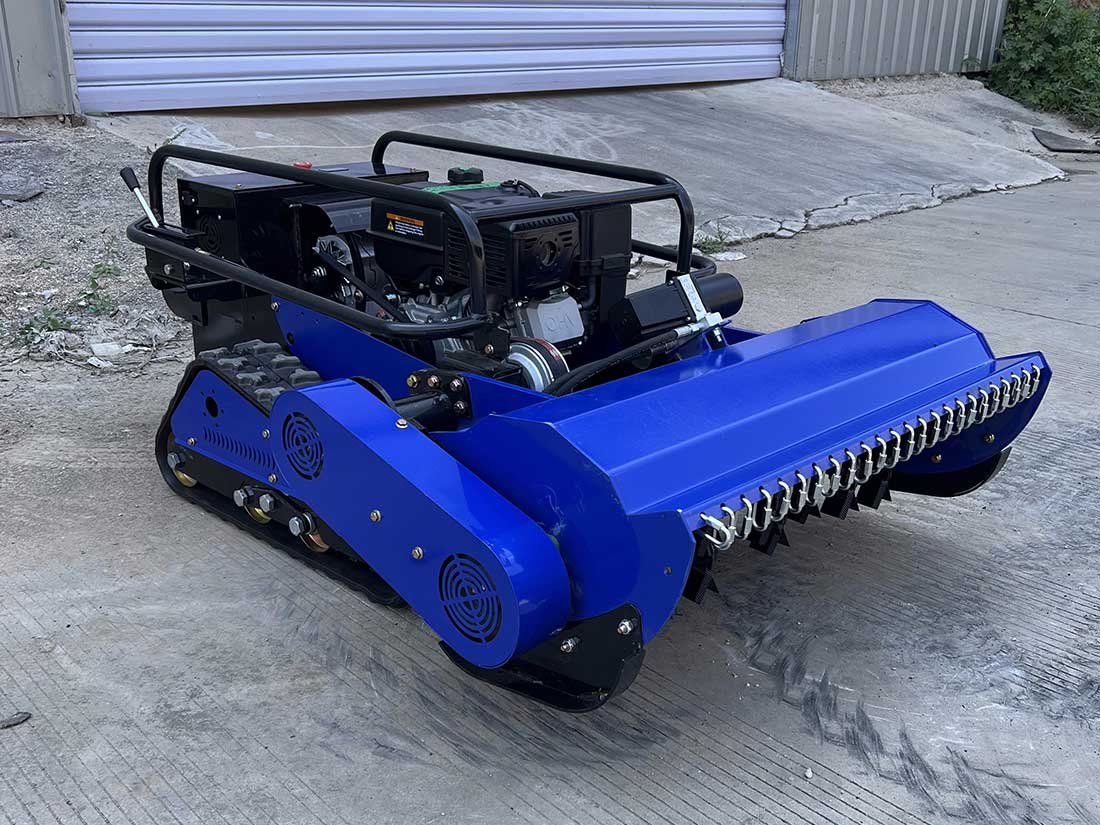
Certain remote-controlled mowers use tracked undercarriages designed to provide traction on selected uneven surfaces. These machines may be suitable for embankments, rough grass areas, orchards, and other locations where conventional equipment has limited access.
The actual capability of a lawn mower depends on track design, weight distribution, surface conditions, vegetation, and manufacturer-approved operating limits. Businesses should never assume that every tracked mower can safely operate on every slope.
More flexible workforce planning
A remote-controlled machine can help maintenance teams allocate specialized equipment to difficult sections of a property while using conventional mowers on accessible areas.
Depending on the site, this may simplify certain operations and reduce the need for labor-intensive mowing methods. The real effect on staffing and productivity should be assessed through practical trials rather than assumed from advertised specifications.
Access to specialized applications
A commercial lawn mower with remote operation may help businesses manage areas such as roadside verges, drainage channels, steep landscape banks, and selected agricultural properties.
The greatest value often comes from solving a recurring operational problem rather than replacing every machine in the fleet.
3. Key Industries Using Remote-Controlled Lawn Mowers
Remote-controlled mowing equipment can be considered across several professional sectors. Each application has different requirements, so equipment selection should begin with a clear understanding of the site.
Commercial landscaping
Landscaping contractors often maintain properties that combine open lawns, slopes, planting areas, and uneven boundaries. A remote-controlled lawn mower can complement conventional equipment by handling selected sections where specialized mobility or operator positioning is beneficial.
For contractors, the main evaluation criteria include cutting quality, maneuverability, setup time, transport requirements, and the ability to complete recurring jobs reliably.
Roadside and infrastructure maintenance
Roadside verges, drainage channels, and infrastructure corridors frequently require regular vegetation control. These sites may include restricted access, traffic exposure, and slopes that complicate conventional mowing.
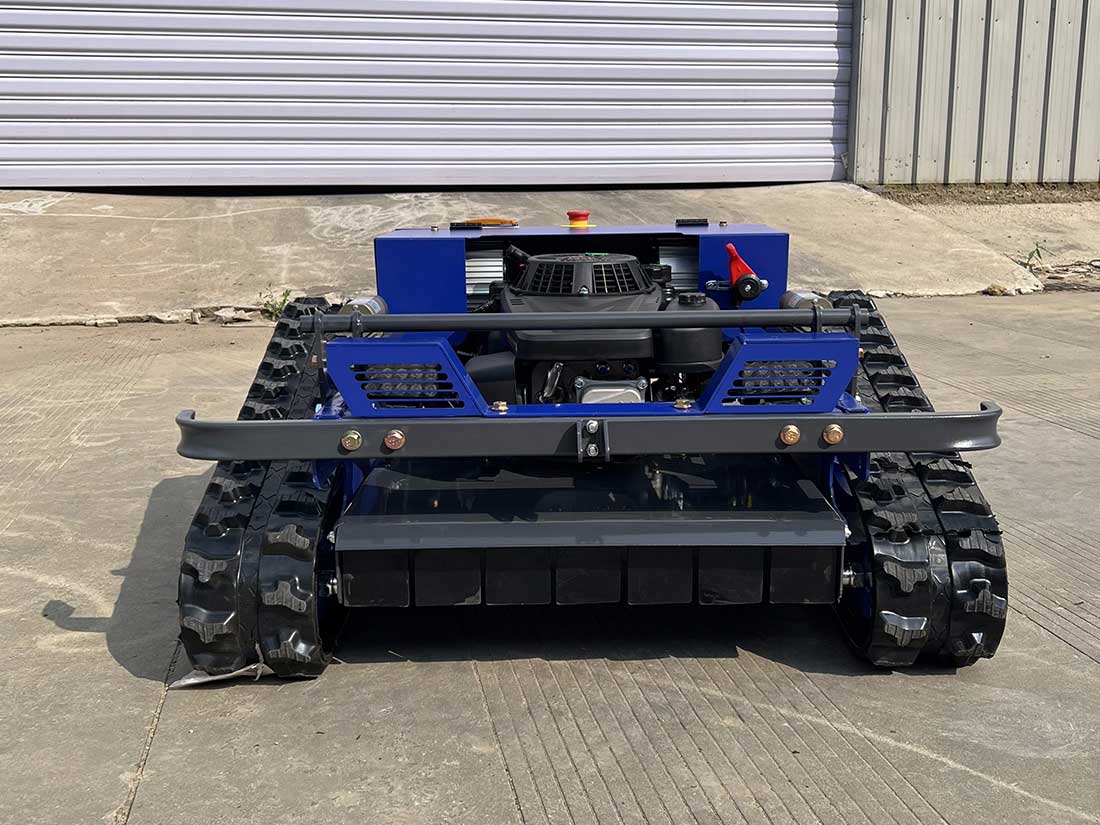
A suitable remote-controlled lawn mower may allow crews to control cutting operations from a more appropriate position. Nevertheless, remote operation does not replace traffic management, exclusion zones, warning measures, or compliance with applicable safety regulations.
Agriculture and orchard management
Farms and orchards often contain uneven ground, narrow access routes, and vegetation growing around trees, fences, and irrigation systems.
A compact remote-controlled lawn mower may be suitable for selected grass-cutting tasks in these environments. Buyers should check the machine's width, turning radius, ground clearance, cutting height, and ability to manage the expected vegetation without damaging nearby infrastructure.
Property and facility management
Large commercial properties, industrial sites, and institutional grounds may contain a mixture of maintained lawns and less accessible vegetation.
Using a specialized lawn mower for difficult sections can complement the wider maintenance fleet. Facility managers should consider the frequency of mowing, access restrictions, operator training, maintenance support, and the consistency of the required finish.
4. Remote-Controlled vs. Conventional Professional Lawn Mowers
Remote-controlled and conventional machines are not necessarily competitors. They often serve different roles within a professional equipment fleet.
| Evaluation factor | Conventional lawn mower | Remote-controlled lawn mower |
|---|---|---|
| Typical application | Routine mowing on suitable terrain | Selected difficult-access or specialized mowing tasks |
| Operator position | Walking behind or riding on the machine | Operating from a suitable remote-control position |
| Terrain suitability | Depends on the machine's design and rated limits | Some models are designed for uneven ground and slopes |
| Maneuverability | Varies by size and configuration | Compact models may access selected restricted areas |
| Operator training | Required according to the machine and task | Includes remote-control procedures and emergency response |
| Maintenance | Depends on powertrain and cutting system | Depends on the model, mobility system, and cutting components |
| Best purchasing approach | Match the machine to routine work | Match the machine to specific operational challenges |
For open, level lawns, a conventional ride-on mower may remain a cost-effective choice. For certain embankments or difficult-access areas, a purpose-designed remote-controlled lawn mower may offer practical advantages.
The correct choice depends on the terrain, vegetation, required finish, workload, operating limits, and total cost of ownership.
5. Features Businesses Should Evaluate Before Buying
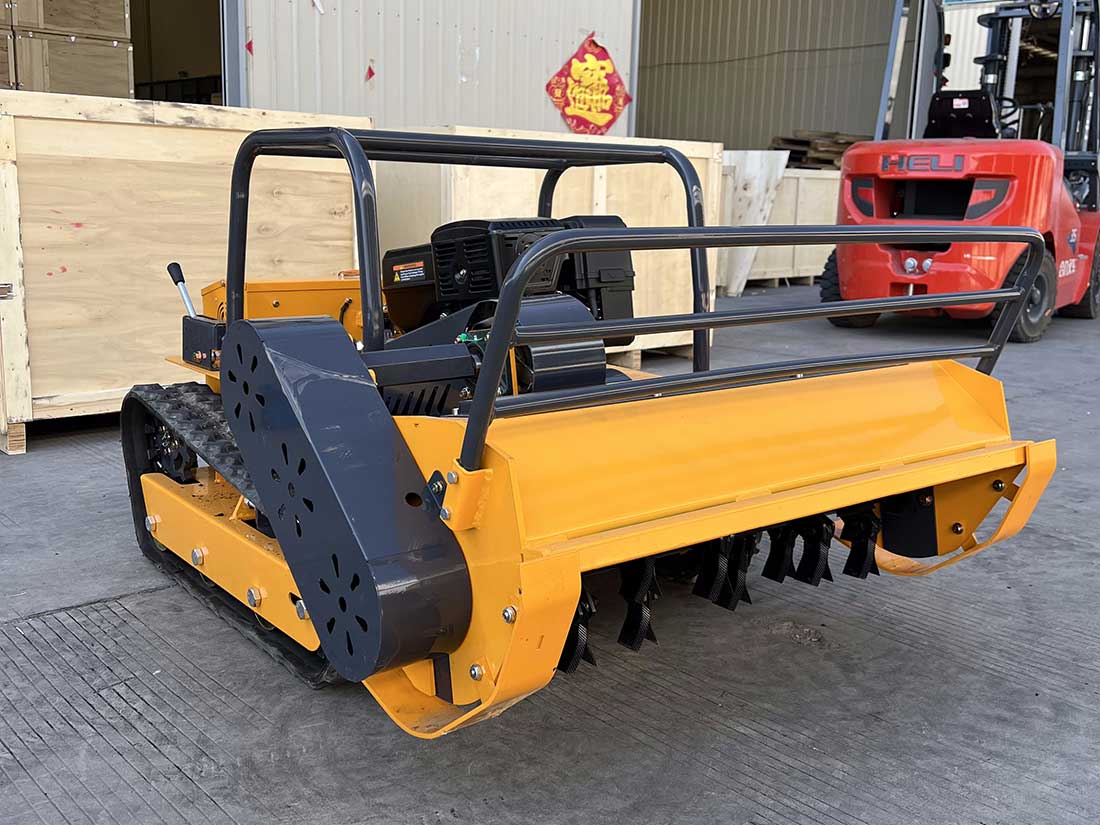
Selecting a professional lawn mower requires a systematic assessment of machine capabilities and operating conditions.
Cutting width and cutting system
Cutting width affects how much ground a machine can cover per pass. A wider cutting system may improve coverage on open areas, while a narrower machine may be easier to maneuver around obstacles.
The cutting mechanism must also match the vegetation. Fine grass, tall grass, weeds, and rough vegetation may require different cutting configurations. Buyers should check cutting height adjustment, blade design, and the manufacturer's recommended applications.
Mobility and traction
Wheel or track design influences how the machine interacts with the ground. For difficult terrain, buyers should assess traction, ground pressure, stability, and turning behavior.
A tracked lawn mower may provide useful mobility in selected conditions, but wet grass, loose soil, and abrupt slope changes can still create hazards.
Remote-control functionality
Businesses should examine the control range, responsiveness, user interface, emergency-stop function, and procedures for responding to a lost signal. They should also confirm whether the remote controller manages all required functions or only selected operations.
Power system and operating time
Different machines have different power configurations and maintenance needs. Buyers should compare expected operating time, refueling or charging requirements, service intervals, and the suitability of the power system for their daily schedule.
Parts and service support
For commercial operators, equipment downtime can disrupt work schedules. Before purchasing a lawn mower, check the availability of replacement blades, tracks or other wear components, service documentation, warranty terms, and technical support.
6. How Remote-Controlled Equipment Can Improve Operational Efficiency
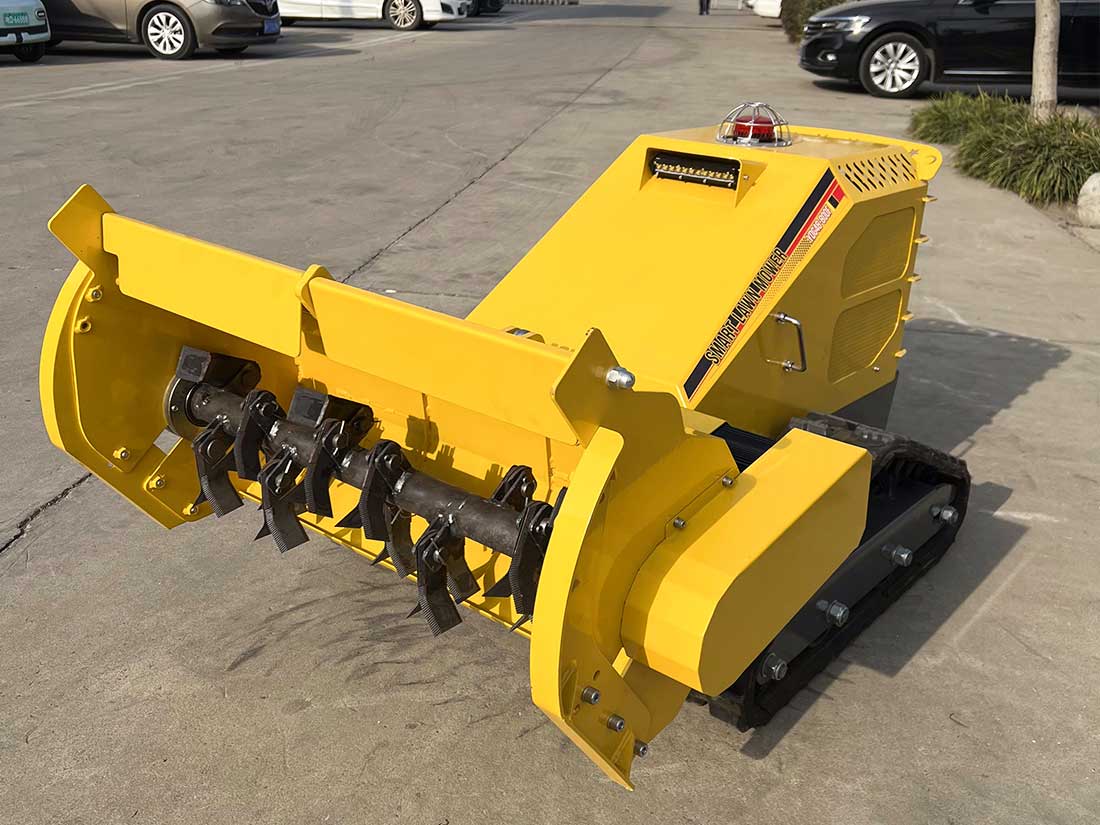
Remote-controlled equipment can help businesses rethink how they organize mowing operations. However, efficiency should be measured across the complete job rather than by cutting speed alone.
A professional evaluation should include:
Site preparation: Time spent inspecting the area, identifying obstacles, and establishing safe operating boundaries.
Transport and setup: Time required to move the machine to the work area and prepare it for operation.
Mowing performance: The area covered, cutting quality, and need for repeated passes.
Repositioning: Time spent moving between sections and navigating restricted access.
Maintenance: Cleaning, inspection, servicing, and replacement of wear components.
Operator requirements: Training, supervision, and the time needed to complete the task safely.
For example, a landscaping contractor responsible for several steep embankments could test a remote-controlled lawn mower on a representative section while continuing to use conventional equipment on flat ground.
The contractor could then compare completion time, cut quality, setup requirements, maintenance, and total operating costs. This approach produces more useful business evidence than relying on generalized productivity claims.
7. Safety and Maintenance for Commercial Operations
Safety must remain a priority regardless of the type of lawn mower used. Remote operation can change the operator's position, but it does not eliminate hazards from cutting blades, flying debris, unstable terrain, moving machinery, or hidden obstacles.
Professional operators should:
Review the operating manual and complete appropriate training.
Inspect the site before beginning work.
Confirm that the machine is suitable for the terrain and vegetation.
Check the remote-control connection and emergency-stop function.
Maintain the recommended exclusion zone around the machine.
Keep the machine within its manufacturer-approved slope and operating limits.
Stop and secure the machine according to the specified isolation procedure before maintenance or blockage removal.
Maintenance is equally important for long-term performance. Regularly inspect blades, cutting components, guards, fasteners, tracks or wheels, and other serviceable parts. Follow the manufacturer's schedule for cleaning, lubrication, and power-system servicing.
Commercial businesses should keep maintenance records to identify recurring issues, schedule preventive work, and reduce avoidable downtime.
8. Calculating the Return on Investment
A professional lawn mower should be evaluated as a long-term business asset. Its value depends on how often it is used, which jobs it performs, and the operating costs it helps manage.
Relevant costs include:
Initial purchase price.
Transportation and setup.
Operator training.
Fuel or electricity.
Routine servicing and replacement parts.
Downtime and expected service life.
Potential benefits may include improved access to difficult areas, more flexible allocation of equipment, and reduced exposure to certain hazardous mowing positions. The financial value of these benefits varies by application.
Businesses can estimate the investment's payback period by comparing the initial investment with realistic annual net savings. Those savings should be calculated using measured labor, operating, and maintenance costs rather than assumed improvements.
For a contractor that frequently maintains difficult slopes, a remote-controlled lawn mower may be used regularly enough to justify its cost. A business that mainly maintains small, flat lawns may obtain better value from conventional equipment.
The best purchasing decision is based on actual operational needs and realistic financial projections.
9. Common Mistakes When Choosing Professional Mowing Equipment
Even experienced buyers can select unsuitable equipment if they focus too narrowly on one specification.
Choosing based only on price
A low purchase price may not reflect long-term maintenance costs, durability, parts availability, or suitability for the intended terrain.
Assuming all tracked mowers handle every slope
Track systems can improve traction in certain conditions, but slope performance depends on the entire machine and the operating environment. Always verify manufacturer specifications.
Ignoring vegetation type
A lawn mower designed for routine grass maintenance may not be appropriate for dense weeds or rough vegetation. Match the cutting system to the job.
Overlooking transport and setup
Commercial operators often move between sites. Machine dimensions, loading requirements, transport arrangements, and setup time can influence overall efficiency.
Underestimating training requirements
Remote-controlled equipment requires operators to understand control functions, emergency procedures, visibility, and safe working distances.
Avoiding these mistakes helps businesses choose equipment that delivers practical value rather than simply attractive specifications.
10. Explore Professional Remote-Controlled Lawn Mowers from JY Lawn Mower
For businesses evaluating specialized mowing equipment, the next step is to identify machines that match their terrain, vegetation, and maintenance schedule.
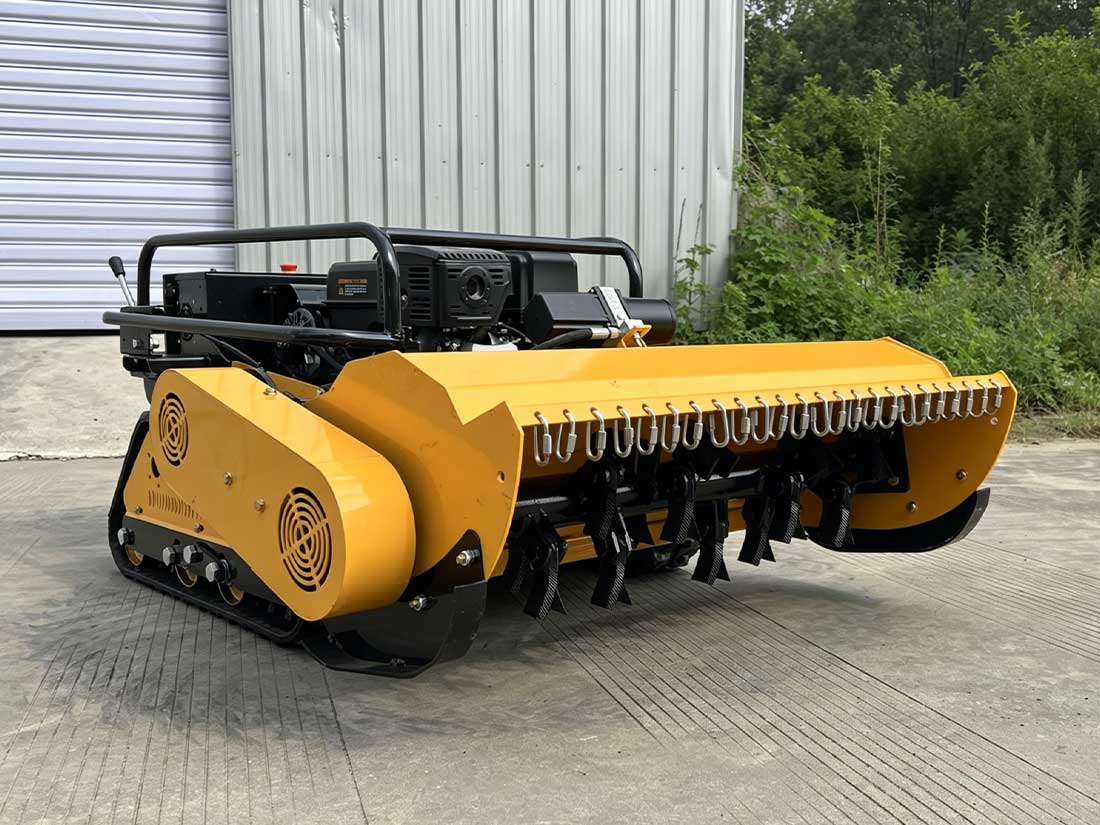
JY Lawn Mower provides a starting point for exploring remote-controlled mowing equipment for professional landscaping and vegetation-management applications.
Visit the official website: https://www.jylawnmower.com/
Before selecting a model, prepare information about the working area, slope conditions, vegetation height, required cutting finish, and expected daily operating time. Reviewing these requirements with the supplier can help narrow the options and identify the specifications that matter most.
Businesses should also confirm maintenance requirements, replacement-parts availability, operating limits, and technical support before making a final purchasing decision.
Conclusion: Choosing the Right Professional Lawn Mower for Your Business
Businesses are considering remote-controlled mowing equipment because it offers an alternative way to manage selected difficult and restricted-access areas. When appropriately designed for the task, a remote-controlled lawn mower can support more flexible operator positioning, specialized terrain management, and better allocation of equipment across a property.
However, remote-controlled machines are not a universal replacement for conventional mowing equipment. The most effective choice depends on terrain, vegetation, cutting requirements, safety procedures, maintenance needs, and total cost of ownership.
By evaluating these factors carefully, landscaping contractors, agricultural operators, property managers, and vegetation-maintenance teams can make more informed investment decisions.
Explore remote-controlled mowing solutions at JY Lawn Mower to learn more about equipment options for professional grass cutting and challenging terrain.